The gavel makes a very specific sound when it hits the wood block. It is not loud, not really. It does not echo like gunfire or crash like thunder. It is a dry, flat thud. But when that thud lands, a room full of grown adults—people with millions of dollars, people with handcuffs waiting for them, people fighting for the custody of their children—instantly falls silent.
For thirty-four years, Judge Arthur Tompkins lived for that sound. He knew the exact amount of pressure required to command a room without looking desperate. He knew how the leather chair felt against his lower back during a ten-hour trial. He knew the precise weight of the black robe, which always felt slightly too warm in July and never warm enough in January.
Now, he sits in a vinyl booth at a diner off Interstate 70. The robe is packed away in a cedar chest in his attic. He is wearing a faded polo shirt, and his knuckles are swollen from arthritis. Outside, the midday heat shimmers off the asphalt of a gas station parking lot. He is seven hundred miles from his old courtroom, drinking terrible coffee from a mug that has a chip near the rim.
He is seventy-three years old, and he is on a road trip. Not to see the Grand Canyon. Not to visit his grandchildren in Seattle.
He is traveling because he thinks the American experiment is bleeding out from a wound most people cannot see.
The Invisible Shield
We are approaching a milestone that feels heavy, almost impossible to comprehend. Two hundred and fifty years. A quarter of a millennium since a group of wealthy radicals signed a document declaring that they were done with kings. We have planned fireworks. We have ordered commemorative coins. We will give speeches about freedom and endurance.
But if you strip away the flags and the parades, a democracy is just a collective agreement to believe in pieces of paper.
The most important piece of paper we have depends entirely on a single, fragile concept: that the person sitting under the seal of the court does not care who won the last election.
"People think the biggest threat to a courthouse is a bomb," Arthur says, tracing a ring of condensation on the laminate table. He speaks softly, but with the deliberate cadence of a man who spent decades making sure every syllable was captured by a court reporter. "It isn't. A bomb destroys brick and mortar. You can rebuild a wall. The real threat is when a citizen looks up at the bench and sees a politician in a black dress instead of a judge."
That is judicial independence. It sounds academic. It sounds like something you sleep through in a high school civics class while the radiator hums in the corner.
But consider what happens when it disappears.
Imagine you own a small business. You have poured your life savings into a storefront on Main Street. A massive, politically connected corporation moves into town and sues you, claiming your logo infringes on their trademark. They want to wipe you out. You hire a lawyer. You spend money you don’t have. You finally get your day in court.
Now, imagine you look at the judge. You know, because you read the news, that the corporation’s chief executive officer just held a massive fundraiser for that judge’s upcoming reelection campaign. You know the political party currently in power has been publicly demanding that the courts "clean out" businesses like yours.
How does your stomach feel in that moment?
That cold, hollow sensation in your gut is what happens when the rule of law turns into the rule of the crowd. It is the feeling of realizing that the game was rigged before you even shuffled the deck.
The Highway Choir
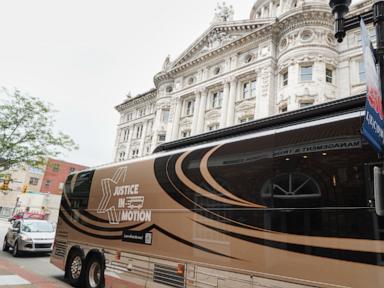
Arthur is not alone on the interstate. He is part of an ad-hoc, largely uncoordinated caravan of retired jurists who have spent the last year packing overnight bags and driving to Rotary Clubs, high school gymnasiums, church basements, and public libraries. They call themselves different things in different states, but the mission is identical. They are trying to explain the mechanics of a miracle before we forget how it works.
They are an unlikely crew of evangelists. Judges are trained to be detached. They are conditioned by decades of professional habit to avoid the public square. They do not give interviews about ongoing cases. They do not attend political rallies. They live in a self-imposed monastery of briefs, motions, and precedents.
To see them out here, standing behind podiums covered in felt, trying to compete with the sound of a middle school basketball practice down the hall, is jarring. It feels a bit like seeing a surgeon standing on a street corner, trying to convince passersby that washing their hands is a good idea.
"The language we use has become toxic," says Evelyn Vasquez. She joined the tour after retiring from a federal district bench in Texas. She is sharp, precise, and looks like she could silence a room with a single raising of her left eyebrow. "We talk about 'activist judges' or 'Trump judges' or 'Obama judges.' Every time we use those phrases, we chip away at the foundation. A judge doesn’t have a team. Or, if they do, the team is an old, boring document written in 1787."
The problem they are fighting is a shift in public consciousness. For generations, the judiciary was viewed as a referee. You might not like the penalty call, but you accepted that the referee was operating under the same rulebook as everyone else.
Today, the court is increasingly viewed as just another prize to be captured. A trophy for the winning side. A weapon to be wielded against the losing side.
Consider the numbers that keep these retired judges awake in hotel rooms that smell like industrial carpet cleaner. Public trust in the judiciary has plummeted to historic lows over the last decade. Poll after poll shows that a significant majority of Americans believe judges are motivated primarily by politics rather than the law.
When trust drops that low, the system stops working. The law loses its moral authority. It becomes nothing more than state-sanctioned force.
The Weight of the No
The journey these retired judges are taking is self-funded, exhausting, and often deeply frustrating. They are meeting people who are not just skeptical, but angry.
At a town hall in Ohio, a man stood up in the back of the room. He was wearing a camouflage baseball cap and shaking with a quiet, intense fury. He wanted to know why a judge could stop a law passed by a governor who won sixty percent of the vote. "Who died and made you king?" the man shouted.
Evelyn remembers the moment vividly. The room went quiet. The air grew thick.
"I told him the truth," she says. "I told him that the system was designed precisely to prevent the sixty percent from eating the forty percent. I told him that the most important job a judge has is to say 'no' to the loudest crowd in the room. Even if that crowd includes the President, the Congress, and every person living on his street."
It is a difficult sell in an era that values speed, consensus, and tribal victory. We live in a culture of the immediate. We want what we want, and we want it now. The judiciary is, by design, slow, deliberate, and often frustratingly counter-majoritarian. It is meant to be a cooling saucer for the boiling tea of public passion.
But the cooling saucer only works if everyone agrees not to smash it.
Arthur recalls a case from his second year on the bench. It involved a young man accused of a horrific crime that had set the local community on fire. The local newspapers were screaming for blood. The digital comments sections were filled with threats. The police department was under immense pressure to secure a conviction.
During the trial, it became undeniable that the evidence had been obtained through a flagrant violation of the fourth amendment. The police had entered the home without a warrant, without probable cause, simply because they had a hunch.
"I had to throw the evidence out," Arthur says. His voice drops an octave. "Which meant the case collapsed. Which meant the boy went home. I knew what would happen. I received death threats. My wife had to have a police escort to the grocery store for three weeks. My neighbors stopped speaking to us."
He looks out the diner window at a semi-truck grinding its gears as it pulls onto the highway.
"But if I had let that evidence in," he continues, "I would have been saying that the constitution only applies when the neighbors are in a good mood. And if that’s the case, we don’t have a constitution at all. We just have a neighborhood association with handcuffs."
The Road Ahead
The caravan moves on. Next stop is a community college auditorium in Indiana. Then a veterans’ hall in Illinois.
They do not use PowerPoint presentations. They do not hand out glossy brochures. They just stand up there, with their gray hair and their memories of old courtrooms, and they talk. They answer questions from people who suspect them of being part of a deep-state conspiracy. They listen to complaints about decisions made by courts thousands of miles away.
It is lonely work. It is easy to wonder if it matters. Can a few dozen retirees in rental cars reverse a nationwide slide toward cynicism? Can a story about a trademark dispute or an illegal search compete with the deafening, 24-hour roar of political outrage?
Perhaps not. But as the country prepares to blow out the candles on its 250th birthday, these judges are offering something rare: a reminder of what dignity looks like when it isn’t performing for a camera.
They are not asking for applause. They are asking for something much harder. They are asking us to tolerate the frustration of a system that does not always give us the outcome we want, because that very frustration is the price of our freedom.
Arthur finishes his coffee and leaves a five-dollar bill on the table. He walks out into the blinding midwestern sun, squinting against the glare. He checks his watch. He needs to be in Terre Haute by four o’clock. There are fifty people waiting in a basement to hear about why the rules matter, even when they hurt.
He gets into his sedan, adjusts the rearview mirror, and turns the key. The engine turns over with a steady, quiet hum, and he pulls out onto the asphalt, merging back into the long, unfolding ribbon of the American road.