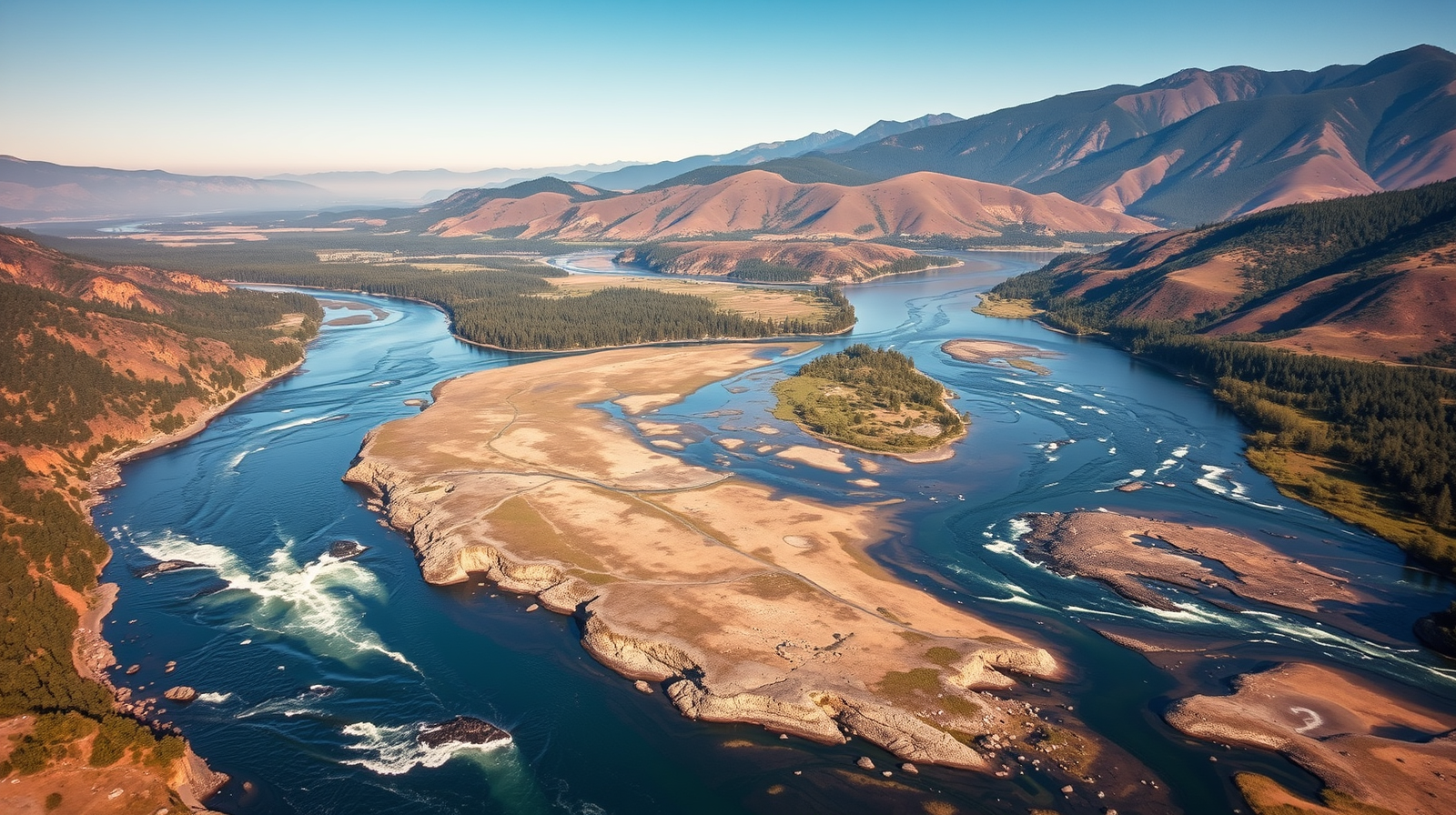
The largest dam removal project in American history has fundamentally altered the firefighting calculus in Northern California and Southern Oregon. When the four hydroelectric dams on the Klamath River were decommissioned and breached between 2023 and 2024, proponents celebrated the return of salmon runs and the restoration of natural river flows. But for the wildland firefighters tasked with protecting the remote timberlands surrounding the river, the project eliminated four massive, reliable aerial dipping stations. The reservoirs are gone. The water is gone. And in the heat of a record-breaking fire season, the consequences are becoming lethal.
For decades, the Copco, Iron Gate, J.C. Boyle, and John C. Boyle reservoirs served as critical infrastructure for fire suppression. Helicopters could dip buckets into these calm, deep pools and return to the fire line in minutes. Now, those reservoirs have been replaced by a free-flowing, narrow river channel characterized by high velocity, shallow rapids, and complex eddy currents. Aerial assets can no longer safely hover over the river to extract water, forcing pilots to fly longer distances to reach alternative lakes or return to distant base airports. You might also find this connected story insightful: Why Donald Trump Threatens Canada Over Wildfire Smoke Ahead of the World Cup Final.
Seconds define the window between a contained flare-up and a catastrophic mega-fire. When that window widens because a pilot has to travel an extra ten miles for water, the forest burns.
The Operational Vacuum
Wildfire suppression is a game of logistics. To stop a blaze in rugged terrain, you need a high frequency of water drops to cool the fuel bed before ground crews can move in. The Klamath project effectively removed the middle-ground logistics of this operation. As highlighted in latest articles by USA Today, the implications are widespread.
Before the dams fell, the reservoirs acted as a local hydrant. A pilot could drop water and be back for a refill in under four minutes. Today, the geography of the Klamath Basin presents a new barrier. The river—once dammed into predictable, wide basins—now courses through steep, narrow canyons where the wind creates unpredictable downdrafts. These conditions make low-level flight over the water dangerous, if not impossible, for heavy-lift helicopters.
Federal and state agencies, including Cal Fire and the U.S. Forest Service, were forced to scramble for alternatives as the deconstruction phase began. They identified supplemental ponds and distant reservoirs, but these locations lack the accessibility of the former dams. In a fire, location is utility. If the water is not nearby, it might as well not exist.
The Myth of Restoration Balance
The architects of the Klamath River Renewal Corporation project argued that the long-term ecological health of the basin outweighed the temporary disruption of infrastructure. They focused on the anadromous fish recovery—the return of Chinook and Coho salmon to spawning grounds blocked for a century. This is an indisputable biological victory. However, this focus on aquatic life ignored the terrestrial reality of living in a tinderbox.
Restoration efforts often operate in silos. Biologists design river channels to mimic pre-colonial flows, favoring gravel beds and meanders. Meanwhile, fire ecologists look at the same landscape and see fuel loads, evacuation routes, and water access. When these two fields fail to integrate, the result is a landscape that is "healed" for fish but increasingly hostile to human settlement.
The removal of the dams was not merely a physical change; it was a shift in regional risk management. By removing the reservoirs, the state essentially traded a reliable fire-suppression tool for an improved aquatic ecosystem. Whether this trade-off holds value depends on one’s proximity to the flames. For the residents of Siskiyou County, the math is increasingly difficult to justify as smoke chokes the valleys every August.
Why Infrastructure Fails When We Forget It
Dams provide secondary benefits that often go uncalculated until they vanish. Throughout the American West, aging water infrastructure serves as the backbone of our wildfire defense system. We rely on irrigation ditches, stock ponds, and hydroelectric reservoirs to hold the line against infernos. When these structures are labeled "obsolete" due to energy production shifts or environmental remediation, the fire safety net frays.
Consider the hypothetical scenario of a lightning strike on a ridge line near the former Iron Gate site. Five years ago, a helitanker could have deployed within three minutes. Today, that same pilot must navigate a narrow canyon with no safe hover point, diverting to a reservoir fifteen miles away. That extra transit time means the fire has time to double in size. In heavy timber, a fire that doubles in size in ten minutes can become impossible to contain for days.
This is the hidden cost of the de-industrialization of rural landscapes. We are removing human-made barriers to nature, but we are failing to account for the fact that we have built human lives in those same areas. Nature is not inherently fire-safe; it is volatile. By removing the tools that allowed us to manage that volatility, we are leaving the basin more vulnerable than it was in the era of the dams.
A New Strategy for a River Without Dams
Restoration advocates suggest that the river will eventually stabilize and that native vegetation will return to the exposed reservoir beds, reducing the overall fire hazard. While true, this process takes decades. In the interim, the landscape is scarred by vast, dried-out sediment flats. These areas, once underwater, are now covered in non-native grasses that dry out rapidly and create a flashy fuel bed—the perfect ignition point for a fast-moving grass fire.
To mitigate this, fire agencies are being forced to deploy resources that shouldn't be necessary. They are installing temporary "pumpkin" tanks—collapsible, portable water bladders—at strategic locations near the river. While effective, these require constant maintenance, water trucking, and staffing. It is a costly, inefficient patch for a problem we created by design.
True adaptation requires more than just temporary tanks. It requires a rethink of how we manage water in a post-dam world. We need permanent, strategically placed dipping basins that don’t rely on the river’s erratic flow. We need pre-cleared helispots that account for the new wind patterns in the reopened canyons.
The Klamath River is running free for the first time in a hundred years. The salmon are returning, and the sediment is clearing. But the fire remains the constant variable in this equation. Until we build the infrastructure to replace what we tore down, the freedom of the river will come at the expense of the safety of the valley. We have successfully restored the past, but we have yet to secure our future.