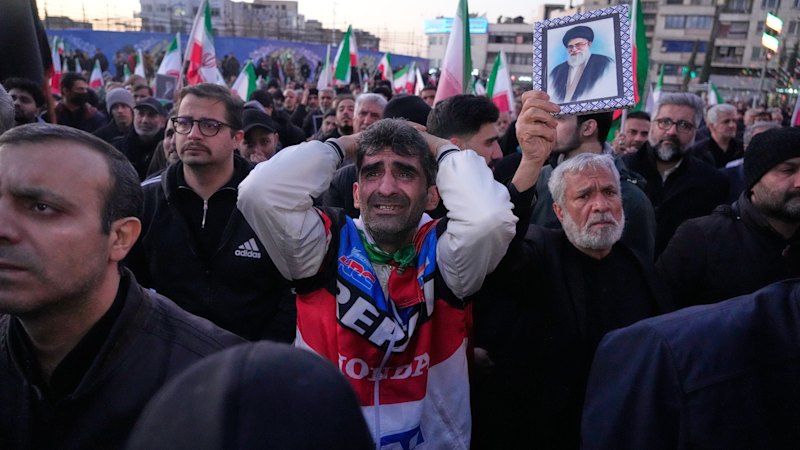
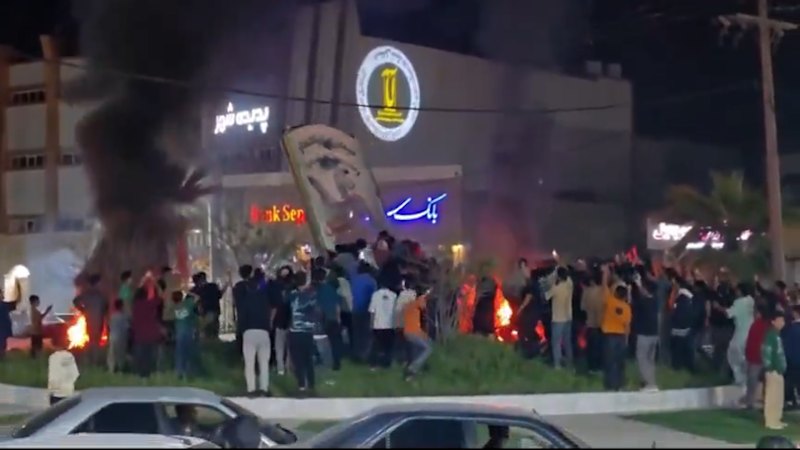
The joint military operations conducted by Israeli and U.S. forces against Iranian leadership and strategic infrastructure represent a shift from grey-zone shadow warfare to a doctrine of high-threshold kinetic signaling. This operation is not an isolated act of aggression but a calculated calibration of the regional deterrence functions. By transitioning from proximity-based strikes to direct targeting of command-and-control (C2) nodes, the coalition seeks to alter the cost-benefit analysis of the Iranian security apparatus. The primary objective is the systemic degradation of "forward defense" capabilities—the network of regional proxies and integrated missile systems that Iran utilizes to project power without incurring direct sovereign costs.
The Tripartite Framework of Target Acquisition
To understand the scope of these strikes, one must categorize the targets not by their geographic location, but by their functional utility within the Iranian strategic depth model. The coalition utilized a tripartite selection process designed to maximize psychological impact while maintaining a specific "off-ramp" for de-escalation.
- C4I Infrastructure (Command, Control, Communications, Computers, and Intelligence): By neutralizing hardened communication hubs, the coalition induces "strategic blindness." This forces the targeted leadership into insecure communication channels or localized decision-making, effectively severing the link between the central high command and field-level operational units.
- Logistical Bottlenecks: Targeting specific manufacturing facilities for Unmanned Aerial Vehicles (UAVs) and solid-fuel propellant plants addresses the supply-side constraints of Iran’s asymmetric warfare capability. Replacing high-precision components under a global sanctions regime introduces a temporal lag that prevents immediate retaliatory volume.
- Leadership Survivability Calculus: Targeting the physical locations of high-ranking IRGC officials serves as a "demonstration of reach." The intent is to prove that no level of hardening or concealment provides absolute immunity, thereby increasing the internal friction within the leadership as they prioritize personal survival over operational coordination.
The Mechanics of Integrated Suppression of Enemy Air Defenses (SEAD)
The success of these strikes relied on a sophisticated SEAD (Suppression of Enemy Air Defenses) campaign that bypassed or neutralized the S-300 and indigenous Bavar-373 platforms. This phase of the operation demonstrates the technological disparity between integrated Western avionics and localized radar networks.
The coalition likely utilized a tiered entry strategy. Electronic Warfare (EW) platforms first saturated the environment with "digital noise," creating false positives on Iranian radar screens. This was followed by the deployment of air-launched decoys designed to trigger the engagement sequences of surface-to-air missile (SAM) batteries. Once these batteries revealed their positions by activating their fire-control radars, they were neutralized by high-speed anti-radiation missiles (HARMs) and low-observable (stealth) strike aircraft.
The technical failure of the Iranian integrated air defense system (IADS) to register these incursions before impact suggests a critical vulnerability in their sensor fusion. If the IADS cannot maintain a "common operating picture," the entire defensive strategy collapses into isolated, "point-defense" clusters that are easily bypassed by standoff munitions.
Strategic Ambiguity and the Redline Paradox
A fundamental tension exists in the "Kinetic De-escalation" theory. For a strike to be a deterrent, it must be severe enough to discourage future action, yet precise enough to avoid triggering a total war. This is the Redline Paradox: a strike that is too successful might leave the adversary with nothing to lose, prompting a desperate, all-out response.
The coalition managed this paradox through "proportionality mapping." By avoiding energy infrastructure (oil refineries) and nuclear enrichment sites, the strikes signaled that the objective was the military leadership and its immediate tools of projection, rather than the economic or long-term survival of the state. This leaves the Iranian regime with a choice: they can acknowledge the loss and retreat into a period of internal restructuring, or they can escalate and risk the destruction of the high-value assets that were intentionally spared in the initial wave.
The Cost Function of Retaliation
From a consulting perspective, the Iranian response is dictated by a rigid cost function. Any retaliatory move must satisfy three internal variables:
- Domestic Credibility: The regime must appear strong to its base and security forces to prevent internal fracturing or coup attempts.
- Proxy Retention: If Iran does not respond to strikes on its leadership, its regional proxies (Hezbollah, Houthis, PMF) may view the Iranian "security umbrella" as a liability rather than an asset.
- Asset Preservation: Iran knows that a direct, high-volume missile strike on Israeli or U.S. assets will trigger a "Phase 2" coalition response, which would likely target the economic engines—the Kharg Island oil terminal and the Bandar Abbas port.
Current indicators suggest Iran is trapped in a "diminishing returns" cycle. Their previous massive drone and missile salvos have shown that Western and Israeli multi-layered interception (Iron Dome, David’s Sling, Arrow 2/3) can achieve a near-99% attrition rate. Therefore, a conventional military response is statistically likely to fail, while an unconventional (terrorist or cyber) response lacks the immediate "prestige" required to satisfy domestic audiences.
Intelligence Dominance as a Force Multiplier
The precision of the targeting—hitting specific rooms within buildings or mobile convoys in transit—indicates a deep "human intelligence" (HUMINT) and "signals intelligence" (SIGINT) penetration of the IRGC. This level of transparency into the adversary’s movements acts as a force multiplier. It forces the Iranian leadership to spend more time on internal purges and security protocols than on external strategy.
When a military organization becomes paranoid of its own communication channels, its "OODA loop" (Observe, Orient, Decide, Act) slows down significantly. The coalition has essentially weaponized Iranian internal distrust.
Shift Toward the Post-Proxy Era
The strategic play here is the forced transition toward a "Post-Proxy" regional reality. For decades, the Iranian strategy relied on the "Ring of Fire" concept—surrounding Israel with low-cost, high-disruption proxy forces. By striking the Iranian "head" directly, the coalition is signaling that the era of proxy-based immunity is over.
This creates a structural bottleneck for Iran. If they continue to fund and direct proxies, they will face direct kinetic consequences on their own soil. If they cease support for proxies, they lose their primary mechanism for regional influence. This is a classic "pincer" maneuver in geopolitical strategy: forcing the opponent into two equally undesirable choices.
Institutional Resistance and Tactical Adaptation
The Iranian military is not a monolith. The IRGC (Islamic Revolutionary Guard Corps) and the Artesh (regular military) often have competing interests and varying levels of technological integration. These strikes likely exacerbated these fault lines. The Artesh, responsible for sovereign defense, may view the IRGC’s regional provocations as the direct cause of the current vulnerability.
Evidence of this friction can be seen in the delayed and often contradictory official statements regarding the extent of the damage. A fractured command structure cannot execute the complex, multi-domain synchronization required to repel a high-tech coalition force.
The Tactical Imperative
The immediate strategic requirement for the coalition is the maintenance of "persistent presence" in the electromagnetic and physical domains. The following steps dictate the success of the post-strike environment:
- Continuous ISR (Intelligence, Surveillance, and Reconnaissance): Utilizing high-altitude long-endurance (HALE) drones to monitor repair efforts at targeted sites. Any attempt to reconstruct C2 nodes must be met with immediate "follow-on" strikes to ensure the degradation remains permanent.
- Cyber-Kinetic Integration: Deploying "wiper" malware against Iranian logistics databases to coincide with physical strikes. This compounds the physical destruction with administrative chaos, preventing the efficient reallocation of resources.
- Diplomatic Isolation of the Supply Chain: Leveraging the kinetic success to pressure neutral states to tighten export controls on dual-use technologies (carbon fiber, high-end semiconductors, and CNC machinery) that Iran requires for its missile programs.
The strategic play is no longer about "winning" a war in the traditional sense; it is about the "systemic exhaustion" of the adversary's capacity to engage in asymmetric disruption. By making the cost of the IRGC’s regional strategy unsustainable, the coalition forces a pivot toward internal survival, effectively neutralizing the external threat without the need for a full-scale ground invasion.