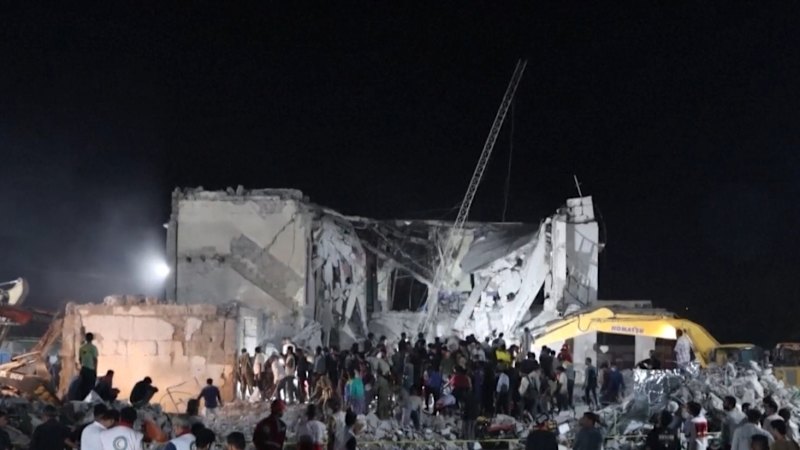
The recent surge in kinetic activity across the Middle East reflects a transition from traditional shadow warfare to a high-frequency attrition model. This shift is not merely an increase in volume but a fundamental change in the operational logic of deterrence. When state and non-state actors engage in iterative strikes, they are testing the structural integrity of regional defense architectures—specifically the integration of multi-layered interceptor grids and the economic sustainability of prolonged defensive postures.
To understand the current instability, one must deconstruct the conflict into three primary operational vectors: the Cost-Exchange Ratio, the Saturation Threshold, and the Intelligence-to-Strike Latency.
The Cost-Exchange Asymmetry
A critical failure in modern regional analysis is the tendency to measure success by "intercepted versus hit." This metric is shallow. The true driver of long-term strategic shift is the Economic Attrition Gradient.
In the current theater, the cost of an offensive asset—often a loitering munition or a tactical ballistic missile—frequently represents a fraction of the cost of the kinetic interceptor required to neutralize it. This creates a structural deficit for the defending party.
- Unit Cost Disparity: A $20,000 "suicide" drone forces the deployment of an interceptor missile costing between $100,000 and $2 million.
- Industrial Throughput: The manufacturing cycle for advanced surface-to-air missiles (SAMs) is significantly longer than the assembly time for low-tech offensive swarms.
- Depletion Tactics: Attackers utilize waves of "low-fidelity" assets to force the defender to expend high-fidelity inventory, leaving a window of vulnerability for a secondary, high-velocity strike.
This asymmetry means a "90% interception rate" can still constitute a strategic defeat if the defender’s inventory replenishment rate cannot match the attacker’s deployment rate.
The Saturation Threshold and Sensor Overload
Modern attacks in the Middle East have evolved from singular, high-value targets to Synchronized Multi-Axis Attacks. This tactic is designed to find the "Saturation Threshold"—the point at which a command-and-control (C2) system can no longer process incoming telemetry or prioritize targets effectively.
The Mechanics of Integrated Air Defense (IADS) Failure
A defense system operates on a finite number of fire-control channels. If an attacker launches twenty assets at a battery with sixteen channels, four assets are mathematically guaranteed to bypass the primary defense layer. The recent "rocking" of Middle Eastern stability is a direct result of attackers reaching this saturation point through:
- Divergent Velocity Profiles: Mixing slow-moving drones with high-speed cruise missiles to force the IADS to calculate multiple intercept solutions simultaneously.
- Geographic Convergence: Launching from 360 degrees to negate the directional advantages of radar arrays.
- Electronic Warfare (EW) Layering: Using localized jamming to "blind" specific nodes in the sensor grid, creating a temporary corridor for kinetic impact.
When an attack "rocks" a region, it is often because the target’s IADS suffered a buffer overflow in decision-making, not necessarily because the defense technology itself failed.
Intelligence-to-Strike Latency: The OODA Loop Compression
The effectiveness of these new attacks is governed by the speed of the OODA Loop (Observe, Orient, Decide, Act). In previous decades, the latency between identifying a target and executing a strike was measured in hours or days. Current regional dynamics have compressed this to minutes.
The proliferation of real-time satellite imagery, open-source intelligence (OSINT), and localized drone reconnaissance allows for Dynamic Targeting. This means attackers are no longer hitting static coordinates; they are hitting moving convoys, temporary installations, and personnel clusters with high precision.
The Vulnerability of Fixed Infrastructure
Fixed infrastructure—ports, refineries, and airbases—is becoming increasingly difficult to defend. The "fixity" of these assets makes them perpetual targets for iterative testing. Attackers use "probing strikes" to map the exact response time of the defender’s quick-reaction forces (QRF) and interceptor batteries. Each successive attack is a data-gathering mission that refines the next strike’s probability of kill ($P_k$).
Logistics as a Combat Variable
The regional instability is inextricably linked to the Logistics of Displacement. Every attack on a shipping lane or a fuel depot has a cascading effect on the price of insurance and the speed of the global supply chain. This is the Geopolitical Multiplier.
When a maritime corridor is threatened, the cost is not just the physical damage to a hull; it is the rerouting of 10% of global trade. This "tax" on the global economy acts as a soft-power weapon, pressuring international actors to intervene or make diplomatic concessions they would otherwise avoid. The attack is the "signal," but the economic disruption is the "payload."
Identifying the Breakpoint
The current trajectory suggests we are approaching a Decoupling Point. This is the moment where the political cost of restraint exceeds the military cost of a full-scale escalation. Several variables determine this threshold:
- Redline Erosion: When a "redline" is crossed without a proportional kinetic response, the deterrent value of that redline drops to zero, inviting more aggressive testing.
- Internal Political Friction: In many Middle Eastern states, the domestic pressure to respond to perceived weakness can force a government’s hand, leading to an unplanned escalation.
- Proxy Autonomy: The increasing technical sophistication of non-state actors means they no longer require direct oversight from their sponsors. This reduces the "command brake" and increases the likelihood of a catastrophic miscalculation.
The Strategic Pivot
To stabilize the theater, the defense philosophy must move away from "Perfect Interception" toward Proactive Disruption. This involves targeting the manufacturing and assembly nodes—the "Left of Launch" strategy.
Waiting for the asset to enter the terminal phase of its flight is a losing economic game. Instead, the focus must shift to:
- Supply Chain Interdiction: Disrupting the flow of dual-use components (microchips, engines, carbon fiber) required for drone and missile production.
- Cyber-Kinetic Integration: Using non-kinetic means to disable the C2 infrastructure that coordinates multi-axis strikes.
- Distributed Defense: Moving away from centralized, high-value radar hubs toward a mesh network of low-cost sensors and mobile interceptors.
The Middle East is currently the global laboratory for 21st-century attrition warfare. The "attacks" mentioned in surface-level reports are actually data points in a massive, high-stakes simulation. The actor who successfully manages their Cost-Exchange Ratio while maintaining a high OODA Loop frequency will dictate the regional order for the next decade. Success requires the immediate transition from static defense to an agile, preemptive posture that targets the attacker's industrial capability rather than their individual munitions.