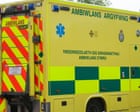
A major road incident forces us to look directly at the infrastructure connecting our rural communities. Just after midday on Tuesday, June 23, 2026, emergency crews rushed to the A484 on the outskirts of Kidwelly, Carmarthenshire. A First Bus X11 service traveling between Swansea and Llanelli had flipped onto its side near a roundabout. The scale of the crash forced Dyfed-Powys Police to declare a major incident. It took more than five hours of intense, multi-agency coordination before the emergency declaration was officially stood down at 5.30pm.
Nineteen people were injured in total. First responders handled the chaotic scene with precision, ensuring that all passengers were removed from the overturned vehicle by mid-afternoon. While thirteen individuals were assessed and discharged right at the roadside, six people required transportation to local hospitals.
Fortunately, none of the injuries are believed to be life-threatening. However, the operational strain on regional resources highlights a fragile reality for rural healthcare and transit networks.
The Anatomy of the Response on the A484
When a large transit vehicle overturns, the logistical challenge is immediate. Two Wales Air Ambulance helicopters landed near the scene, joining a fleet of ground paramedics, fire crews, and police officers. The collision occurred around 12.20pm near the Parc y Bocs roundabout, blocking a vital artery that connects local coastal towns.
Emergency teams quickly established a triage system to manage the casualties. For those who escaped severe physical injury but faced shock and displacement, local community infrastructure filled the gap. The John Burns Foundation centre in Kidwelly opened its doors as an emergency rest centre, providing shelter, welfare arrangements, and immediate comfort. By late afternoon, the individuals using the center had departed, showcasing how quickly local organizations can pivot to support emergency services during a crisis.
Local hospitals felt the impact immediately. The Hywel Dda Health Board issued an urgent directive to the public, warning that accident and emergency departments were facing heavy pressure. The board asked residents with non-emergency issues to utilize NHS 111 Wales or community pharmacies, transparently noting that waiting times would spike as doctors prioritized the crash victims. This standard but vital protocol keeps critical care open for those who truly need it most.
Commuter Fallout and Heatwave Complications
The crash didn't just impact those on the bus. It paralyzed local traffic on a day when regional temperatures were climbing. Realizing that drivers were trapped in standstill queues, Dyfed-Powys Police took the unusual step of issuing heat safety warnings directly to stranded motorists. Officers urged people to find shade, stay hydrated, keep a close eye on children, and explicitly reminded drivers not to leave pets in vehicles.
Local representatives quickly stepped in to manage public safety messaging. Nia Griffith, the MP for Llanelli, publicly urged drivers to stay entirely clear of the area, advising them to map out alternative routes between the Parc y Bocs roundabout and Llandyfaelog Road. In the Senedd, Welsh Government Minister Heledd Fychan kept lawmakers briefed on the evolving situation during plenary sessions.
The physical recovery of a flipped bus is an intricate process. Long after the passengers were safe, the road remained shut so collision investigators could map tire tracks, examine the vehicle's mechanics, and piece together the final moments before the crash.
What This Means for West Wales Transit Safety
While we wait for the official investigation to wrap up, this incident raises serious questions about public transit safety on rural roundabouts and A-roads. First Bus Franchising, which runs the X11 route, dispatched a support team from its Ammanford depot to assist the driver and cooperate with authorities. Managing Director Zoe Hand reiterated that safety remains the company's absolute priority.
Even so, crashes involving overturned heavy vehicles often point to a combination of tricky road geometry, unexpected traffic flow changes, or sudden visibility issues. Navigating a large bus through rural roundabouts requires absolute precision, and when something goes wrong, the high center of gravity makes a rollover highly likely.
If you regular travel these routes or manage commercial fleets, this incident serves as a stark reminder of how fast a routine trip can change.
If you are a commuter in Carmarthenshire, check the latest traffic feeds from Traffic Wales before setting out tomorrow morning. The A484 investigation will likely impact local secondary roads for some time. For fleet operators, use this moment to run a quick audit on your drivers' rural road safety training, focusing specifically on roundabout approach speeds and weight distribution management in hot weather. Keep an eye out for the formal report from the collision investigation unit over the coming months to understand the exact mechanical or environmental factors that caused the rollover.
/894596182-838.2202908273578apartamentocom2quartosavenda55mnocentrosaoleopoldo3.jpg)