Geopolitical analysts love a good choke point. For decades, the consensus surrounding Middle Eastern energy security has treated Kharg Island—the terminal handling roughly 90% of Iran’s crude exports—as the ultimate economic doomsday button. The narrative is lazy, predictable, and repeated ad nauseam by think tanks: if an adversary strikes Kharg Island, Iran’s economy collapses, global oil prices spike to $150 a barrel, and Western economies slide into a recession.
This conventional wisdom is completely wrong.
Threatening or even executing a strike on Kharg Island is not the strategic trump card the West believes it is. In fact, obsessing over this single point of failure ignores the structural evolution of global energy markets, the reality of shadow banking, and the actual mechanics of Iranian crude distribution. The risk isn’t a global economic meltdown; the risk is that striking Kharg exposes the sheer impotence of Western energy sanctions.
The Myth of the $150 Oil Spike
The primary argument against targeting Kharg Island relies on a flawed understanding of supply elasticity. Analysts look at Iran’s current export numbers—hovering around 1.5 million to 1.8 million barrels per day—and assume removing that volume instantly breaks the global supply chain.
It doesn’t.
First, consider global spare capacity. OPEC+ currently sits on millions of barrels per day of offline capacity, intentionally held back to prop up prices. Saudi Arabia, the United Arab Emirates, and even non-OPEC producers like the United States (which hit record production levels of over 13 million barrels per day) can easily absorb a localized shock.
Second, the market has already priced in Iranian disruption risk for a decade. True commodity shocks happen when unexpected disruptions hit transparent markets. Iran’s oil is neither unexpected nor transparent.
The Illusion of "Lost" Barrels
When geopolitical commentators scream about Kharg Island, they picture a sudden, permanent vacuum in global supply. Having spent years tracking illicit capital flows and energy logistics in the Middle East, I can tell you that the physical terminal is only half the story.
If Kharg Island were taken offline tomorrow, global markets would see a temporary knee-jerk price spike driven by algorithms and panicked paper traders. Within weeks, reality would assert itself. The global economy does not run on paper futures; it runs on physical molecules. And those molecules have a funny way of finding a market.
Why Iran's "Ghost Fleet" Makes Kharg Obsolete
To understand why a strike on Kharg Island fails to achieve its strategic objectives, you have to understand the Tejarat-e-Siah—the black trade. Iran does not export oil like a normal nation-state. It operates a decentralized, highly fluid maritime network that defies traditional interdiction.
- Ship-to-Ship (STS) Transfers: A massive portion of Iranian crude is blended, re-flagged, and transferred between tankers in the South China Sea, the Malacca Strait, and the Persian Gulf long before it reaches its final destination.
- The Chinese Independent Refineries ("Teapots"): Mainstream media often implies that Iranian oil goes to global state-owned giants. It doesn’t. It goes to small, independent refineries in China’s Shandong province. These refineries pay in Renminbi (RMB) via localized regional banks that have zero exposure to the US dollar financial system.
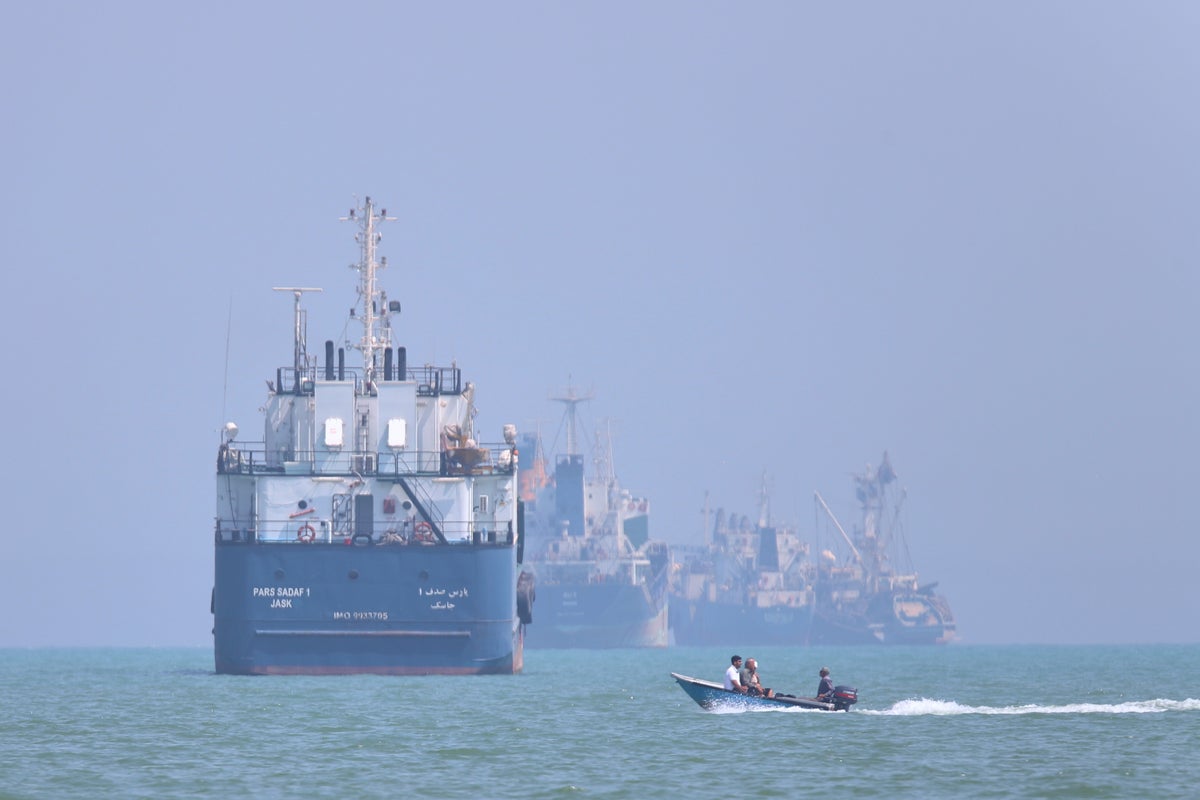
- Alternative Export Points: Kharg is the hub, but it is not the only spoke. Iran has spent the last five years developing the Jask terminal, located outside the Strait of Hormuz. While Jask's current capacity is limited compared to Kharg, treating Kharg as a single point of failure ignores Tehran's active efforts to diversify its export geography.
If Kharg Island is destroyed, Iran's immediate export volume drops, but the premium on its remaining illicit barrels skyrockets. The network doesn't die; it becomes more lucrative for the smugglers.
Dismantling the Consensus: "People Also Ask"
The debate surrounding Iranian energy infrastructure is plagued by poorly framed questions. Let’s correct the record on the three most common assumptions.
"Will attacking Kharg Island bankrupt the Iranian regime?"
No. This question assumes the Iranian government operates on standard corporate accounting. The Islamic Revolutionary Guard Corps (IRGC) controls the smuggling networks. When supply contracts, the black-market price increases.
I have watched Western policymakers apply traditional economic models to sanctioned regimes for twenty years, and it fails every time. When you restrict volume but increase the risk premium, you enrich the specific criminal elements inside the regime who control the illicit distribution channels. The civilian population suffers, but the hardliners running the state security apparatus get a larger slice of a smaller, more expensive pie.
"Can the US Navy protect the Strait of Hormuz if Iran retaliates?"
This is the wrong question. The question isn't whether the US Navy can open the strait; it’s whether the threat of closure is more effective than actual closure.
Iran knows that actually closing the Strait of Hormuz is a suicide pact. It would alienate China, their primary economic lifeline. Therefore, Iran relies on asymmetric gray-zone tactics: limpet mines, drone swarms, and cyber warfare. Striking Kharg Island forces Iran to play its ultimate card, removing the ambiguity that gives them diplomatic leverage. Once the card is played, the deterrent value is gone.
The Counter-Intuitive Risk: Exposing Western Sanctions as a Bluff
The real danger of a strike on Kharg Island has nothing to do with the price of gasoline in Chicago or London. The danger is ideological and structural.
Right now, the United States enforces a global financial hegemony through the weaponization of the SWIFT banking system and secondary sanctions. Western leaders can pretend that their sanctions are what keeps Iranian oil in check.
"If an adversary bombs Kharg Island and Chinese independent refineries simply shift their sourcing to discounted Russian or Venezuelan barrels using non-dollar transactional networks, the illusion of Western market control vanishes."
A physical strike on Kharg is an admission that financial and diplomatic leverage has utterly failed. It exposes the reality that the West cannot police the global gray market. It accelerates the decoupling of the Eastern energy trade from Western financial clearinghouses.
The Strategic Alternative: Target the Ledgers, Not the Loading Docks
If the goal is truly to neutralize Iran’s economic leverage, blowing up concrete piers on an island in the Persian Gulf is an amateur's move. It creates a spectacular explosion for evening news broadcasts but accomplishes nothing long-term.
Instead of targeting the physical infrastructure, the focus must shift entirely to the financial plumbing.
- Abolish the "Teapot" Blindspot: The West routinely greenlights small Chinese regional banks because they are deemed "too small to matter" or too disconnected from the US financial system to care about sanctions. These banks must be targeted via cyber operations and secondary sanctions aimed at their logistics providers.
- Interdict the Insurance: Every ghost tanker requires maritime insurance, even if it’s from a fraudulent or shadowy provider based in a tax haven. Targeting the maritime registries of flags of convenience (like Gabon, Panama, or Palau) does far more damage to Iran’s export capacity than a Tomahawk missile ever could.
Stop looking at Kharg Island as the center of the geopolitical universe. It is a relic of 20th-century industrial warfare. The modern energy conflict is fought on digital ledgers, through front companies in Dubai, and via ship-to-ship transfers in international waters. Bombing the island won't stop the oil; it will only prove that the West has run out of real ideas.