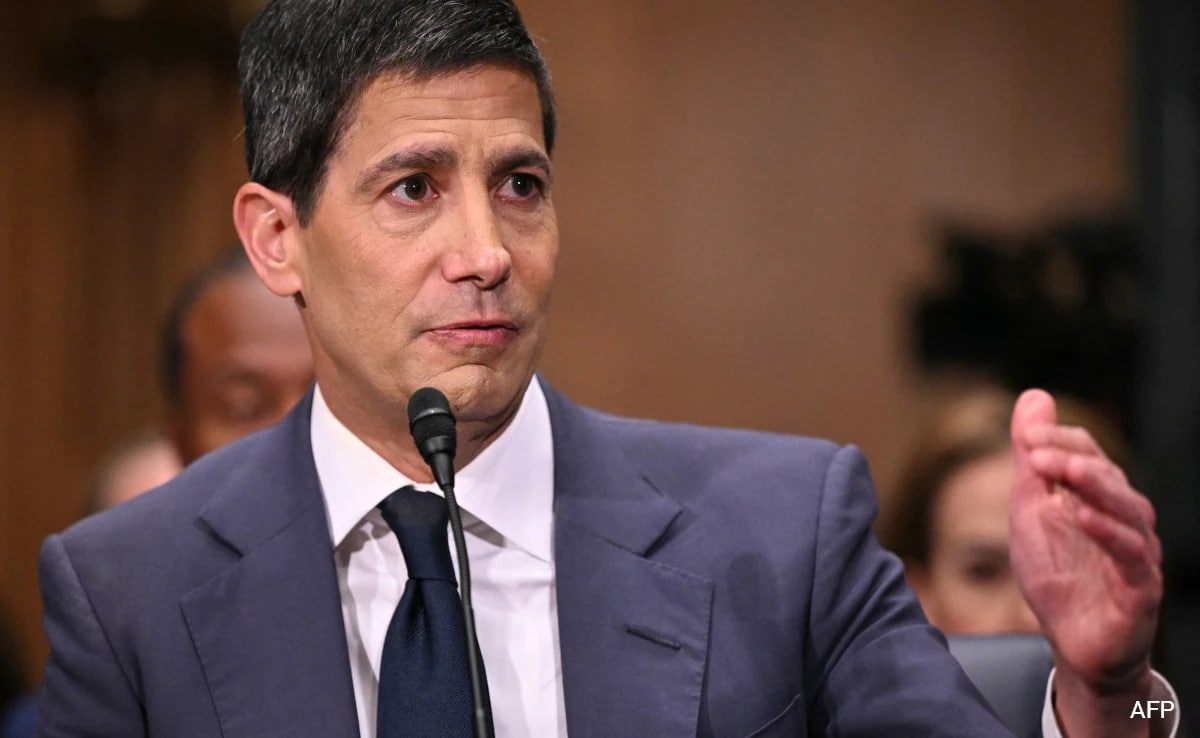
The Senate just handed Kevin Warsh the keys to the Eccles Building, and the financial press is busy swooning over the "return of the hawk." They are wrong. They are looking at a 2008 map to navigate a 2026 minefield. The consensus view suggests Warsh is the bold outsider who will finally dismantle the cult of the "Fed Put" and restore sanity to the balance sheet.
That is a fantasy.
Warsh isn't an outsider; he’s the ultimate insider with a better haircut. If you think his confirmation signals a radical departure from the era of easy money and interventionism, you haven't been paying attention to how the plumbing of global finance actually works. Warsh isn't coming to burn the house down. He’s coming to repaint the shutters while the foundation continues to rot.
The Myth of the Volcker Reincarnation
Every time a Republican president taps a new Fed Chair, the ghost of Paul Volcker is summoned from the depths of 1979. We are told this is the one. The man who will crush inflation, ignore the stock market's temper tantrums, and bring the federal funds rate to a level that actually reflects the cost of capital.
Warsh is not Volcker. He isn't even close.
Volcker operated in a world where US debt-to-GDP was roughly 35%. Today, it is screaming past 120%. When Volcker jacked up rates to 20%, he wasn't risking a systemic sovereign debt crisis because the interest payments on the national debt weren't yet the largest line item in the budget. Warsh is stepping into a trap. If he actually follows through on his "hawkish" reputation, he triggers a fiscal death spiral.
The math is brutal. For every 100 basis point increase in the average interest rate on Treasury debt, the federal deficit swells by billions. Warsh knows this. He is a creature of Morgan Stanley and the Bush-era NEC. He understands that the Fed is no longer independent; it is the silent partner of the Treasury Department.
The "Sound Money" Mirage
The "People Also Ask" sections of the internet are currently flooded with variations of: "Will Kevin Warsh return us to the gold standard?" or "Does Warsh support sound money?"
The answer is a resounding "No," but with better branding. Warsh advocates for a "price level target" or a "nominal GDP target" wrapped in the language of discipline. It’s a bait-and-switch. By shifting the goalposts away from a simple 2% inflation mandate to more complex, discretionary targets, the Fed actually gains more power to intervene, not less.
True sound money doesn't require a genius at the helm. It requires a predictable, boring rule. Warsh is an advocate for "discretionary' leadership. In plain English, that means he wants the flexibility to bail out the system when his friends on Wall Street start crying about liquidity. I’ve watched this play out for two decades. The "maverick" enters the room, looks at the flashing red screens on the trading floor, and realizes that being a hero is less fun than being a savior.
Why the Market Loves a Fake Hawk
Observe the reaction in the bond market. Yields haven't spiked into the stratosphere. Why? Because the big money knows the game. They know that a "hawk" in the chair provides the political cover necessary to keep the status quo alive.
If a known dove like Lael Brainard were at the top, every tick of inflation would be blamed on "reckless liberalism." But when Warsh presides over a 3.5% inflation rate while keeping the discount window wide open, he gets a pass from the donor class. He is the "responsible" face of permanent intervention.
The fatal flaw in the competitor's analysis—and the general media narrative—is the belief that the Fed Chair actually has a choice. They don't. The Fed is a prisoner of its own balance sheet.
The Hidden War on Digital Assets
Warsh has been vocal about the need for a Central Bank Digital Currency (CBDC) to maintain the dollar's "technological edge." This is where the contrarian alarm bells should be deafening.
The crowd that cheered for Warsh because they thought he’d be "pro-crypto" or "anti-inflation" is about to get a cold shower. Warsh’s version of the future isn't decentralized. It is a highly efficient, programmable dollar that allows the Fed to bypass the commercial banking system and implement monetary policy directly on your smartphone.
Imagine a scenario where the Fed decides the economy is "overheating." Under a Warsh-led CBDC regime, they don't just raise rates and hope the banks follow suit. They could, theoretically, apply a negative interest rate directly to your digital wallet to force you to spend or tax your transactions in real-time.
He isn't a luddite. He’s a technocrat who realizes that the old tools (the Fed Funds Rate) are broken. He’s looking for a bigger hammer.
The Reality of the "Independent" Fed
We love the story of the brave Fed Chair standing up to the President. It makes for great television. In reality, the Fed and the White House are joined at the hip by the necessity of funding a $2 trillion annual deficit.
Warsh was chosen because he is "market-friendly." That is code. It means he won't do anything to cause a 20% drawdown in the S&P 500. He is there to manage the decline of the dollar's purchasing power as gracefully as possible.
The "hawk" label is a PR stunt designed to calm the bond vigillantes. It buys the administration six to twelve months of "credibility" while they continue to run the printing presses to fund domestic industrial policy and foreign conflicts.
The Warsh Playbook:
- Talk tough: Use phrases like "fiscal discipline" and "monetary stability" in every speech.
- Act slow: Raise rates in tiny, telegraphed increments that the market has already priced in.
- Pivot fast: The moment a mid-sized regional bank wobbles, launch a "temporary" liquidity facility that is just QE with a different name.
- Consolidate: Use the transition to a digital dollar to ensure the US Treasury never misses a payment.
Your Strategy is Obsolete
If you are waiting for Warsh to "fix" the economy, you are the liquidity.
The smart move isn't betting on a return to 1990s-style stability. The smart move is realizing that the volatility is the point. Warsh’s tenure will be defined by "regime shifts"—sudden, violent swings in policy disguised as "data-dependent adjustments."
I have seen funds wiped out because they believed the Fed's rhetoric. They thought "Higher for Longer" was a promise. It wasn't. It was a suggestion. Warsh will be no different. He will talk like a gold bug and act like a Keynesian when the pressure mounts.
Stop looking at the man and start looking at the debt. The Fed Chair is just the person tasked with deciding who loses their shirt first: the savers or the speculators. Under Warsh, my money is on the savers getting the short end of the stick, just like they always do.
The Senate didn't confirm a savior. They confirmed a professional manager for an insolvent system.
Get used to the new boss. He’s the same as the old boss, just with a more convincing scowl.