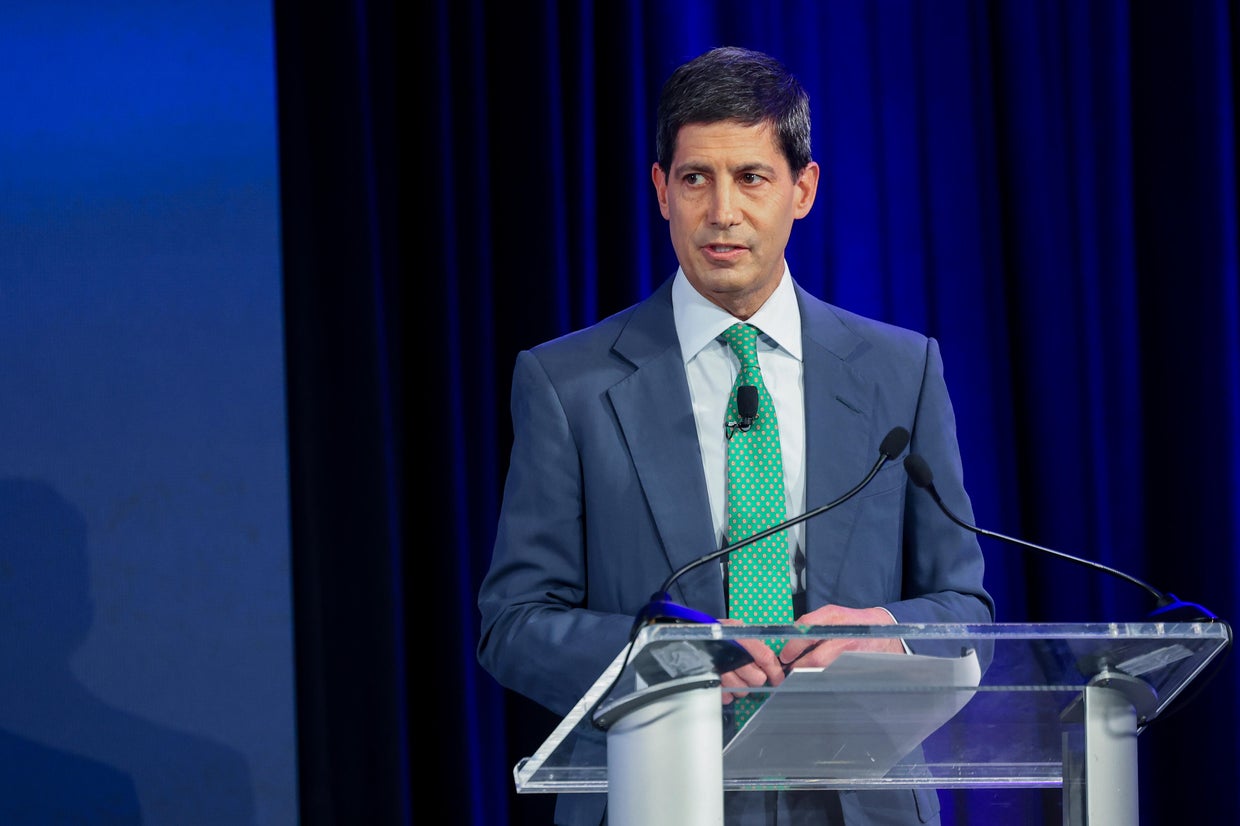
The Senate just handed Kevin Warsh the keys to the most powerful economic engine on the planet. By a razor-thin 54-45 margin, he’s officially the new chair of the Federal Reserve. This wasn't a standard bureaucratic handoff. It was a political brawl that makes previous confirmations look like a Sunday brunch. Most people see a headline about a "new Fed chair" and assume it's just another guy in a suit talking about basis points. They’re wrong.
This isn't business as usual. It’s a fundamental shift in how your money, your mortgage, and the entire US economy will function for the next four years.
The end of the Powell era
Jerome Powell is out, and he didn't exactly leave on a high note. The transition is happening against a backdrop of 3.8% inflation—well above that "magic" 2% target—and a bizarre legal cloud. For months, the Justice Department was sniffing around Powell’s tenure. While those probes were recently dropped, the damage to the Fed's image of "unshakable independence" was already done.
Warsh steps into a building that’s deeply divided. He’s not just taking the chair; he’s inheriting a rate-setting board where dissent has become the new normal. Last month alone, we saw more "no" votes on interest rate decisions than we’ve seen in three decades. You don't just walk into that kind of friction and fix it with a friendly memo.
Is he an inflation hawk or a political puppet
The biggest criticism leveled against Warsh is his perceived "flip-flop." Back in 2008 and 2011, when he first sat on the Fed board, he was a legendary hawk. He worried about inflation when it was barely a whisper. He hated the idea of "easy money" and pushed for higher rates to keep the economy from overheating.
Fast forward to today. Warsh has spent the last year echoing calls for rate cuts, aligning himself closely with the White House. Critics like Senator Elizabeth Warren aren't holding back. She basically called him a "sock puppet" for the administration. The fear? That he’ll slash rates to juice the economy for political points, even if it sends your grocery bill through the roof.
But let’s look at what Warsh actually says. He argues for a "regime change." He wants the Fed to stop trying to be a "general-purpose agency" and go back to being a narrow central bank. He wants a smaller balance sheet. In his view, if the Fed stops buying up so many government bonds, it can actually afford to keep interest rates lower without sparking a fire. It’s a theory. We’re about to see if it works in practice.
The Fetterman factor
One of the weirdest details of this confirmation was the vote tally. It was almost perfectly partisan, except for John Fetterman. The Pennsylvania Democrat broke ranks to vote "yes" with the Republicans. Why? It signals that even some on the left are tired of the status quo at the Fed. They want someone who at least acknowledges that the current model for fighting inflation isn't working for regular people.
What this actually means for your wallet
Forget the high-level theory for a second. You want to know what happens to your bank account. Here is the reality of the Warsh Fed.
Interest rates won't drop overnight. Despite the political pressure, the markets aren't betting on a massive cut at the June 16-17 meeting. Most analysts expect rates to stay parked exactly where they are—around 3.5% to 3.75%—for the rest of 2026. Warsh might want to cut, but he still has to convince 11 other voters on the board. He doesn't have a magic "lower rates" button on his desk.
Expect less "Fed-speak." One of Warsh's biggest gripes is that the Fed talks too much. He thinks the quarterly forecasts and constant speeches make the bank too rigid. He wants to pull back the curtain. If you’re used to the Fed telegraphing every move six months in advance, get ready for a more unpredictable central bank.
The independence test. This is the big one. If inflation keeps creeping up—and with oil prices surging, it might—Warsh will face a choice. Does he hike rates to save the dollar, or does he keep them low to satisfy the President? If he chooses the latter, the Fed’s credibility might never recover.
Stop watching the headlines and watch the data
If you’re trying to navigate this economy, don't get distracted by the political noise in D.C. The real story isn't the man; it's the math.
Watch the Consumer Price Index (CPI) numbers. April showed a 0.6% monthly jump. That’s high. If those numbers don't cool down by the June meeting, Warsh will be backed into a corner. He’ll either have to betray the people who nominated him by keeping rates high, or he’ll have to ignore the very inflation he used to be so afraid of.
Your next move should be simple. Lock in fixed rates where you can. The "predictable" Fed is gone. We’ve entered an era of "regime change," and in the world of finance, that usually means volatility. Don't wait for a 2% world that might not come back for a long time. Prepare for the Fed to be louder in policy but quieter in its promises.
Check your exposure to floating-rate debt now. If Warsh can't wrangle his board to lower rates, those high interest costs aren't going anywhere. Honestly, the smartest thing you can do is assume the "Warsh Pivot" will take a lot longer than the politicians claim. Keep your cash flexible and your eyes on the energy market. That’s where the real inflation battle is being fought, regardless of who sits in the big chair.