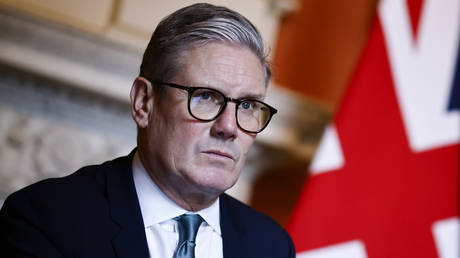
Keir Starmer didn’t expect to be playing firefighter on the world stage this early in his premiership. For months, the Downing Street line was all about stability and "resetting" relations with Europe. But reality has a way of punching through carefully crafted PR. The recent tension between the UK government and the incoming Trump administration has exposed a massive fracture in the Western bloc that Starmer can’t paper over anymore. It’s not just a minor disagreement over trade or defense. It’s a fundamental clash of worldviews that threatens to leave Britain stranded in the middle of the Atlantic with no reliable shore to land on.
You’ve likely seen the headlines about legal threats and Twitter spats. Behind that noise, there's a serious structural problem. The "Special Relationship" is looking less like a partnership and more like a hostage situation. Starmer is trying to maintain a bridge to a White House that seems increasingly interested in burning bridges down. If you think this is just about political theater, you’re missing the bigger picture. This shift affects everything from intelligence sharing to the cost of your weekly shop.
The end of the unified West as we know it
For decades, we’ve operated under the assumption that the UK, the US, and Europe were essentially on the same team. We shared values, enemies, and economic goals. That consensus is dead. Starmer’s recent admissions about "cracks" in the alliance aren't just a moment of honesty—they’re an acknowledgment that the old rules don't apply. Trump’s "America First" 2.0 isn't a fluke. It’s a doctrine.
The UK finds itself in a precarious spot. On one side, you have a European Union that’s increasingly protective and wary of any British "cherry-picking" post-Brexit. On the other, a US administration that views traditional alliances as transactional at best and parasitic at worst. Starmer’s challenge isn't just to be a diplomat. He has to decide which side of the crack he wants to stand on before it widens into a chasm.
Why the Trump rift is different this time
During the first Trump term, British officials largely tried to "wait it out." They assumed things would eventually go back to normal. That was a mistake. The rift today is deeper because the political DNA of both countries has changed. Starmer leads a Labour government that is ideologically miles apart from the MAGA movement. We’re talking about a fundamental disagreement on the climate, the role of international law, and the very concept of collective security through NATO.
Take the recent dispute over the Chagos Islands or the public back-and-forth regarding political interference in the US election. These aren't just "blips." They represent a total breakdown in communication. When the Trump team files legal complaints against the UK’s governing party, the diplomatic "good vibes" are officially over. Starmer can say he’ll work with whoever is in the White House, but you can’t collaborate with someone who thinks you’re actively working against their interests.
The Ukraine problem is the ultimate stress test
Nothing exposes the cracks in the Western bloc quite like the war in Ukraine. This is where the rubber meets the road for Starmer. The UK has been one of Kyiv’s most vocal and consistent supporters. We’ve sent tanks, long-range missiles, and billions in aid. But if Trump follows through on his rhetoric to scale back US involvement or force a "peace deal" that favors Moscow, Starmer is left holding the bag.
Europe can't fill the void left by the US. Not even close. If the Americans pull out or drastically reduce their support, the UK faces a brutal choice:
- Double down on support for Ukraine and risk a massive financial and military deficit.
- Follow the US lead and admit that the era of Western moral leadership is over.
Starmer knows this. His recent meetings with European leaders show a desperate attempt to build a "plan B." But a plan B without the US military machine is basically just a well-worded letter of protest.
Trade wars and the cost of the rift
Let's talk about your wallet. The rift with Trump isn't just about high-level geopolitics; it’s about trade. Trump has been very clear about his love for tariffs. He sees them as a tool of national power. For a UK economy that’s already struggling with low growth and the lingering effects of Brexit, a trade war with the US is the last thing anyone needs.
If Trump slaps a 10% or 20% tariff on all imports, British manufacturing takes a hit. Scotch whisky, cars, and pharmaceuticals—all of them become more expensive and less competitive. Starmer’s hopes for a UK-US trade deal were already slim. Now, they’re basically non-existent. The "cracks" he talks about will manifest as higher prices on shelves and fewer jobs in British factories. It’s that simple.
The defense spending trap
There's a lot of talk about the "2% of GDP" target for NATO defense spending. Trump wants more. He wants 3%, maybe more. Starmer is under immense pressure to increase UK defense spending at a time when the domestic budget is already stretched to the breaking point.
If the UK spends more on defense to appease a Trump-led Washington, where does that money come from? It comes from schools, the NHS, and infrastructure. If we don't spend it, we risk losing the security umbrella that has kept the peace in Europe for 80 years. It’s a classic "no-win" scenario. Starmer is trying to find a middle ground that probably doesn't exist. You can't be a leader of the "rules-based international order" and a favorite of a leader who wants to tear that order down.
Stop pretending the Special Relationship is fine
The biggest mistake Starmer or any commentator can make is pretending this is business as usual. It’s not. The West is fragmenting. We are seeing the rise of a multi-polar world where the UK’s influence is shrinking. Being a "bridge" between the US and Europe only works if both sides want to cross it. Right now, they’re both busy building their own separate islands.
Starmer’s admission of these cracks is a start, but it’s not a strategy. A strategy requires picking a lane. Do we lean into the "European pillar" of NATO and accept that our future is tied to the continent? Or do we try to navigate the unpredictable waters of a Trump presidency and hope we don't get crushed?
What happens next for the UK
The diplomatic dance is going to get a lot more awkward. Expect to see Starmer making more trips to Paris and Berlin. He’s trying to shore up European defenses because he knows the US can no longer be relied upon as the "adult in the room." This isn't just a temporary rift; it's a structural realignment.
If you’re watching this play out, don't focus on the handshakes. Look at the policy divergence. Look at the rhetoric coming out of the Cabinet. The "cracks" Starmer mentioned are going to define his premiership. He won't be judged by how well he talks about these rifts, but by how he protects British interests as the Western bloc continues to splinter.
Start paying attention to the UK’s defense procurement and its stance on international trade agreements. The shift away from the US is already happening in quiet rooms in Whitehall. The public "admission" was just the tip of the iceberg. We’re moving into a more fractured, more dangerous era of global politics. The era of the "Unified West" is in the rearview mirror. Prepare accordingly.