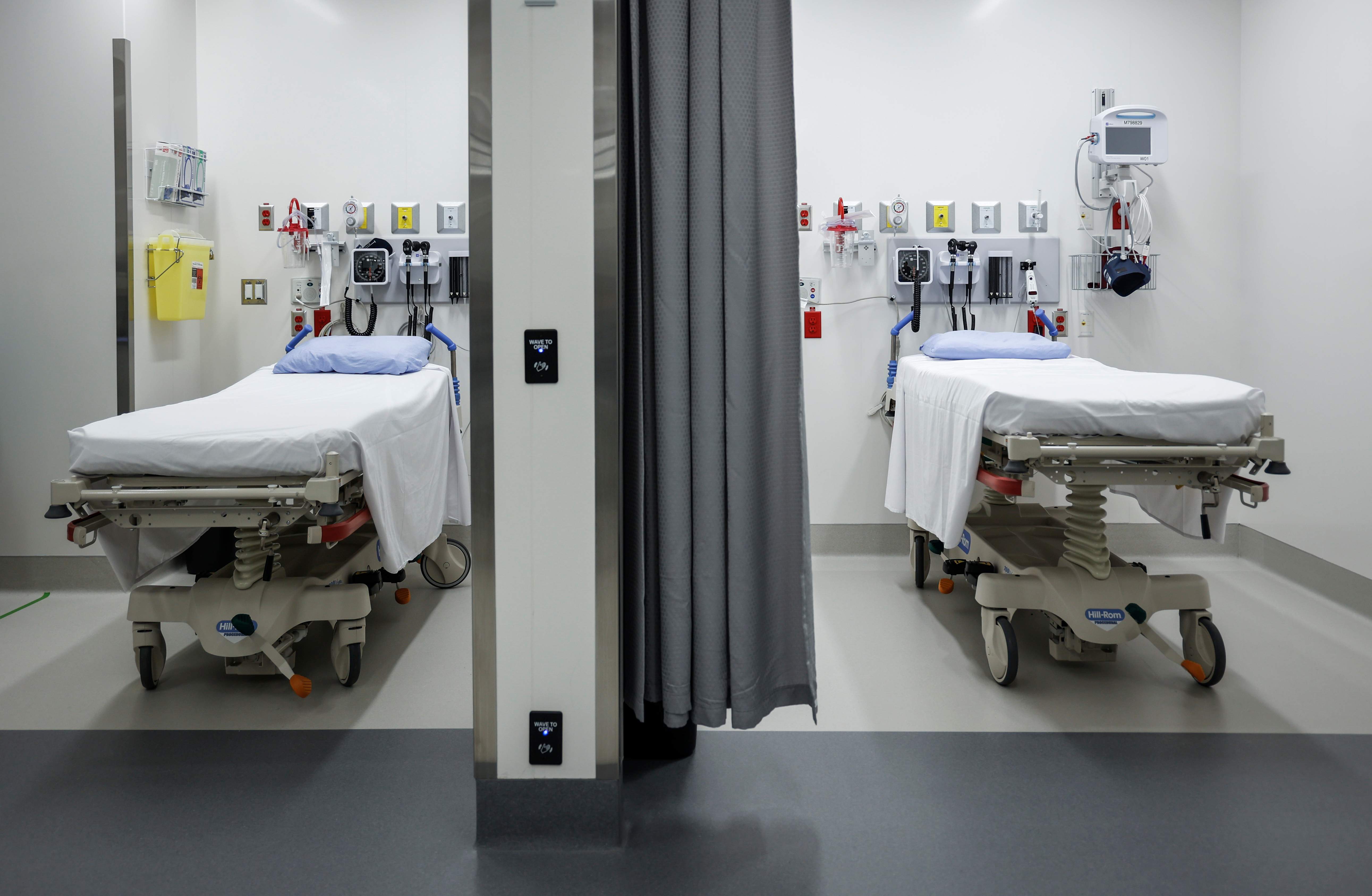
The headlines always read the same. Days stranded on a gurney. Fluorescent lights humming twenty-four hours a day. Plastic chairs that chew into your spine. Media outlets scream about systemic failure every time a mental health patient waits seventy-two hours in an emergency department for a locked psychiatric bed. The lazy consensus is uniform: this is an outrage, an administrative crime, a sign that the healthcare machinery is broken beyond recognition.
Everyone agrees the ER is the worst place for someone in a psychological crisis. Everyone demands more inpatient beds. Everyone thinks the solution is moving people faster into traditional psychiatric wards.
They are wrong.
I have spent years watching systems try to engineer away this bottleneck, pouring billions into brick-and-mortar psych units that operate on nineteenth-century custodial models. I have seen administrators panic over boarding times while ignoring the profound structural dysfunction of the destinations themselves. For a vast subset of patients, rushing them out of the emergency department and into a traditional psychiatric ward is not a rescue. It is an escalation of institutional trauma disguised as treatment.
The emergency room, for all its sensory assault and chaotic noise, acts as an unintended pressure valve. It is an open, highly monitored, medically integrated crucible. Stripping away those hours of waiting under the banner of efficiency often means shipping vulnerable people into locked facilities where autonomy dies and chemical straitjackets reign.
Let us dismantle the comfortable narrative.
The Myth of the Magic Bed
The core premise of the mainstream outcry relies on a seductive piece of institutional math: more psych beds equal better care. If a patient sits in the ER for three days, the logic goes, it is because some greedy hospital bean-counter or archaic bureaucracy is hoarding a room.
This argument collapses the moment you look at what actually happens inside those coveted inpatient units.
Traditional psychiatric hospitalization is rarely a therapeutic oasis. It is a holding pattern dominated by risk mitigation, legal liability, and defensive medicine. Once a patient crosses the threshold from the ER to the ward, their care shifts from acute stabilization to compliance enforcement. The primary objective of the ward is not your long-term psychological recovery; it is ensuring you do not harm yourself or anyone else while under their roof, shielding the hospital from litigation.
When we demand shorter ER wait times at all costs, we are essentially demanding a faster conveyor belt into an environment engineered for containment rather than healing.
I have watched hospitals scramble to clear their emergency departments, discharging patients into short-term units where they see a psychiatrist for precisely seven minutes every forty-eight hours. The rest of the time is spent pacing a linoleum hallway, watching daytime television at deafening volumes, and interacting with overworked techs who have zero clinical training.
Compare that to the modern emergency department. In an ER, you have immediate access to diagnostic labs, toxicology screenings, neurological evaluations, and physicians trained to rule out physiological mimics of psychiatric distress. A staggering number of patients presenting with acute behavioral symptoms are actually suffering from metabolic imbalances, severe infections, drug toxicity, or neurological events.
Throw those patients onto a psych ward too quickly, and you miss the medical root cause entirely. You treat a thyroid storm or an encephalopathy with antipsychotics because the chart says acute psychosis.
What the Data Actually Tells Us
Look closely at the emergency department throughput metrics. The average wait time for psychiatric boarding has indeed climbed over the past decade, often stretching past forty-eight hours in urban centers. But look at what happens during those hours.
For many patients, the acute spike of a crisis has an expiration date. Crisis is an emotional weather event. It storms violently, destroys everything in its path, and then—if the person is kept safe and unburdened by immediate life choices—it begins to clear.
The emergency department, despite its hostile aesthetic, provides a neutral holding zone where time itself does the heavy lifting. A patient arrives in a state of chemical or situational frenzy. They scream, they weep, they threaten. Twenty-four hours later, wrapped in a blanket, fed three mediocre meals, and distanced from the toxic environment or interpersonal trigger that broke them, the acute panic subsides.
If you had forced an immediate transfer to a locked ward during hour two, that patient would have been institutionalized, dosed with heavy sedatives, and branded with a formal inpatient admission on their medical record. By letting them wait in the ER, the system accidentally gave them the one thing they needed most: a cooling-off period that avoids permanent escalation.
Of course, this does not excuse the physical reality of a stretcher in a hallway. Nobody wants a vulnerable person sleeping under harsh glare for three days. But conflating physical discomfort with clinical inadequacy is a lazy error. The fix is not building more cages; the fix is rethinking what a crisis stabilization space should look like.
The Contradiction of Integrated Care
We love to talk about holistic medicine until it is time to build a mental health facility. Then we segregate the mind from the body as if they belong to different species.
Traditional psychiatric units are physically and culturally isolated from general medical hospitals. They are often located in separate wings, separate buildings, or entirely different campuses. This separation creates a dangerous blind spot. When a psychiatric patient develops a physical complication—a cardiac arrhythmia from psychotropic medications, a severe infection, or respiratory depression—they have to be transferred back to an emergency room.
The ER is the only place in the modern medical complex where the mind and the body are forced to inhabit the same room.
When a patient waits in the ER, they are surrounded by general practitioners, internists, and emergency physicians who see the whole organism. If their blood pressure drops, someone notices. If they experience acute chest pain, an EKG is minutes away.
Rush that same patient into a psychiatric facility, and their physical health becomes secondary to behavioral management. The nurse-to-patient ratios on psych floors are notoriously thin for physical medicine. Vitals are checked less frequently. Physical complaints are frequently dismissed as psychosomatic manifestations of the underlying mental illness.
By fighting to eliminate ER boarding times without reforming the destination units, we are sacrificing physical safety for the sake of administrative optics. We want the spreadsheet to look clean. We want the average length of stay in the emergency department to drop from seventy-two hours to four hours.
We just do not want to talk about the spike in readmissions, medication errors, and unaddressed medical comorbidities that happens the moment we succeed.
Designing the Anti-Model
If we are going to fix this crisis, we have to stop asking how we can move psych patients into standard hospital beds faster. That is optimizing a broken pipeline.
Instead, we need to decouple crisis stabilization from both emergency departments and traditional psychiatric wards entirely.
Imagine a decentralized network of peer-led, medical-adjacent stabilization pods. These are not quiet white rooms with locked doors. They are low-stimulus, highly staffed environments where individuals in crisis can walk in, drop their bags, and decompress for up to five days without ever triggering an official hospital admission or wearing a paper gown.
These spaces require three non-negotiable elements:
- Radical Autonomy: Patients retain their phones, their clothes, and their right to leave. Coercion is the primary driver of psychiatric trauma; removing it changes the clinical trajectory instantly.
- Integrated Triage: On-site advanced practice providers capable of running basic metabolic panels and medication reconciliations within the first hour, eliminating the medical blind spots of standalone psych facilities.
- Peer Dominance: The primary staff members are not security guards in tactical vests or burnt-out techs passing out paper cups of pills. They are certified peer specialists—people who have walked through the fire of psychosis, addiction, and despair and survived.
When you offer this kind of environment, the demand for traditional inpatient beds plummets. Patients do not need three days on an ER gurney if they can walk into a stabilization pod within ten minutes of a crisis. And they certainly do not need a locked ward if they are given twenty-four hours of genuine, non-coercive sanctuary.
The Real Scandal
The scandal of psychiatric boarding is not that patients are waiting in the emergency room. The scandal is that our society has completely outsourced emotional distress to acute-care hospitals because we refuse to build social infrastructure that catches people before they fall.
We wait until a human being is standing on a ledge or screaming in a grocery store parking lot, dragging them into the most expensive, hyper-stimulating environment on earth—the emergency department—and then act surprised when the system chokes on the volume.
The emergency doctors are doing their best. The nurses are drowning. The patients are terrified.
Stop pretending that a shiny new psychiatric ward is a cure for a broken culture. Stop measuring success by how fast you can shove a traumatized human being out of the hallway and into a locked room out of sight.
Let the patient wait where they are safe, where their body can be monitored, and where the storm has room to pass. Then fix the world outside the hospital doors so they never had to come there in the first place.