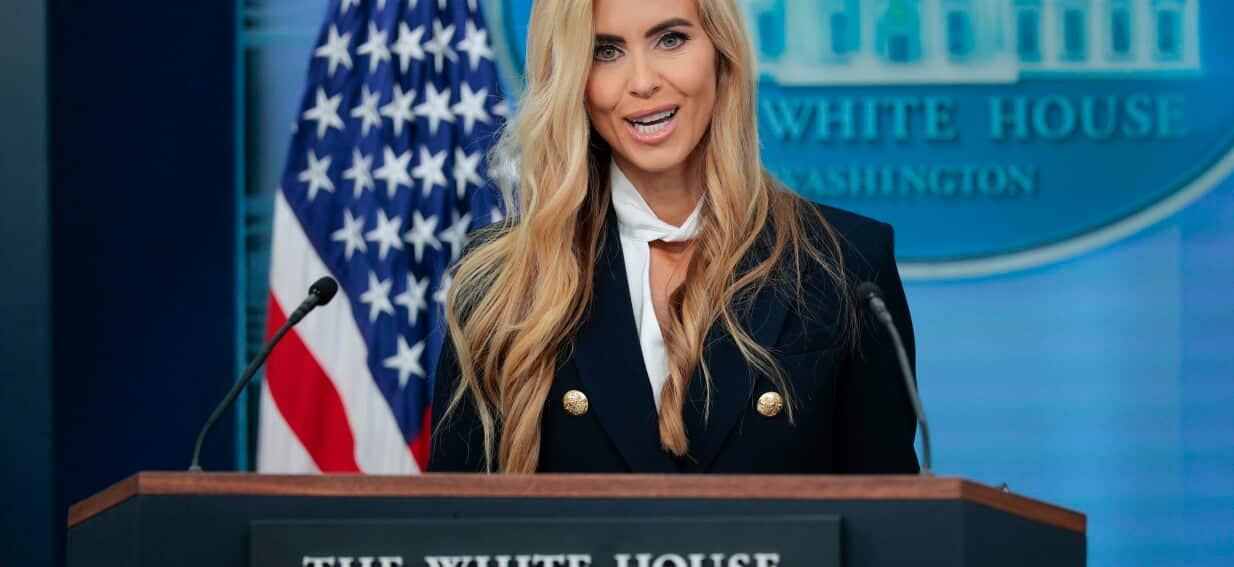
Katie Zacharia was President Donald Trump's 37th White House press secretary for five days in October 2026, making her the shortest-serving press secretary in American history. Appointed on October 9 after Karoline Leavitt stepped down at the end of August, Zacharia officially took the post on October 12, delivered a single roughly 15-minute briefing on October 13, faced immediate scrutiny over her legal credentials, and was ousted on October 16.
Five days. That is all it took to turn a cable-news loyalist into a Washington cautionary tale.
Anyone who has watched White House communications long enough knows the podium is a meat grinder. You do not get a grace period there, and you certainly do not survive on television enthusiasm alone. When a president picks a spokesperson based on loyalty and screen time rather than institutional command, the stress fractures show up almost immediately—sometimes before the first briefing even ends.
How a Cable Commentator Reached the Brady Briefing Room
Katie Zacharia did not walk into the West Wing out of nowhere. Born Kate Sharon Black in California, she earned a bachelor's degree in political science and government from Pepperdine University in 2007 and a law degree from Pepperdine Caruso Law in 2011. Early in her career, she worked as an intern for the Republican National Committee and the White House Office of Political Affairs during the George W. Bush administration, spent time in China working with a law firm and a nonprofit focused on migrant children, and later took on development, advisory, and advocacy roles tied to Pepperdine, Fix California, and the anti-abortion group White Rose Resistance.
In 2026, her orbit moved closer to Trump's inner circle. She briefly served as deputy assistant secretary for public affairs and spokesperson at the Department of Homeland Security early in the year, exiting less than two months later after Secretary Kristi Noem was fired. By June 2026, Zacharia was working as a senior communications advisor for Truth Social and the Trump Media and Technology Group, while appearing regularly as a commentator on networks like Newsmax and Fox News.
In Trump's media ecosystem, those appearances matter. Cable television is often an audition tape.
Yet getting picked for the job and surviving the job are two entirely different animals. According to reporting on the appointment, Trump's close ally and appointments secretary Natalie Harp pushed for Zacharia to succeed Leavitt, even as White House chief of staff Susie Wiles opposed bringing her in. The press secretary role had sat open since Leavitt's departure at the end of August, leaving a vacuum that heightened expectations whenever someone finally stepped up to fill it.
Inside the Fifteen-Minute Debut That Unraveled
The James S. Brady Press Briefing Room does not forgive hesitation. When Zacharia held her first and only formal briefing on October 13, 2026, the session lasted roughly 15 minutes. She spent a major share of her time at the podium thanking Trump and reading prepared lines about second-term achievements, including claims on prescription drug prices and upcoming midterm campaign travel stops.
Then came the slips and the optics. Critics and reporters pointed to a jarring gaffe in which she referred to her husband as "the president". She left the room after taking questions from only three predominantly conservative outlets, drawing pushback from across the political spectrum and sharp commentary from figures like CNN's Kaitlan Collins, Jimmy Kimmel, and writers at The Atlantic.
A press briefing is not a pep rally. When a spokesperson treats a hostile or skeptical room like a friendly panel show, every stumble becomes a headline.
Press secretaries earn their keep when the room turns cold. They know the policy memos inside out, they anticipate trap questions before a reporter finishes asking them, and they keep the president's message disciplined without turning themselves into the story. Zacharia looked rattled by the intensity of the scrutiny, reportedly telling Trump and others that the week since her selection had been far rougher than she anticipated.
The Bar Exam Dispute and Legal Scrutiny
Even as the briefing fallout settled, a sharper problem emerged: her legal credentials. While Pepperdine confirmed she earned her J.D. in 2011, reporting indicated she took the California bar exam in 2011 and did not pass.
On October 14, 2026, the nonprofit Campaign for Accountability filed a complaint with the State Bar of California asking regulators to investigate whether Zacharia had violated state law by presenting herself as a lawyer. Zacharia later pushed back on the significance of the exam in public remarks, calling the results "somewhat inconsequential" given that she had lived in China with her husband, while critics noted that holding a law degree is not the same as holding an active license to practice law in California.
In Washington, credential disputes rarely stay confined to bar associations. They feed a broader narrative of sloppy vetting. When an administration already faces questions about how quickly senior roles are filled or vacated, any ambiguity on a resume hands opponents an easy lever to pull.
| Dimension | What Happened in October 2026 | Why It Mattered |
|---|---|---|
| Tenure Length | Five days in office, from October 12 to October 16 | Shortest tenure on record for a White House press secretary, surpassing Jonathan Daniels's 19-day stint in 1945 |
| First Briefing | Roughly 15 minutes on October 13; took questions from three outlets and made a verbal slip calling her husband "the president" | Signaled lack of readiness for the daily grind of the White House press corps |
| Credential Clash | Ethics complaint filed with the State Bar of California over how she described her legal background | Turned a background detail into a public integrity story mid-week |
| Exit Mechanics | Trump publicly suggested she "reconsider" the job before her firing on October 16 | Left the press secretary seat vacant again and underscored internal friction |
Why Loyalty Without Preparation Backfires in the West Wing
There is a legitimate counter-argument worth making here, especially from defenders of Trump's approach to communications. In modern politics, traditional daily briefings often feel staged for cable clips and partisan combat rather than genuine persuasion. Supporters of Zacharia and of a more combative style argue that mainstream correspondents approach any conservative spokesperson with hostility, and that a president who already commands massive direct attention on social media and television needs loyalists who will defend him without flinching.
That argument has real weight when a spokesperson actually controls the room. Fierce loyalty can be an asset if it is paired with rapid-fire command of facts, thick skin, and institutional discipline.
Without those guardrails, loyalty alone is brittle. A spokesperson who is visibly bruised by criticism or who creates fresh controversies for the principal becomes a liability rather than a shield. By October 16, Trump himself told reporters he had urged Zacharia to "reconsider" taking the job—saying, "Is this for you, Katie? Because honestly, you don't need it"—before she was out after five days. The White House initially framed her exit around transitioning into another role later, yet the brevity of the run instantly invited comparisons to Anthony Scaramucci's 11-day stint as communications director in 2017.
What Her Ouster Reveals About White House Hiring
If you want to understand the mechanics of second-term White House personnel, look at what happened around Zacharia rather than just at Zacharia herself. Two realities stand out:
- Factional friction punishes weak rollouts: When internal allies champion a pick over the objections of senior management, any early stumble invites swift second-guessing.
- Television fluency is not executive readiness: Talking points on a friendly panel are a world apart from fielding rapid-fire questions on foreign policy, elections, and domestic controversies with the whole world watching.
- The podium remains a high-wire act: Even in an era of fragmented media and social platforms, the White House press secretary post still carries symbolic weight—and leaving it vacant or cycling through it fast signals instability.
In the weeks after her dismissal, Zacharia did not disappear from view; she remained vocal in media appearances—including a contentious BBC Newsnight exchange over midterm and election topics—even as reports swirled about whether she had any realistic path back into the administration. For observers watching how the White House manages its message, the lesson was already etched in stone: five days at the podium is a blink of an eye, yet it is plenty of time to see whether someone is built for the pressure.
Katie Zacharia BBC Newsnight interview
This video report captures Zacharia's combative post-ousting media appearance weeks after her brief five-day tenure as press secretary ended.


