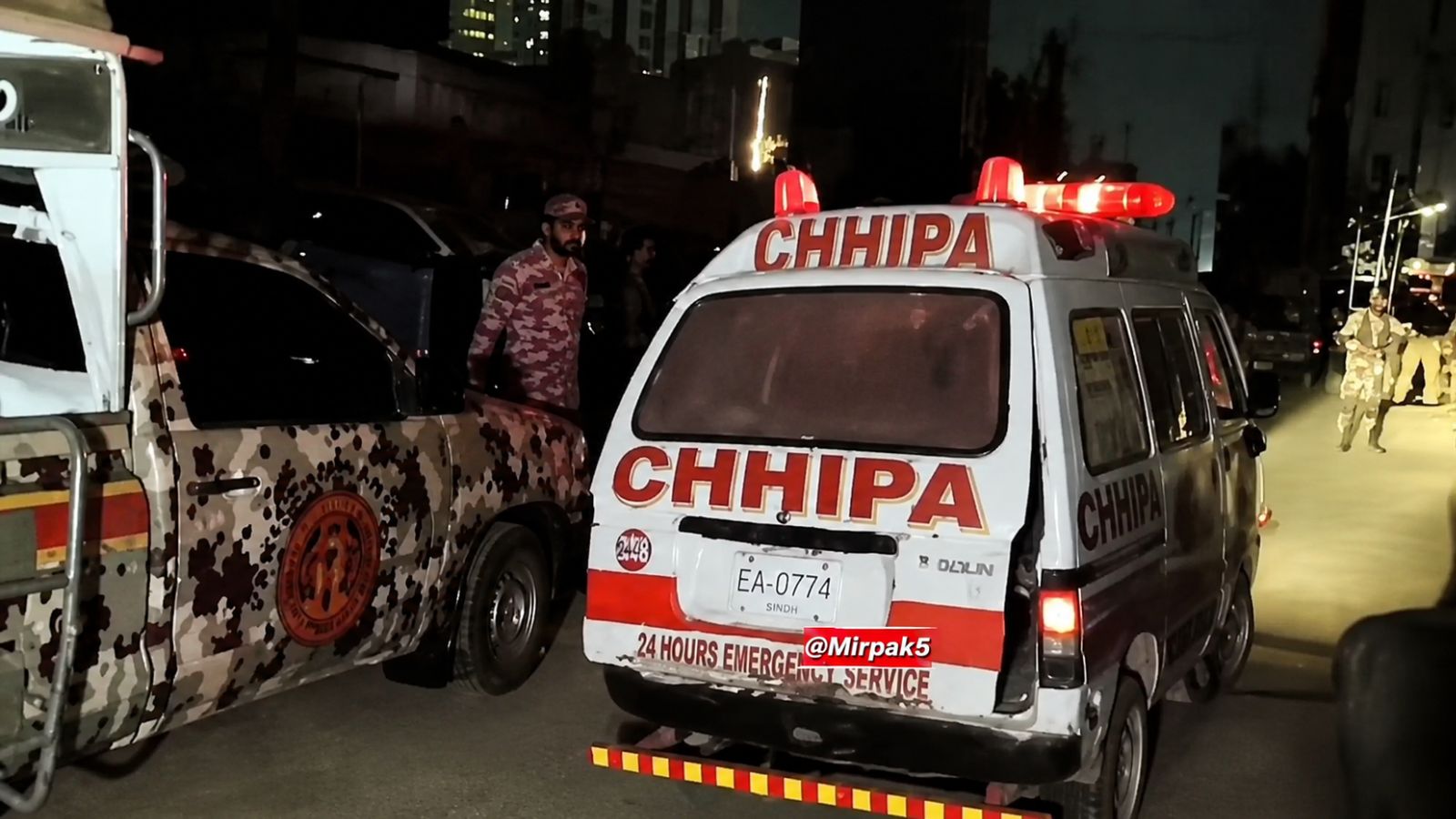
Standard media reporting on security incidents in Karachi follows a predictable, lazy script. A blast occurs near a university or a paramilitary Rangers outpost. The headlines immediately scream about a "security breach." Talking heads on television call for more checkpoints, higher blast walls, and heavier deployments. The consensus is always the same: the system failed because it wasn't rigid enough.
This analysis is completely wrong. Learn more on a connected issue: this related article.
The standard approach to urban security in Pakistan’s economic engine is actively creating the very vulnerabilities it seeks to eliminate. The hyper-fortification of specific zones—like university campuses and bureaucratic enclaves—does not deter asymmetric threats. It merely displaces them while paralyzing the economic and social lifeblood of the city. I have spent years analyzing regional security frameworks and economic metrics in urban conflict zones. I can tell you that treating a sprawling metropolis of over twenty million people like a series of isolated military garrisons is a recipe for systemic collapse.
The Mirage of the Hardened Target
When a flashpoint hits the news, the immediate bureaucratic reflex is to harden the target. If an explosion happens near a university or a Rangers office, the response is to add more sandbags, deploy more armed personnel, and choke local traffic. Further journalism by The New York Times explores related perspectives on the subject.
This strategy assumes that asymmetric actors possess a rigid, unyielding checklist of targets. They do not. Modern urban militancy operates on fluid, opportunistic logic. When you turn a government building or an educational institution into an impenetrable fortress, you don't eliminate the threat. You shift it fifty yards down the street to the unprotected mass of commuters stuck in the traffic jam caused by your new checkpoint.
Consider the mechanics of urban chokepoints. A checkpoint designed to screen vehicles creates a dense, static crowd of soft targets outside the perimeter. To an insurgent or an attacker, a line of cars idling for two hours due to security theater is far more attractive than the heavily armed installation behind it. The hardening of the core simply subsidizes the slaughter of the periphery.
The Economic Cost of Security Theater
You cannot separate Karachi’s security from its economic vitality. The city generates a massive chunk of Pakistan's federal tax revenue and handles the vast majority of its international trade. Yet, the current security paradigm treats commercial fluidity as an acceptable casualty.
Every container delayed at a poorly managed security cordon, every business meeting canceled because an entire district was locked down over a vague threat alert, destroys capital. Insurgents do not need to breach the gates of a high-value installation to win. If they can force the state to choke its own financial capital out of sheer panic, they have achieved their strategic objective.
The numbers bear this out. Decades of escalating internal security budgets have not yielded a proportional increase in stability. Instead, they have created an environment of permanent friction. True urban resilience does not look like a city trapped behind concrete blast barriers; it looks like a system that can absorb a shock and keep moving.
What the "Experts" Get Wrong About Intelligence
The common refrain after any urban attack is a demand for "better intelligence." This is usually code for expanding mass surveillance or conducting sweeping, heavy-handed sweeps of marginalized neighborhoods. This approach mistakes the volume of data for actionable insight.
The failure is rarely a lack of raw data. The failure lies in the institutional structure of the agencies handling it. Pakistan's urban security apparatus is deeply fragmented. Multiple civilian, paramilitary, and military intelligence wings operate in parallel, often hoarding information to protect their bureaucratic turf.
A single, unverified tip can trigger the lockdown of a multi-million-dollar commercial corridor because no single agency wants to take the responsibility of dismissing it. This creates a state of perpetual wolf-crying. When everything is a high-level threat, nothing is.
The Counter-Intuitive Path Forward
If fortification fails and mass surveillance misses the mark, what actually works? The answer requires a fundamental pivot away from static defense toward decentralized agility.
- Dismantle the Permanent Chokepoints: Replace fixed checkpoints with unpredictable, highly mobile units. Fixed checkpoints become predictable landmarks that attackers easily map and bypass. Mobile, data-driven interdiction disrupts an attacker’s reconnaissance phase.
- Decentralize Response Infrastructure: Instead of concentrating elite response forces in heavy, centralized garrisons that get stuck in Karachi’s legendary traffic jams, distribute small, highly trained tactical units across municipal sectors.
- Prioritize Spatial Fluidity: Security protocols must be audited for economic friction. If a security measure slows down the movement of goods or people by more than a defined threshold, it must be scrapped or redesigned. The preservation of economic velocity is a security priority, not a luxury.
The current trajectory is unsustainable. Turning universities into high-security compounds alienates the youth and stifles open thought, while doing nothing to stop a determined attacker. Turning commercial sectors into gridlocked mazes of shipping containers destroys the economic base required to fund the state apparatus in the first place.
Stop building higher walls. Start building a faster, more flexible city. The obsession with absolute control is making Karachi completely uncontrollable.