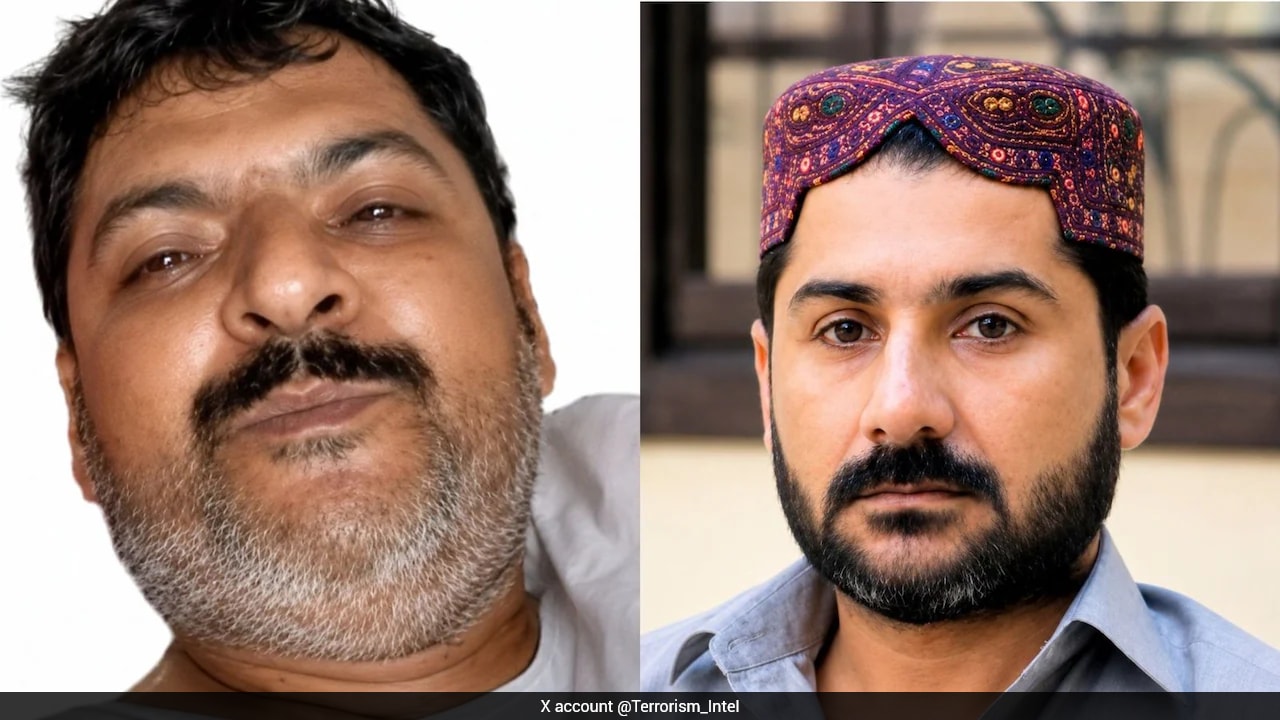
Every time a headline drops about gunfire in Lyari, the mainstream media rolls out the exact same tired script. A brother of a notorious underworld figure gets shot. Anonymous gunmen on motorcycles vanish into the labyrinthine alleys. Commentators rush to frame it as a routine gang war resurgence, a local turf battle, or another chapter in an endless saga of underworld vengeance.
It is lazy journalism at its finest, and it completely misses the structural reality of urban warfare in Pakistan's most misunderstood district.
Let us tear down the lazy consensus. The narrative that Lyari is merely trapped in a perpetual loop of ethnic and gang-related vendettas is a convenient smoke screen. It absolves the state of systemic governance failures and reduces complex socio-economic collapse to a cinematic mob movie. When Uzair Baloch's brother gets targeted, the immediate reaction is to look backward at past gang wars. The real story demands looking forward at how political patronage, stalled judicial processes, and structural neglect keep the district on permanent life support.
The Myth of the Autonomous Underworld
For decades, the standard media playbook treats neighborhoods like Lyari as autonomous zones governed entirely by cartel bosses and street thugs. This is false. No criminal syndicate operates in a vacuum, and certainly not one embedded deep within Pakistan's most populous financial hub without external oxygen.
I have watched analysts diagnose Karachi security issues from air-conditioned offices miles away, pointing fingers exclusively at localized factions. They treat these criminal networks as if they exist independently of political shifts, law enforcement crackdowns, and municipal abandonment.
Imagine a scenario where every major operation targeting underworld elements in Karachi is actually a realignment of political influence rather than an eradication of crime.
When high-profile targets or their family members get hit in densely populated neighborhoods like Kalakot or SingukLine, the police immediately cite "personal enmity." It is the ultimate administrative cop-out. It prevents any deeper audit of why weapons circulate so freely, why surveillance fails in areas designated as sensitive, and why the local economy offers zero legitimate upward mobility for young men.
The Economics of Impunity
Let us talk about the core driver that everyone avoids: economic desperation married to institutional failure.
Lyari is not violent because its residents are inherently lawless. It is violent because the formal economy locked its doors to them generations ago. When ports, transport syndicates, and local commerce are heavily taxed by informal power brokers, crime becomes the only scalable venture for survival.
The lazy narrative focuses on the individuals—the Balochs, the Rahims, the Arshad Pappus of the past. By personalizing the conflict, commentators turn a systemic governance crisis into a personality contest. It makes for gripping television, but it solves nothing.
Focusing on the brother of a jailed gang leader as if his shooting alters the geopolitical landscape of Karachi is a distraction. The underlying machinery—the weaponized youth, the drug supply lines, the extortion networks—remains untouched whether a specific individual survives an assassination attempt or not.
Dismantling the People Also Ask Fallacy
If you search for these incidents online, the automated queries pop up with predictable monotony.
Who controls Lyari now?
What happened to the Uzair Baloch network?
Is the gang war coming back to Karachi?
These questions are fundamentally flawed because they assume Lyari is managed by a single franchise that simply changes hands like a corporate board of directors. The reality is far more fractured. Control is decentralized, chaotic, and heavily transactional. The vacuum left by major crackdowns did not usher in peace; it atomized the violence into smaller, less predictable criminal cells that are much harder to monitor or negotiate with.
The traditional syndicate model is dead. What remains is a decentralized gig economy of violence. Petty extortionists, freelance hitmen, and corrupt enforcement cogs operate in a loose federation of mutual survival. Asking who "controls" Lyari today is like asking who controls the black market for spare parts in a collapsing metropolis. Nobody does. Everyone just takes their cut until the next high-profile headline forces a temporary crackdown.
The Real Cost of Looking Away
Media outlets love the drama of the underworld because it generates clicks without requiring investigative heavy lifting. Mention a notorious name, throw in a reference to motorcycle-riding assassins, and watch the engagement metrics climb.
Meanwhile, the structural rot deepens. Real security reform requires boring, tedious work. It means reforming police recruitment, breaking up entrenched political protection rings, investing heavily in education infrastructure, and dismantling the informal taxation networks that fund street-level muscle.
Nobody wants to read about municipal zoning, merit-based policing, or job creation programs. They want blood, bullets, and a familiar villain.
Until we stop treating Karachi's marginalized districts as crime thriller sets and start treating them as victims of systemic state abandonment, these shootings will continue to repeat on an endless loop. The gunmen vanish because the system allows them to vanish. And the media keeps chasing the ghosts while the foundation crumbles.