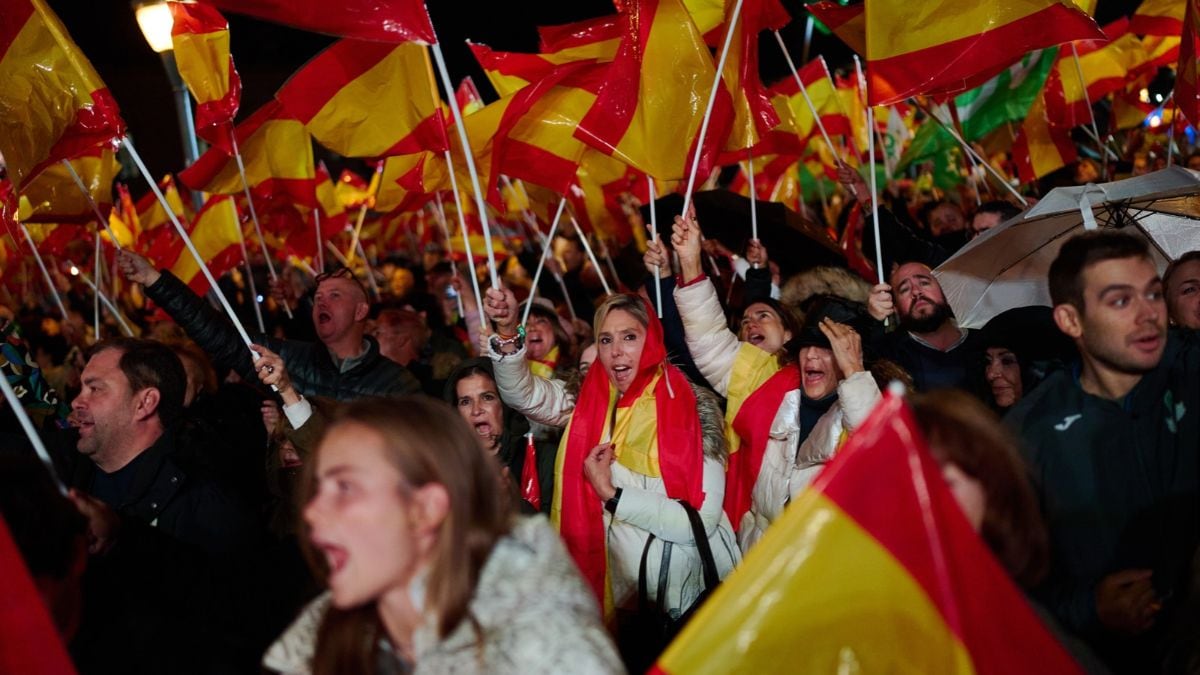
July in Madrid does not forgive hesitation. By noon, the asphalt along Paseo de la Castellana softens under a sun that feels less like weather and more like an accusation, driving locals into shuttered apartments and dark, tiled bars where the hum of ceiling fans competes with the midday television news.
In late May 2023, Prime Minister Pedro Sánchez stood before cameras at the Moncloa Palace and dropped a match into that dry summer air. His Socialist Workers’ Party, known across Spain as the PSOE, and its left-wing coalition partners had just suffered a punishing defeat in regional and municipal elections. Rather than limp through six months of parliamentary attrition until December, Sánchez dissolved the Cortes Generales and called a snap general election for July 23.
Polls published immediately after the announcement—by outlets including El País, El Mundo, and Spain’s Center for Sociological Research—pointed toward a decisive shift. Major survey aggregators projected that Alberto Núñez Feijóo’s conservative People’s Party, or PP, alongside the hard-right Vox party led by Santiago Abascal, stood on the threshold of securing an absolute majority of at least 176 seats in the 350-seat Congress of Deputies.
Statistics tell you who might win. They never tell you what happens in the kitchen when the numbers land on the table.
The Weight of a Ballot in Forty Degrees
To understand why a projected parliamentary majority in Madrid triggers tremors from Vigo to Valencia, imagine a hypothetical evening in a third-floor flat in Zaragoza. Let us call the family the Navarros—not real individuals, though millions of Spanish households mirror their exact fault lines.
Elena, forty-two, runs a small logistics firm that survived the pandemic through state-backed credit lines and labor reforms passed under Sánchez’s government. Across the dinner table sits her father, Mateo, seventy-one, a retired machinist who remembers when Spain transitioned out of Francisco Franco’s dictatorship in the late 1970s. Beside him is Elena’s twenty-year-old son, Lucas, staring at his phone between bites of tortilla.
For Mateo, the ballot is memory. When polling institutes project a governing alliance that could include Vox—the first time a party to the right of the mainstream conservatives would enter national government since Spain’s return to democracy—Mateo hears echoes he thought his generation had buried. Vox’s platform calls for rolling back regional autonomy, repealing gender-violence laws in favor of broader family-protection statutes, and tightening immigration enforcement. To Mateo, these are not abstract policy planks; they are direct challenges to the constitutional settlement of 1978 that stitched a fractured country together.
For Elena, the ballot is arithmetic. She respects her father’s history, yet she looks at her quarterly tax filings, rising borrowing costs from the European Central Bank, and the friction of hiring under stricter permanent-contract rules. When Feijóo campaigns on lowering income taxes, trimming bureaucratic red tape, and governing from the center-right without Sánchez’s reliance on Basque and Catalan separatist parties for parliamentary survival, Elena listens closely. She does not want extremism. She wants predictability.
And Lucas? Lucas barely looks up. Polling data consistently shows younger Spanish voters wrestling with some of the highest youth unemployment rates in the European Union and an urban housing market where renting a studio in Madrid or Barcelona consumes most of an entry-level paycheck. For him, the snap election scheduled in the dead heat of July feels like an ambush designed to keep people away from the polls while they are on vacation—or an urgent emergency brake pulled by a prime minister betting that fear of the hard right will mobilize a dormant left.
Three people. One table. Three completely different elections happening inside the same country.
Why Pedro Sánchez Pulled the Trigger
Politicians rarely call snap elections out of generosity. They call them when waiting costs more than jumping.
Consider what would have happened had Sánchez stayed the course until December 2023. Spain was set to assume the rotating six-month presidency of the Council of the European Union on July 1. Governing through half a year of bad regional headlines, endless parliamentary ambushes, and mounting friction inside his own left-wing coalition would have bled the PSOE dry. By calling the vote immediately after the May 28 regional losses—where the PP swept major cities like Seville and Valencia and seized regional governments across the map—Sánchez forced two things to happen at once.
First, he compressed time. A short, scorching summer campaign left little room for the newly formed far-left platform Sumar, led by Labor Minister Yolanda Díaz, to fracture into public infighting. Either the fragmented groups to the left of the Socialists unified under one banner within days, or they faced electoral annihilation under Spain’s D’Hondt proportional representation system, which punishes divided parties in smaller rural provinces.
Second, Sánchez forced Feijóo into an immediate, uncomfortable spotlight. Throughout May and June, the People’s Party had to negotiate regional coalition deals with Vox in places like Valencia and Extremadura. Every handshake between PP regional leaders and Vox negotiators gave Socialist strategists fresh footage for national campaign broadcasts. Sánchez’s core argument to hesitant moderate voters became blunt: a vote for Feijóo’s center-right vision was, mathematically, a vote that could hand cabinet ministries to Santiago Abascal.
Think of Spain’s parliamentary math like a two-key safe. Under the 1978 Constitution, forming a government requires an absolute majority of 176 votes in the first investiture ballot, or a simple majority—more yes votes than no votes—in a second round forty-eight hours later. Because Spain’s party system shattered its traditional two-party monopoly after the 2008 financial crisis and the 2015 rise of Podemos and Ciudadanos, almost no single party reaches 176 seats alone anymore. Every prime minister must turn two keys at once: winning enough seats of their own, and finding partners willing to turn the second key without blowing up the room.
The Invisible Stakes Behind the Polling Averages
When international headlines summarize Spain’s snap vote as a projected right-wing majority, they often miss the quieter institutional battles simmering beneath the surface. Having watched Spanish politics cycle through four general elections between 2015 and 2019, anyone who has stood outside the Congress of Deputies on Carrera de San Jerónimo during investiture week knows that the real drama begins after the ballots are counted.
Look at what sits on the table regardless of who takes the prime minister’s residence:
- The Territorial Question: Spain is not a federal state on paper, yet its seventeen autonomous communities wield vast powers over healthcare, education, and policing. Sánchez’s minority coalition relied on parliamentary support from Catalan pro-independence parties like Esquerra Republicana de Catalunya and the Basque nationalist EH Bildu—a partnership that infuriated conservative voters, particularly after the government pardoned jailed Catalan separatist leaders and reformed sedition laws. A PP-Vox majority promised a sharp reversal, tightening constitutional oversight over regional governments. Yet critics warned that centralizing power from Madrid could reignite street protests in Catalonia and the Basque Country, testing whether stability achieved through firmness holds or snaps.
- The Economic Tightrope: Macroeconomic figures painted an unusual contrast in mid-2023. Spain’s inflation rate had cooled faster than many eurozone peers, dipping below two percent by June, while tourism rebounded to record levels and employment numbers hit historic highs above twenty-one million contributors to Social Security. Even so, grocery bills remained stubbornly elevated compared to pre-2021 prices, and variable-rate mortgages—common across Spanish households—jumped sharply as interest rates climbed. Voters experienced an economy that looked healthy on spreadsheets in Brussels while feeling tight at the supermarket checkout in Murcia.
- The Postal Vote Logistics: Holding a national election on July 23 created a logistical stress test unprecedented in modern Spanish democracy. Millions of Spaniards routinely leave inland cities for the coast in late July. Postal vote applications surged past 2.6 million—more than double previous records—straining the state postal service, Correos, and turning administrative delivery deadlines into a partisan battleground over whether every citizen’s ballot would arrive in time.
A History That Refuses to Stay Quiet
To grasp why the prospect of a PP-Vox government carries such emotional voltage across Europe, you have to step back from daily polling trackers and look at the continent’s broader political weather.
Across Europe in 2022 and 2023, center-right parties increasingly tested governing arrangements with nationalist, populist, or hard-right movements—from Giorgia Meloni’s coalition in Italy to Sweden’s parliamentary confidence agreement with the Sweden Democrats. For decades, Spain stood out as an exception. Even during severe economic recessions, no major hard-right party won parliamentary representation after the early 1980s. Many observers assumed Spain’s lived memory of authoritarian rule acted as a permanent firewall.
That firewall cracked in December 2018, when Vox won twelve seats in Andalusia’s regional parliament, and broke open nationwide in 2019 when it captured fifty-two seats in the national Congress. Vox’s rise did not happen in a vacuum. It fed directly on anger over the 2017 Catalan independence crisis, cultural backlash against progressive social legislation—including laws on transgender rights, abortion access, and democratic memory—and economic anxiety in Spain’s depopulating interior, known as la España vaciada, or Emptied Spain.
Yet inside the People’s Party itself, the alliance remained deeply contested. Feijóo, a four-term regional president from Galicia who built his reputation as a pragmatic administrator rather than a culture warrior, openly stated throughout the campaign that he preferred to govern alone in a minority administration rather than bring Vox into the cabinet. His dilemma was merciless: if the PP won 150 or 160 seats, it would fall short of 176. Vox would hold the second key, and Abascal made clear he would not hand over his party’s votes for free.
Uncertainty hung over both camps. Would moderate swing voters in Madrid, Barcelona, and Seville reward Feijóo’s promise of calm management, or recoil at the price of his parliamentary arithmetic? Could Sánchez pull off a comeback similar to his 2019 survival, or had four years of polarization exhausted the electorate’s patience? Nobody—not the pollsters in Madrid, not the diplomats in Brussels, not Elena Navarro staring at her invoices in Zaragoza—could say with certainty how fifty million lives would pivot on a single Sunday in July.
The Quiet Hour Before the Urns Open
On the morning of July 23, before the sun climbs high enough to bleach the stone facades of Madrid’s Barrio de las Letras, election workers arrive at local schools and community centers to assemble cardboard voting booths and inspect clear plastic ballot boxes.
Outside, the streets are still cool. An elderly man walks slowly toward a polling station carrying an envelope folded neatly inside his jacket pocket. Across town, a young woman dragging a rolling suitcase stops at a school entrance on her way to Atocha train station, slipping her ballot through the slot before catching a morning train south toward Málaga.
Inside those translucent boxes, paper slips stack one atop another—white envelopes for the Congress of Deputies, sepia envelopes for the Senate—carrying the competing dreams, grievances, and calculations of a nation caught between memory and fatigue, waiting for nightfall to count what they have decided.