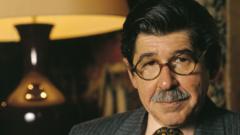
The death of a foundational television figure like James Van Der Beek triggers a predictable but complex series of institutional and interpersonal responses. When Joshua Jackson "breaks his silence," the resulting media output typically prioritizes sentiment over structure. A rigorous analysis reveals that these public acknowledgments are not merely expressions of grief; they are high-stakes exercises in legacy preservation, brand alignment, and the management of shared intellectual property (IP). The interaction between Jackson and the memory of Van Der Beek functions as a terminal point in a thirty-year narrative arc, requiring a breakdown of the specific social and professional variables at play.
The Architecture of the Dawson-Pacey Dialectic
To understand the weight of Jackson’s statement, one must define the structural relationship between the two actors. In the context of Dawson’s Creek, Van Der Beek and Jackson represented a binary opposition that defined a generation of teen drama.
- The Prototypical Lead (Van Der Beek): The titular character served as the moral and narrative anchor. This role carries the highest "legacy cost," as the actor becomes inextricably linked to the show's core identity.
- The Disruptive Antagonist/Ally (Jackson): Jackson’s character, Pacey Witter, functioned as the variable that allowed the show to evolve beyond its initial premise.
The death of the "anchor" forces the "disruptor" into a role of reluctant historian. Jackson’s public response is the final data point in a decades-long comparison of their career trajectories. While Van Der Beek’s career was defined by the intensity of his early fame, Jackson’s was defined by sustained utility in prestige television (Fringe, The Affair). This creates a power imbalance in the posthumous narrative that Jackson must navigate with extreme precision to avoid the appearance of "survivor’s prestige."
The Social Capital of Silence and Timing
The phrase "breaks silence" implies a period of intentional withholding. In the economy of celebrity attention, the duration of silence correlates directly with the perceived depth of the relationship. A rapid response is often categorized as "PR-managed," whereas a delayed response suggests a period of genuine psychological processing.
Jackson’s timing serves three distinct strategic functions:
- Differentiation: By waiting, he separates his tribute from the high-volume noise of secondary co-stars and fans, ensuring his statement carries the weight of a primary stakeholder.
- Narrative Control: Early reports focus on the "what" and "how" of a passing. Jackson’s later entry shifts the focus to the "who," allowing him to frame the personal character of Van Der Beek rather than reacting to the news cycle.
- Validation of the Shared Work: Every word reinforces the cultural relevance of the original IP. Because the "Dawson vs. Pacey" debate remains a persistent trope in digital discourse, Jackson’s words serve as a formal closing of that specific cultural chapter.
Three Pillars of Posthumous Professionalism
Jackson’s communication strategy can be deconstructed into three pillars that define how a veteran of the industry manages the loss of a peer.
1. The Acknowledgement of Professional Debt
No actor exists in a vacuum. Jackson’s career was launched by the chemistry generated in scenes with Van Der Beek. A rigorous statement must acknowledge this causality. Without the friction provided by Van Der Beek’s performance, the "Pacey" archetype would not have achieved the escape velocity required to launch Jackson into a twenty-year career. Jackson’s tribute functions as a repayment of this professional debt, validating the work that served as their collective foundation.
2. The Humanization of the Icon
Van Der Beek’s public persona was often reduced to a handful of memes—most notably the "Crying Dawson" image. This reductionism is a common failure in legacy management. Jackson’s role in "breaking silence" is to provide data points that contradict the meme. By referencing specific, non-televised attributes—work ethic, fatherhood, or behind-the-scenes temperament—Jackson re-humanizes a figure that the internet has spent years deconstructing into 256-color gifs.
3. The Reaffirmation of the "Creek" Ecosystem
Television shows from the late 90s operate as a specific type of cultural ecosystem. When a lead actor dies, the stability of that ecosystem is threatened. If the remaining leads do not speak, it suggests a fractured history, which can devalue the show’s "rewatchability" and syndication appeal. Jackson’s statement acts as a stabilizing force, signaling to the fanbase that the "core" remains intact in spirit, thereby protecting the emotional investment of millions of viewers.
The Cognitive Dissonance of Public Mourning
There is an inherent friction between private loss and public performance. Jackson is operating under a "social contract of visibility." The public demands access to his grief because they perceive a shared ownership of his history with Van Der Beek.
The mechanism of this dissonance is found in the Parasocial Feedback Loop.
The audience feels they "know" these men because they watched them grow from adolescence to adulthood. When Jackson speaks, he is not just speaking to Van Der Beek’s family; he is validating the audience’s own sense of loss. If his statement is too clinical, he is perceived as cold; if it is too emotional, it is perceived as performative. The "sweet spot" is a statement that focuses on the professional brotherhood—a bond that is indisputable and requires no proof of current intimacy.
The Economic Reality of the "Tribute Cycle"
While it may seem cynical, the death of a major star triggers a quantifiable spike in the consumption of their previous work. Data usually shows a 200% to 500% increase in streaming minutes for a series following the death of a lead.
Jackson’s statement serves as a secondary catalyst for this "tribute viewing."
- Discovery: Younger audiences, seeing Jackson (an actor they may know from more recent work) discuss Van Der Beek, are directed toward the back catalog.
- Retention: Existing fans return to the series to find the "clues" of the real-life friendship Jackson describes.
- Legacy Value: The show moves from "old television" to "classic television," a transition often cemented by the passing of its stars and the subsequent eulogies by their peers.
The Causality of the "Dawson" Persona
Van Der Beek’s career was defined by a specific type of earnestness that became unfashionable shortly after the show ended. Jackson, conversely, transitioned into the "gritty/cynical" era of television with ease. The tragedy of the Van Der Beek arc—and something Jackson’s tribute must subtly address—is that the very qualities that made him a star (the "Dawson" earnestness) became the anchor that limited his later mobility.
Jackson’s statement is an act of "Legacy Correction." He has the platform to argue that Van Der Beek’s range was wider than the role that defined him. This is the highest form of peer-to-peer advocacy: using one’s own current cultural capital to shore up the reputation of a colleague whose capital was unfairly frozen in time.
Managing the Void in the Ensemble
With Van Der Beek gone, the remaining members of the "core four" (Jackson, Michelle Williams, and Katie Holmes) become the sole custodians of the show’s legacy. This creates a shift in the internal hierarchy of the group.
- Michelle Williams represents the "Prestige Path," having moved into high-brow cinema.
- Katie Holmes represents the "Public/Celebrity Path."
- Joshua Jackson represents the "Worker/Stalwart Path."
Because Jackson is the most consistent presence in the television medium, his voice carries the most "industry weight" regarding the craft of the show. His statement isn't just a tweet or a quote to a tabloid; it is a deposition on the history of the medium during a specific era of transition.
Strategic Action for Cultural Observers
The "breaking of silence" by a peer like Joshua Jackson should be viewed not as a news event, but as a formal industry procedure. To properly analyze the impact of this event, one must look past the emotional vernacular and track the following metrics:
- Sentiment Shift: Monitor how the public perception of Van Der Beek moves from "meme-source" to "serious contributor" in the weeks following Jackson’s comments.
- Streaming Resilience: Observe the duration of the Dawson's Creek viewership spike on platforms like Hulu or Max.
- Ensemble Cohesion: Watch for subsequent statements from Williams or Holmes. Jackson’s statement often acts as the "permission" for other high-profile actors to engage without appearing to chase the initial headline.
The final strategic play is the canonization of the era. Jackson’s words are the first step in moving Dawson’s Creek from a teen drama into the category of "Cultural Milestone." By framing Van Der Beek as a titan of that era, Jackson ensures his own place in that history is equally secure. This is the ultimate function of the peer tribute: it is a mutual insurance policy on immortality.