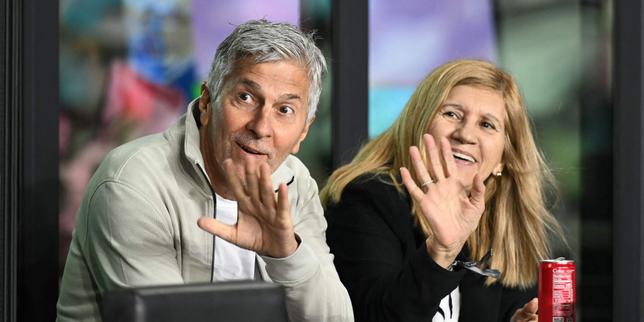
The football world lost a foundational figure when Jorge Messi passed away at the age of 68 in Rosario, Argentina. While headlines naturally focus on his role as the father and long-time representative of Lionel Messi, reducing Jorge to just an agent or a famous parent misses the entire point of how modern football history was shaped. Without Jorge's stubborn resolve, the greatest career in the history of the sport might have stalled out in a provincial town in South America before it ever truly began.
The Man Behind the Legend
Jorge Horacio Messi wasn't born into wealth or football royalty. He worked for years as a steelworker and chemical technician, balancing a demanding blue-collar life in Rosario with raising four children alongside his wife, Celia Cuccittini. Long before boardrooms and mega-million-euro contracts entered the picture, Jorge was just a father trying to solve a brutal practical problem: his exceptionally talented young son had a growth hormone deficiency that required expensive medical treatments.
Local clubs in Argentina couldn't or wouldn't foot the ongoing bills for the daily injections Lionel needed. Jorge didn't accept defeat quietly. He sought out opportunities across the Atlantic, betting everything on a hesitant trial with FC Barcelona in the year 2000.
The Barcelona Gamble
History remembers the famous story of a contract scribbled on a paper napkin at a Catalan tennis club, but people often forget the sheer disruption required to make it happen. Jorge packed up part of his family and moved to Spain, navigating a foreign bureaucracy while his son developed inside La Masia. It was a massive gamble. If Barcelona had walked away from the medical investment, the family's sacrifices would have yielded little.
Instead, Jorge stayed close. He became his son's primary sounding board, a fierce protector against overzealous executives, and eventually, his official agent. Lionel has often noted that he always sought his father's approval after every single match, needing that honest, unfiltered critique from the one person who cared more about his well-being than his stardom.
Navigating the Later Years
As Lionel's career evolved into a global enterprise, Jorge sat at the center of high-stakes negotiations, contract disputes, and eventual moves to Paris Saint-Germain and Inter Miami. Yet, despite handling enormous financial portfolios, he maintained his grounded, no-nonsense Argentine temperament.
Health struggles kept Jorge from traveling to the United States during the 2026 FIFA World Cup, a tournament that saw Lionel experience visible emotional moments on the pitch after dealing with private family worries back home. When media speculation occasionally crossed lines regarding his privacy, the Messi family responded swiftly and fiercely, protecting Jorge's dignity just as he had protected Lionel's career decades earlier.
Clubs like Newell's Old Boys, along with governing bodies like CONMEBOL, paid emotional tributes following his passing at a Rosario clinic. They remembered a man who possessed the vision and rigor to safeguard an extraordinary talent.
When you watch Lionel Messi play today, you are watching the product of a steelworker's stubborn refusal to let a medical condition define his son's ceiling. Jorge Messi left behind a legacy measured not just in trophies or contracts, but in the sheer willpower required to nurture the greatest player the game has ever seen.