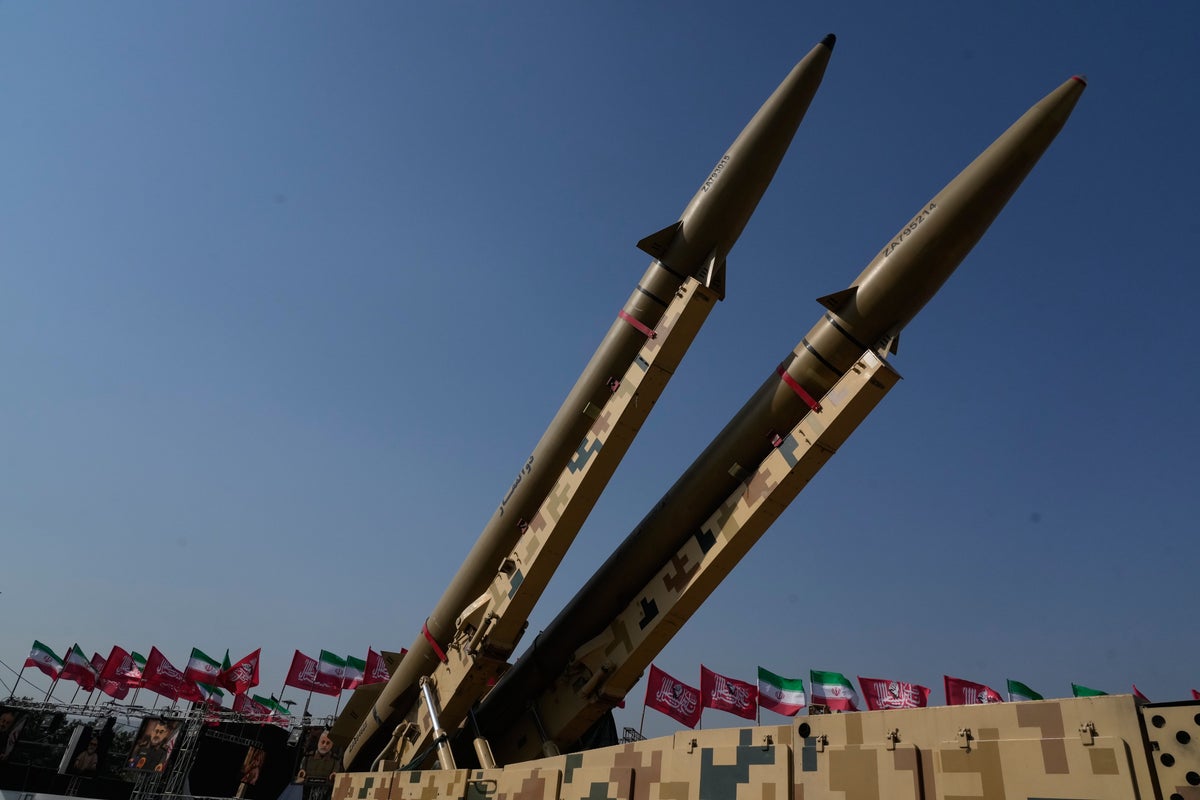
Every major newsroom spent the last twenty-four hours hyperventilating over a neat, tidy little fairy tale. The mainstream script reads like a Hollywood action sequence: the United States drops heavy kinetic ordnance on Iranian positions, Tehran retaliates with a barrage of ballistic terror, and brave regional allies like Jordan leap into the midnight sky to intercept the threats, saving Western civilization from fiery ruin.
It makes for great television. It also completely misunderstands how modern aerospace defense and sovereign state survival actually function in the Middle East.
I have spent years analyzing theater missile defense architectures, supply chains for interceptor batteries, and the grim calculus of regional military logistics. I have watched defense contractors and Pentagon briefers spin operational necessities into heroic theater time and time again.
The lazy consensus says Jordan stepped up as a selfless defender of international order. The reality is far more brutal, far more transactional, and entirely divorced from the diplomatic poetry being peddled on cable news. Amman did not fire expensive surface-to-air missiles into the dark because King Abdullah suddenly decided to audition for NATO. They did it because an uncontrolled barrage of foreign ordinance tearing through Jordanian airspace is an existential threat to the Hashemite monarchy, regardless of who launched it or where it was eventually supposed to land.
Let us dismantle the core falsehoods driving this narrative one by one.
The Myth of the Unprovoked Allied Shield
The fundamental error in standard reporting is framing the air defense actions of third-party nations as acts of pure ideological solidarity with Washington. When American media outlets report on regional militaries shooting down incoming threats, they imply a coalition of shared values.
That is pure fiction.
Airspace sovereignty is an absolute physical reality. If a foreign government launches hundreds of explosive tubes across international borders, those objects do not care about diplomatic communiques or regional alliances. They drop debris, they trigger premature Patriot battery responses, and they turn civilian population centers into collateral damage zones.
When Jordanian radar picked up inbound vectors, the decision to engage was made in military operations centers based on radar cross-sections and projected impact points within Jordanian territory. Not because Washington picked up a red telephone and demanded fealty.
To understand why this distinction matters, look at the economics of modern defense.
The Arithmetic of Exhaustion
Military analysts love to talk about capabilities, but they rarely talk about burn rates. Every time an advanced missile defense system fires an interceptor to swat down a low-cost loitering munition or an older ballistic variant, a massive financial and logistical imbalance occurs.
Imagine a scenario where a state spends tens of thousands of dollars constructing a basic propulsion-driven projectile, forcing a defender to expend a multi-million-dollar interceptor missile to stop it. Multiply that by dozens of incoming vectors over a few hours.
The mainstream coverage treats these defensive successes as infinite loops. They assume air defense batteries have bottomless clips. They do not. The global supply chain for precision guidance systems, solid rocket propellants, and seeker heads is constrained by extreme manufacturing bottlenecks.
When Jordan uses its limited air defense inventory to clear its skies, it is burning finite national security capital. Amman cannot afford to play global policeman indefinitely. Their stockpiles are not replenished by waving a magic wand in Congress. Every defensive launch represents a permanent reduction in their immediate deterrence posture against internal and external threats that do not make the evening news.
The Washington Blind Spot
American foreign policy commentary suffers from a severe case of main character syndrome. Every event in the Levant or the Gulf is viewed strictly through the lens of how it affects Washington's domestic politics or global positioning.
When US strikes occur, the response is automatically categorized as either a strategic masterstroke or a reckless escalation. When regional actors react, they are treated as supporting actors in an American-directed play.
This is a dangerous delusion.
Tehran does not launch retaliatory packages merely to test American resolve. They operate within a complex domestic political ecosystem where perceived weakness brings immediate internal instability. Similarly, regional capitals like Amman are executing calculated self-preservation strategies that often run parallel to, but are distinct from, American objectives.
By framing these events as a unified Western-led coalition operation, analysts misdiagnose the vulnerabilities of the region. They miss the quiet, desperate back-channel diplomacy happening behind closed doors where regional leaders are frantically begging both Washington and Tehran to turn down the heat before the local economy collapses under the weight of perpetual tension.
Unconventional Reality Check
If you want to know what is actually happening beneath the headlines, stop reading foreign desk summaries and start looking at insurance rates for commercial shipping in the Red Sea, local currency fluctuations in Amman, and the quarterly production reports of defense primes like Lockheed Martin and Raytheon.
The real story of missile interceptions is not about heroism. It is about logistics, inventory depletion, and the terrifying cost of maintaining a permanent state of high-alert deterrence in a volatile neighborhood.
When the smoke clears and the cable news anchors move on to the next crisis, the physical reality remains: interceptors are running low, airspace is getting more dangerous, and the illusion of stable regional alliances is fraying at the edges.
Stop buying the Hollywood script. Look at the balance sheets.