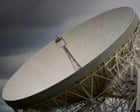
The cultural elite and the academic establishment are currently clutching their pearls over the funding of Jodrell Bank. The narrative is as tired as it is predictable: a collection of artists, writers, and scientists are petitioning the government to "save" the observatory, claiming it represents a sanctuary of human inquiry.
They are wrong. They are not protecting science. They are protecting an antique. Also making waves lately: Planetary Defense Mechanics Evaluating Nuclear Interception for Doomsday Asteroids.
I have spent decades watching taxpayers bleed money into "national treasures" that have long since stopped providing a return on investment. The romanticization of Jodrell Bank is a classic case of legacy bias. People attach value to the site because of the Lovell Telescope’s silhouette—a nostalgic icon of the mid-twentieth century—not because of its current utility in the era of high-frequency, space-based, and array-based radio astronomy.
The Cost Of Sentimentality
Let us be brutally honest about the opportunity cost. Science is an engine of progress, not a museum exhibit. Every pound diverted to maintain a 1957-era structure is a pound stolen from next-generation sensor arrays, quantum computing research, or private sector aerospace innovation. More details regarding the matter are detailed by Wired.
The proponents of the "Save Jodrell" campaign argue that the facility is an educational beacon. That is a lazy defense. Education is not tied to the preservation of steel girders. If you want to inspire the next generation, build a digital laboratory that rivals the actual capability of modern sensors. Teaching a student to look at a 70-year-old telescope is like teaching a pilot to navigate using a sextant. It is charming, sure. But it is not how the work gets done.
The Obsolescence Of The Single Dish
Radio astronomy has moved on. The world of scientific observation has pivoted toward interferometry and massive distributed arrays. While Jodrell Bank still functions, it is an isolated node. Modern radio astronomy relies on the Square Kilometre Array (SKA) project—a global effort that makes Jodrell look like a ham radio setup by comparison.
We are currently witnessing the transition from centralized, single-location observation to decentralized, global data processing. Sticking to the old model of "one giant dish in a field" ignores the reality of aperture synthesis. If we are serious about understanding the universe, we should be dumping resources into the software and global networking that links thousands of smaller, cheaper, and more precise sensors together.
I have seen companies blow millions trying to optimize legacy hardware when they should have abandoned the platform entirely to build a modular replacement. The government is doing exactly this by clinging to Jodrell. They are pouring money into a maintenance black hole that does not scale.
The Danger Of Heritage Protection
The most ironic aspect of this lobby is their obsession with heritage status. Once a site is designated a "protected" landmark, it becomes nearly impossible to innovate on the grounds without navigating a bureaucratic minefield of planning permission and public outrage.
Imagine a scenario where a private tech firm wants to lease that land to build a high-density, low-latency satellite ground station network that actually contributes to 6G connectivity. They cannot. The "heritage" status of the existing structure effectively turns a massive, valuable plot of land into a tomb. By "saving" the observatory, these activists are effectively banning the land from ever being used for modern, high-speed telecommunications or advanced research again.
They claim they want science. They actually want a monument to their own childhood memories.
Separating Science From Spectacle
There is a fundamental misunderstanding of what a research institution is. An institution is defined by its output, its data, and its discoveries—not its physical architecture. If the research teams at Jodrell are world-class, they should be able to operate from anywhere with a fiber-optic connection to the global grid. If they are so tethered to the physical dish that they cannot function without it, then they are not performing cutting-edge science; they are performing maintenance.
If the government actually wanted to boost British science, they would auction the site to the highest bidder in the private sector and redistribute the proceeds into a grant program for actual, high-risk, high-reward research.
Instead, we get a petition. We get a plea for charity. We get a request for more taxpayer-funded preservation of an object that has already served its purpose.
The Hard Reality
Some will call this approach cold. They will say I lack an appreciation for history. My answer is simple: the history of science is a history of discarding what no longer works. We do not use Victorian steam engines to power our grid. We do not use punch cards to run our data centers. We should not be subsidizing a telescope just because it looks good in a photograph.
The obsession with keeping Jodrell Bank "alive" is a symptom of a broader malaise in the scientific community: a fear of the new, a comfort in the familiar, and an inability to let go of the tools that defined their predecessors.
If the observatory is truly essential, it should be able to survive as a self-sustaining commercial entity, perhaps as a tourist attraction or an event space. But it should not be propped up by the public purse while it competes for resources with the very technologies that have rendered it obsolete.
Stop asking the government to pay for your nostalgia. If you love the telescope so much, open your own checkbook. As for the rest of us, we have a future to build, and it requires moving past the artifacts of a bygone era.