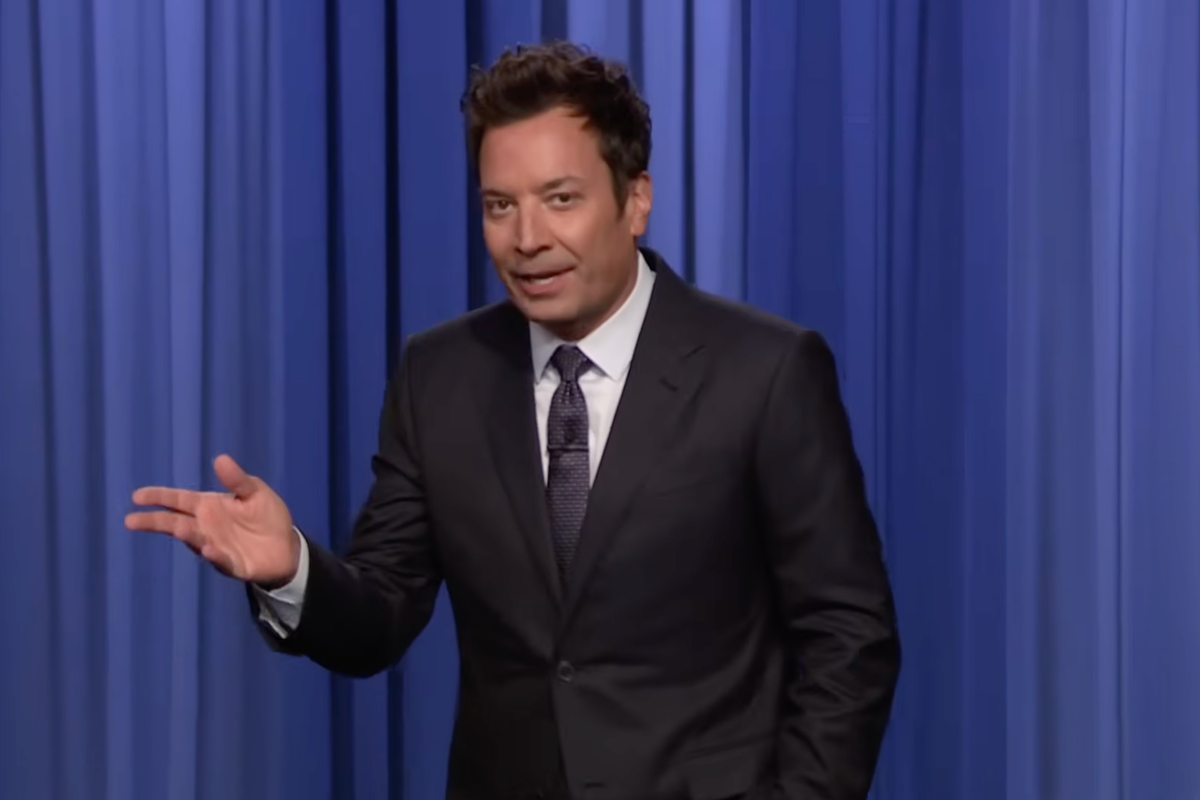
Late-night television loves a neat punchline. Jimmy Fallon stands behind his polished desk, chuckles at his own cue cards, and offers a bit of late-night career counseling to the political machinery. The premise of the bit is simple, digestible, and entirely useless: treat a high-stakes administration communications apparatus like an open casting call on Broadway or a corporate vacancy that needs a standard HR headhunter.
It is the lazy consensus of the entertainment complex. They look at a massive political powerhouse, see a communications vacancy, and immediately frame it as a sitcom problem requiring a standard sitcom solution. Find a clone. Find someone with the exact same cadence, the same media training, the same defensive playbook.
I have watched organizations spend millions of dollars trying to replicate a single lightning-strike talent. I have seen executives panic after losing their public-facing anchor, immediately commissioning executive searches for carbon copies of the person who just walked out the door. It is an expensive, systemic failure of imagination.
Let us dismantle the premise right out of the gate.
The Fallacy of the Interchangeable Spokesperson
The conventional wisdom pushed by late-night monologues and media pundits assumes that a press secretary or a top communications director is a plug-and-play widget. You slide the old one out, slide a new one in, and the machine keeps humming with identical output.
That is not how influence works. That is not how human attention spans operate.
When a figure like Karoline Leavitt establishes a dominant footprint in the cultural and political zeitgeist, she does not do so because she memorized a manual issued by the Republican National Committee. She succeeds because of a specific friction between her personal operating style and the media ecosystem she targets. Trying to find a replacement who mimics that exact style is like trying write a sequel to a blockbuster movie by using the exact same script with a different actor. The audience smells the facsimile instantly. It falls flat. It lacks the original friction.
Imagine a scenario where a high-profile political operation stops looking for a clone and instead deliberately hires someone who behaves in direct contradiction to the predecessor. The entire media ecosystem resets its traps, only to find the traps are pointed at empty air.
That is strategy. What Fallon is selling is just casting.
Why Media Training Ruins Authentic Communication
Let us look at the mechanics of modern political messaging. We are told that everyone standing behind a podium needs hyper-polished, risk-averse media training. The consultants swarm in. They hand over talking points. They coach every inflection, every eyebrow raise, every micro-expression until the human being looks like a poorly rendered avatar reading from an autocue in a corporate basement.
The downside to this approach is absolute. The more polished a spokesperson becomes, the faster the modern audience tunes them out. We live in an era of hyper-saturation. People do not lack information; they lack signal. Polished corporate or political speak is pure noise.
When a communications lead manages to break through, it is almost always because they lean into an unvarnished reality, even a combative one, rather than retreating into safe boilerplate answers.
If you are looking for a replacement in any high-stakes communications role, you should actively disqualify candidates who have spent the last decade learning how to say nothing in fifty different ways. You need someone who treats a press briefing not as a corporate PR defense, but as a direct confrontation of narratives.
The Cost of Chasing the Past
I have seen companies blow millions on executive search firms trying to find the exact duplicate of a departed rainmaker. They want the safety of familiarity. They want to tell their board or their stakeholders, Look, we found someone just like the last one, so nothing will change.
Nothing changing is precisely the problem.
The political and media landscape shifts beneath our feet every six months. What worked in the last election cycle or the last news cycle is already dead by the time the monologue airs on television. If you hire a Karoline Leavitt clone today, you are buying yesterday's weapon at tomorrow's inflated prices.
The real move requires a complete inversion of the question.
Stop asking who can step into the existing shoes. Ask what the shoes are even for anymore. The traditional press briefing room is an artifact of the twentieth century. The cameras are there, but the real distribution happens on fragmented platforms, decentralized feeds, and hostile digital arenas where traditional media gatekeepers have lost their monopoly on translation.
What to Do Instead
If you want to understand how communication works in the current environment, you have to look at the structural mechanics of attention.
- Abandon the Script: Anyone who needs three days to prep a statement for a Tuesday afternoon press conference is already obsolete. Speed and raw reaction velocity beat perfection every single time.
- Embrace Asymmetry: If the opposition expects a defensive pivot, do not pivot. Attack a completely different flank. Force them to spend their limited bandwidth reacting to your frame rather than defending theirs.
- Hire for Instinct, Not Resume: The best communicators are not products of Ivy League public policy programs. They are street fighters who understand human psychology, tribal loyalty, and digital distribution natively.
Jimmy Fallon can keep writing punchlines for people who consume their news through a late-night filter. Meanwhile, the actual game is being played by people who understand that replication is death, and adaptation is the only currency that matters.
Stop looking for the next version of the last person. Build a structure that makes the next person unrecognizable to anyone who wasn't paying attention.