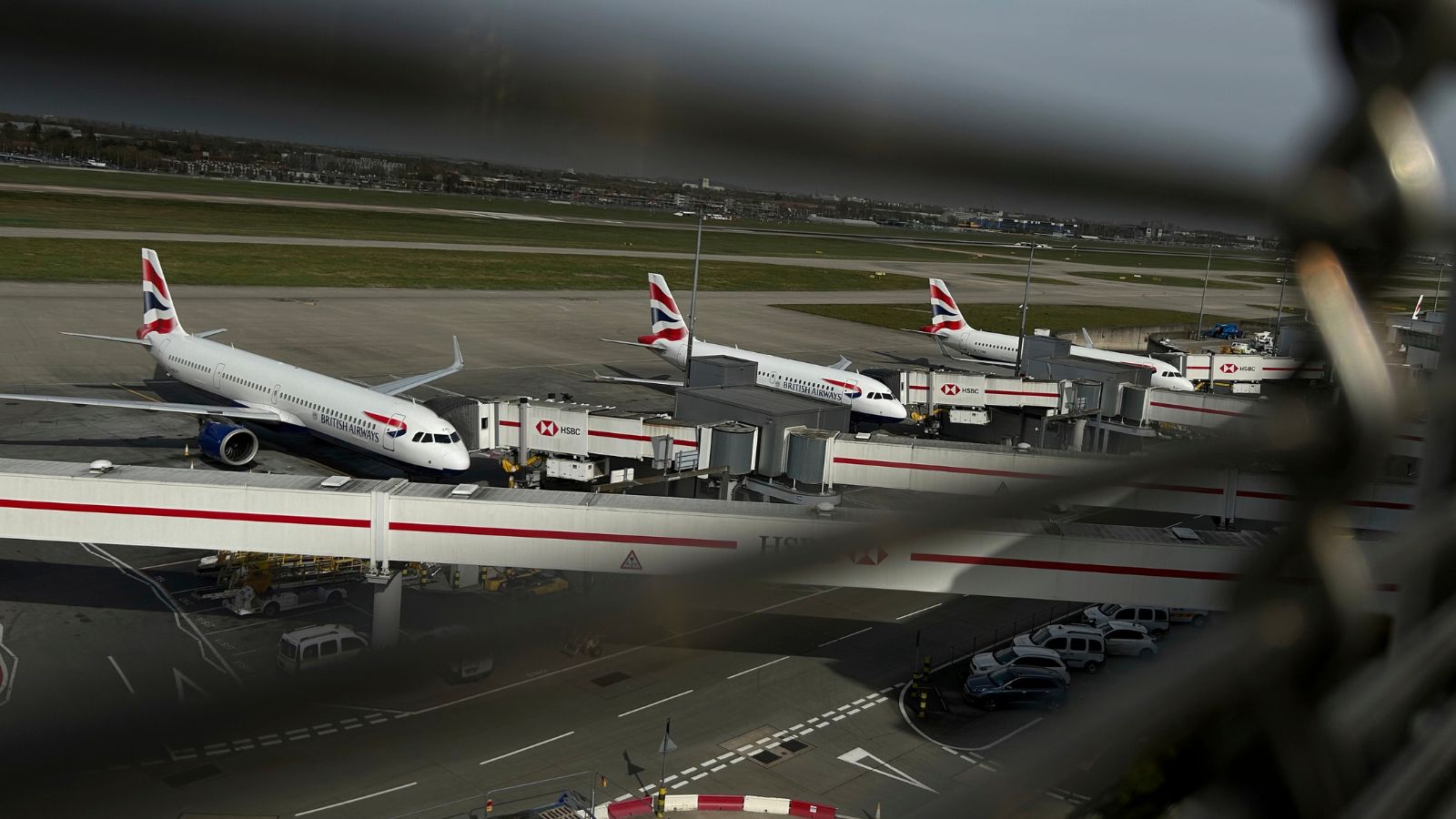
The era of the "unlimited" European flight schedule has hit a physical wall. This week, the aviation industry moved from theoretical warnings to hard cancellations as KLM, Lufthansa, and Virgin Atlantic began stripping flights from their boards. While the immediate trigger is a combined 188 flights axed to preserve dwindling kerosene reserves, the underlying reality is far more grim. Europe has roughly six weeks of jet fuel remaining before the supply chain, throttled by the closure of the Strait of Hormuz, begins to fail systemically.
This is not a temporary scheduling glitch. It is a calculated retreat by carriers that can no longer afford the math of modern aviation.
The Math of a Grounded Fleet
KLM has officially pulled 160 flights from its upcoming schedule, specifically targeting high-frequency "city pair" routes like Amsterdam to London and Düsseldorf. To the casual traveler, this looks like a minor inconvenience—a rebooking on a flight two hours later. To the analyst, it is a desperate hedge. By canceling these flights more than 14 days in advance, KLM avoids the massive payouts required under EU261 consumer protection laws.
The airline is framing this as a "viability" issue rather than a total lack of fuel. The logic is cold. At current prices—which have spiked more than 120% since the conflict in the Middle East intensified—flying a half-empty Embraer jet on a short hop is a guaranteed loss. By consolidating those passengers onto fewer, larger aircraft, they save the most precious commodity in the world right now: kerosene.
Lufthansa has taken an even more drastic step. The carrier is permanently shuttering its regional subsidiary, Lufthansa CityLine, and decommissioning 27 aircraft immediately. When a flag carrier starts cannibalizing its own subsidiaries to save fuel, the "temporary" nature of the crisis has officially ended.
The Middle East Chokepoint
Europe is uniquely vulnerable to this specific geopolitical shock because it imports nearly 90% of its jet fuel from refineries in the Middle East. Unlike crude oil, which can sometimes be rerouted via pipelines or rail, refined kerosene is a specialized product that moves almost exclusively through the Strait of Hormuz.
With that corridor effectively blocked, the "just-in-time" delivery model that airports like Heathrow, Schiphol, and Frankfurt rely on has collapsed.
The Regional Domino Effect
- Secondary Hubs First: Smaller regional airports are already seeing "notices to airmen" (NOTAMs) warning of limited refueling capabilities.
- Long-Haul Preservation: Virgin Atlantic and British Airways are prioritizing their transatlantic routes, where margins are higher, while quietly trimming "non-essential" destinations like Jeddah and Los Angeles.
- The Mid-May Wall: Industry groups like ACI Europe have circled May 15 as the date when current stockpiles hit the "critical" threshold. If tankers don't start moving by then, the cancellations will move from 188 flights to 1,800.
Why Hedging Didn't Save Them
There is a common misconception that airlines are protected from price spikes because they "hedge" their fuel costs—essentially pre-buying fuel at a locked-in price.
Air France-KLM, for instance, has hedged roughly 87% of its fuel exposure. In normal times, that would be a fortress. But hedging only protects against price volatility; it does not conjure physical fuel out of thin air. When the physical supply is not at the airport, the paper contract is worthless.
Furthermore, the unhedged 13% is currently being purchased at record-breaking spot prices of $1,800 per ton. On a long-haul flight, that 13% "gap" can be enough to turn a profitable route into a million-dollar liability.
The Consumer Reckoning
For the traveler, the "full list" of 188 cancellations is just the opening salvo. We are entering a period of "ghost schedules," where airlines list flights they have no intention of running, only to consolidate them 15 days before departure to avoid penalties.
The advice for anyone holding a ticket for June or July is no longer to "check your flight status." It is to secure a refund or a flexible rebooking now, before the remaining seats on the surviving flights become the most expensive real estate in Europe.
The industry is currently running on fumes and optimism. The fumes are running out, and the optimism is becoming an expensive luxury that Lufthansa and KLM can no longer afford to subsidize. This isn't just a fuel shortage; it is a fundamental resizing of the European sky.