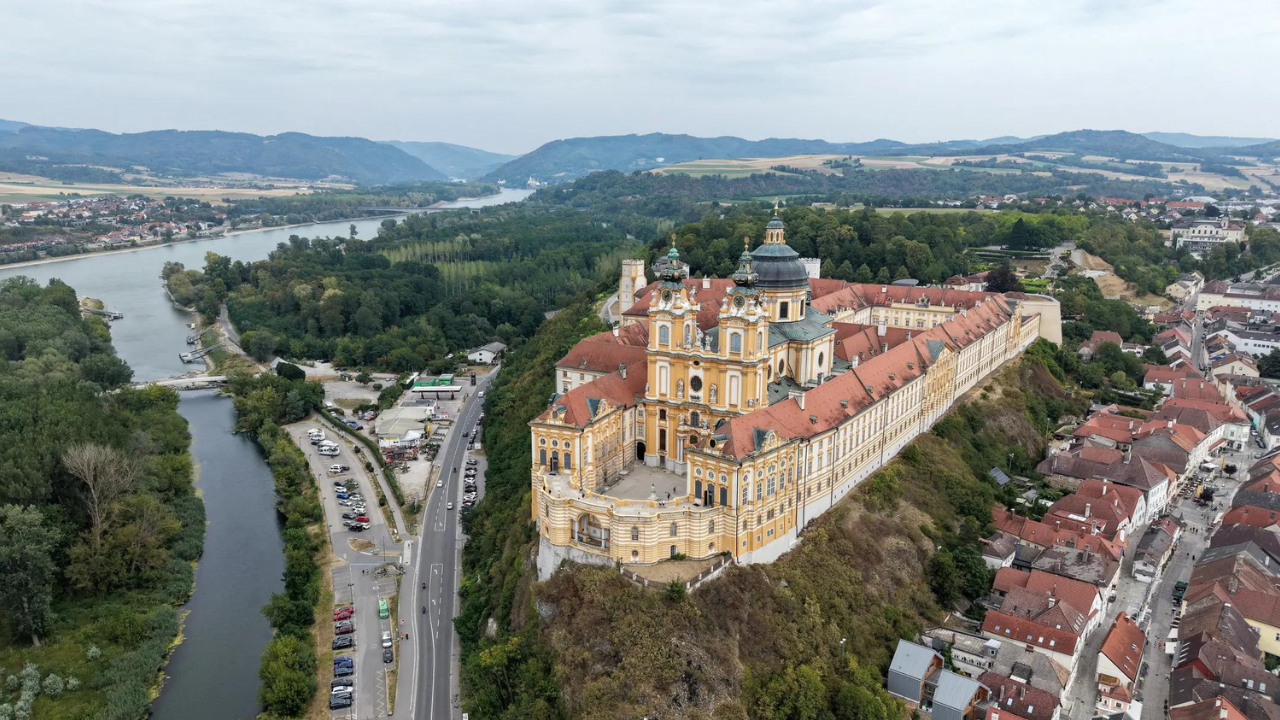
One priest dead, four others wounded, and a quiet southeastern Polish town suddenly thrust onto the front pages of European politics. That was the immediate toll on the morning of September 24, 2026, when a 31-year-old Ukrainian man carrying a knife attacked five people on the grounds of the Benedictine abbey complex in Jarosław.
Let's be honest about what happened and why this story didn't fade after the initial breaking news alerts. Early headlines focused on the raw shock of a knife attack at a Benedictine abbey in Poland—a place just roughly 30 kilometers (about 19 miles) from the Ukrainian border, where violent assaults inside houses of worship are remarkably rare. Yet as prosecutors pieced together the timeline and psychiatric evaluations got underway, the tragedy exposed a tangle of issues that go far beyond a single crime scene: acute mental illness, cross-border transit, online disinformation, and strained public sentiment around Polish-Ukrainian relations.
What Actually Happened Inside the Jarosław Abbey Complex
Around 9:30 a.m. on Thursday, September 24, 2026, police received reports of a stabbing on Benedyktyńska Street in Jarosław, on the grounds of the Benedictine Sisters' abbey complex and its adjoining church and formation center. According to prosecutorial disclosures and local reporting, the assailant—identified under Polish privacy rules as 31-year-old Ukrainian national Ihor M. (also referred to in some outlets as Ihor H.)—attacked five people: three members of the clergy and two laypeople, a man and a woman.
Sixty-seven-year-old Father Stanisław Zbojnowicz (spelled Stanisław Zbojniewicz in several English-language reports), who had served as a priest for four decades, died from his injuries. Two other priests, Father Marek Pieńkowski and Father Adrian Mantykiewicz, along with laypeople Krzysztof G. and Ewa S., were wounded. Several victims required surgery and critical care, though hospital officials and prosecutors later reported that the most severely injured survivors stabilized.
Sister Barbara Dendor, superior of the Benedictine sisters, told Polish media that the assailant seemed like a stranger who showed up in shorts and a short-sleeved shirt despite cool weather. No sisters were inside the church during the assault, and children at a Benedictine-run preschool on the complex were unharmed. Officers detained the suspect at the scene.
Why Initial Rumors Missed Key Details
Whenever a violent incident crosses national or religious lines, speculation races ahead of the evidence. Within hours of the Jarosław stabbing, social media posts and some commentary tried to frame the attack as a calculated geopolitical strike or claimed the suspect had served in Ukraine's military.
Those claims didn't hold up against what officials actually established. Ukraine's ambassador to Poland, Vasyl Bodnar, pushed back against reports that Ihor M. had military service, noting instead that he had left Ukraine in 2022, lived in Germany, and appeared to be dealing with severe mental health problems. Investigators indicated he had traveled from Germany overnight toward the Polish-Ukrainian border before ending up at the abbey.
Even more importantly, court and prosecutorial updates in late September and early October 2026 centered on forensic psychiatry. According to the Przemyśl district prosecutor's office, psychiatric experts evaluated the suspect multiple times after preliminary findings pointed to acute psychotic disorders that prevented logical communication during initial proceedings. On October 7, 2026, after experts concluded he could participate in procedural steps, prosecutors formally questioned him with an interpreter and court-appointed defense counsel present; Ihor M. admitted to the charges—murder and the attempted murder of four people—while declining to give further explanations. The court ordered his detention in a high-security forensic psychiatric facility, while separate psychiatric assessment remained necessary to evaluate his mental capacity at the exact moment of the attack.
In real-world crisis reporting, that distinction matters a lot. A perpetrator's nationality is a verifiable fact; assuming an ideological or political motive before psychiatric and investigative findings are complete is a classic mistake that distorts public understanding.
How a Knife Attack at a Benedictine Abbey in Poland Became a Political Flashpoint
You can't separate this tragedy from the wider mood in Central Europe in late 2026. Poland has been one of Ukraine's closest allies and has hosted hundreds of thousands of people displaced by Russia's invasion, yet years of war, shifting border and residency rules, economic friction, and fatigue have strained public patience in parts of society.
Foreign actors and online agitators know how to exploit raw grief. As analysts and outlets like the Kyiv Independent and Al Jazeera noted, disinformation networks quickly seized on the Jarosław attack to stoke anti-Ukrainian sentiment and drive wedges between Warsaw and Kyiv. At the same time, domestic Polish politics added another layer: Church-state tensions and debates over migration and security already run hot, meaning almost any shock involving clergy or foreign nationals gets pulled into broader cultural arguments.
Both governments moved fast to prevent escalation. Polish Prime Minister Donald Tusk pledged that the suspect would face the full weight of Polish law, while Ukrainian President Volodymyr Zelenskyy condemned the assault as a horrific crime and called for justice. Jarosław Mayor Marcin Nazarewicz declared a local period of mourning.
Forgiveness in the Pews and the Harder Work of Prevention
What stood out most in the days right after the attack wasn't a political speech—it was what happened at the altar. On September 26, 2026, Father Adrian Mantykiewicz, still visibly bruised and bandaged after being stabbed himself, celebrated Mass at the abbey and urged parishioners to pray for the attacker and reject collective blame against Ukrainians. Archbishop Adam Szal of Przemyśl and the head of the Polish bishops' conference, Archbishop Tadeusz Wojda, likewise called for calm, prayer, and restraint rather than hatred.
Still, goodwill alone doesn't answer every hard question. Critics and security observers often ask how an unstable individual can travel across borders, enter a bustling religious and community complex during morning hours, and pick up a kitchen knife on site. Openness and hospitality are central to parish and monastic life—especially in places like Jarosław that have supported refugees and run schools or cultural centers. Hardening a church or abbey like a maximum-security bunker isn't realistic, and frankly, it would change what those spaces are. Yet completely ignoring basic access awareness, staff protocols, or crisis response leaves vulnerable people exposed when someone in acute crisis walks through the door.
Mental health care across borders is another blind spot that rarely gets enough attention until something terrible happens. When a person moves between countries—say, from Ukraine to Germany and then toward Poland—medical history, psychiatric treatment records, and family or social support networks often don't travel with them.
What Readers and Communities Can Do Right Now
If you're following this case or managing safety for a parish, school, or community center, a few practical steps make a real difference:
- Verify before sharing: Wait for prosecutorial and court records rather than reposting unverified claims about motives, military background, or casualty counts when breaking news hits.
- Separate individual crimes from group blame: Remember that one person's violent act—especially one intertwined with severe psychiatric illness—doesn't represent an entire nationality or community.
- Audit low-cost site safety: If you help run a church, monastery, preschool, or community hall, review entry visibility, restrict casual access to kitchens and back rooms, and run simple staff drills on locking doors and calling emergency services fast.
- Track official legal proceedings: Follow updates from Polish prosecutorial authorities and reputable outlets such as Notes from Poland as forensic psychiatric evaluations and court proceedings move forward.