The defense tech sector is currently drooling over a massive headline: thirty-eight major defense contractors and agile startups are all aggressively bidding to build Japan’s next-generation "drone killer" counter-unmanned aerial system (C-UAS). The media framing is entirely predictable. It paints a picture of a vibrant, hyper-competitive, tech-driven renaissance that will securely lock down Japanese airspace against swarms of cheap, weaponized quadcopters.
It is a comforting narrative. It is also completely wrong.
What we are actually witnessing is a classic case of industrial groupthink. Thirty-eight companies are rushing headlong toward an outdated, hardware-obsessed premise that will yield over-engineered, prohibitively expensive systems. These systems will be largely obsolete by the time they pass initial field testing. Having watched defense ministries spend eye-watering sums on kinetic defense architectures over the last fifteen years, I can tell you the trajectory is identical every single time. They build a magnificent, incredibly complex sledgehammer, only for the threat to evolve into a swarm of fast-moving flies.
The industry is asking the wrong question. They are obsessing over how to kill a drone, when they should be figuring out how to make the drone's mission irrelevant.
The Math of Absolute Defeat
Let's break down the economic reality that defense contractors love to ignore during high-stakes pitch meetings.
The prevailing logic among these thirty-eight bidders focuses heavily on kinetic or energy-directed interception. We are talking about automated machine guns, high-powered lasers, and miniaturized missile interceptors.
To understand why this approach fails, you only need basic arithmetic.
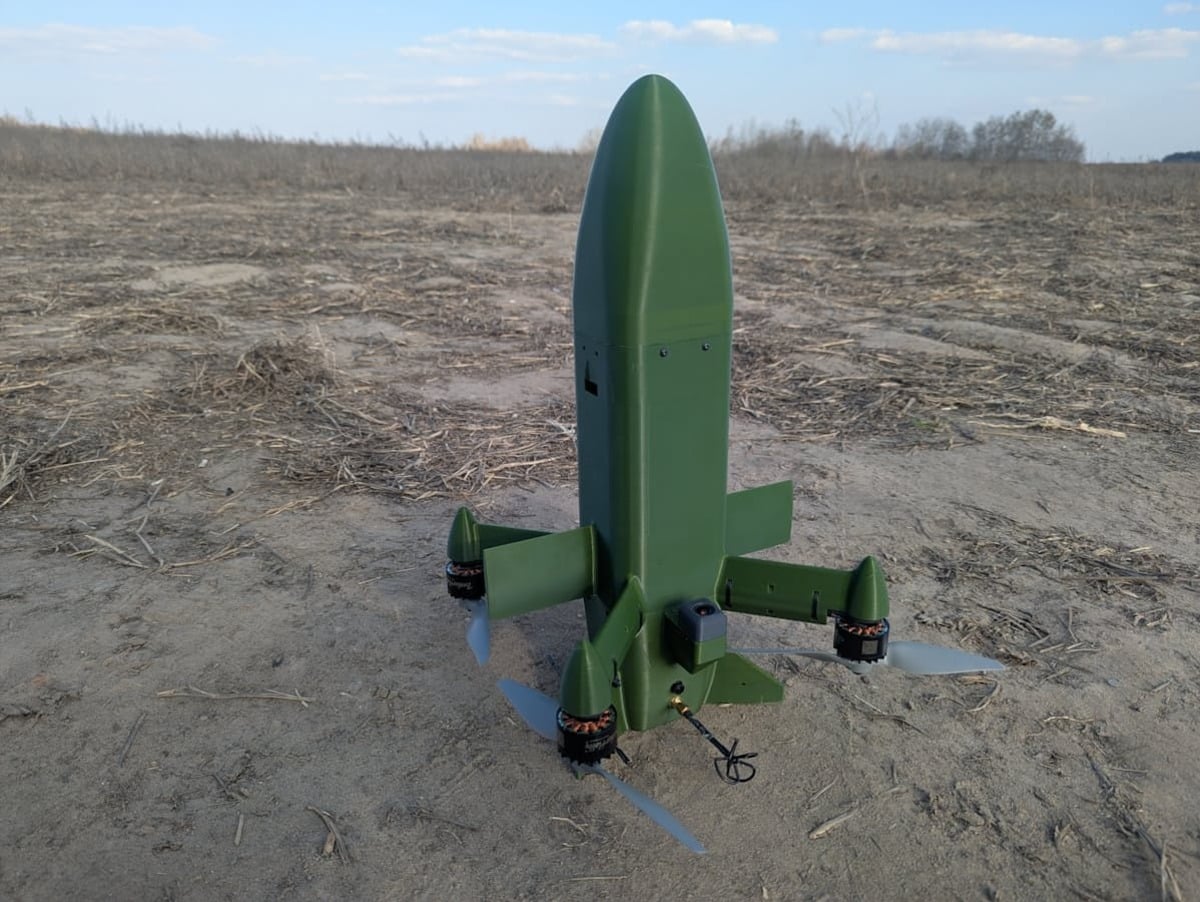
- The Offense: A commercial off-the-shelf drone, modified with a basic 3D-printed payload drop mechanism and a basic optical tracking chip, costs roughly $500 to $1,500.
- The Defense: The radar arrays, thermal tracking cameras, and rapid-fire kinetic platforms required to detect, track, and destroy that single drone cost anywhere from $250,000 to $2 million per unit to install and maintain. Each individual interceptor missile or specialized round can cost tens of thousands of dollars.
Imagine a scenario where an adversary launches a synchronized swarm of 200 low-cost drones toward a naval port or an airbase. The total cost to the attacker is roughly $200,000. For a defender relying on the high-tech hardware currently being pitched in Tokyo, engaging that swarm means draining their entire inventory of high-end munitions, burning out laser cooling systems, and relying on radar tracking loops that get utterly overwhelmed by multiple targets.
Even if the defense system achieves a 95% interception rate—which is remarkably high in real-world combat conditions—the remaining five percent of the swarm will still hit their targets. The attacker wins the economic war on day one. You cannot solve a software-driven mass scaling problem with expensive, physical hardware.
Why Jamming and Directed Energy Won't Save Us
The more sophisticated bidders in this 38-company pool are pushing electronic warfare (EW) and directed-energy weapons (DEW) like high-power microwave systems and lasers. They claim these methods offer an "infinite magazine" that completely solves the cost-per-shot dilemma.
This is a dangerous half-truth.
Radio-frequency jamming relies on breaking the link between the drone and its operator, or disrupting its GPS/GNSS navigation signal. But the era of the remote-controlled military drone is already ending. Modern threat networks are rapidly shifting toward completely autonomous, edge-computed machine vision.
When a drone carries a tiny, integrated neural network chip capable of recognizing a specific silhouette—like an F-35 on a tarmac or a fuel storage tank—it does not need a GPS signal. It does not need a pilot. It can fly completely dark, radiating zero radio signals, totally immune to traditional electronic jamming. You cannot jam a camera that is looking at a building.
Lasers sound fantastic in a laboratory brochure. In the real world, they require massive power generation units, specialized cooling, and near-perfect atmospheric conditions. Heavy fog, thick smoke, torrential rain, or even reflective coatings applied to the enemy drone's hull can radically degrade a laser's thermal transfer efficiency.
By building specialized hardware platforms to counter today's remote-controlled threats, Japan’s defense industrial base is setting itself up to build the world's most advanced paperweights.
The Flawed Premise of the Corporate R&D Race
People inside the Tokyo defense establishment frequently ask: How can we accelerate the procurement cycle to get these 38 companies delivering systems faster?
The question itself is deeply flawed. The bottleneck isn't the speed of the procurement cycle; it is the fundamental nature of what is being procured.
Large-scale defense industrial complexes are structured to build physical assets—ships, planes, heavy armor, and massive radar installations. They struggle immensely with agile, software-first development. When 38 companies line up for a major government contract, they are looking to secure multi-year manufacturing pipelines. They want to stamp out aluminum casings, assemble circuit boards, and sell lucrative, decades-long maintenance contracts.
But C-UAS is fundamentally a software problem that happens to occupy physical space.
The moment a hardware system rolls off the assembly line, its detection algorithms are already static. Meanwhile, threat actors are updating their drone navigation firmware via open-source code repositories overnight. A defense strategy rooted in physical procurement will always lag behind an adversary operating at the speed of software deployment.
The downside of acknowledging this reality is uncomfortable for the industry. It means recognizing that the massive factories and traditional assembly lines owned by legacy defense giants are poorly suited for this fight. It means admitting that a small team of elite software engineers writing automated sensor-fusion code is vastly more valuable than a brand-new, multi-million-dollar missile factory.
Shifting the Target from the Drone to the Architecture
If building a bigger, shinier drone killer is a dead end, what actually works?
We must stop targeting the drone itself and start targeting its structural limitations. A drone is a highly constrained system. It has limited battery life, limited payload capacity, and reliance on physical launch points. Instead of trying to shoot down 100 individual targets in the air, defense architecture must focus on deep, passive resilience and automated signature obfuscation.
Implement Dynamic, Passive Decoys
If an autonomous drone relies on optical recognition to strike an asset, you don't need to blow it out of the sky. You just need to confuse its vision algorithm. Rapidly deployable, thermally accurate, low-cost multispectral decoys can easily trick edge-AI tracking systems into striking empty dirt, completely neutralizing the attack at a fraction of the cost of a missile interceptor.
Dominate the Local Electromagnetic Environment Close to the Ground
Instead of high-power lasers, invest in dense networks of low-cost, passive acoustic and optical sensors distributed across a wide geography. These sensors provide high-fidelity tracking data to localized, low-altitude kinetic nets or physical barriers around critical infrastructure assets, bypassing the need for massive, centralized radar systems.
Focus on Upstream Industrial Chokepoints
Every drone requires highly specialized components: high-density lithium-polymer batteries, specific brushless motors, and specific microcontrollers. The most effective counter-drone strategy is not kinetic interception on the battlefield; it is strict supply-chain interdiction and digital exploitation of the manufacturing pipelines that produce these components globally.
The 38 companies competing for Japan’s next major defense contract will undoubtedly produce highly impressive technical achievements. They will showcase sleek designs, powerful tracking sensors, and spectacular promotional videos of drones being blasted out of the sky under tightly controlled test conditions.
Do not buy the hype.
They are optimizing a broken paradigm. As long as we treat the drone problem as a hardware-centric shooting gallery, we will continue to spend millions to defeat thousands, ensuring our long-term strategic bankruptcy. Stop trying to build a better drone killer. Start building an architecture that makes the drone's presence completely irrelevant.