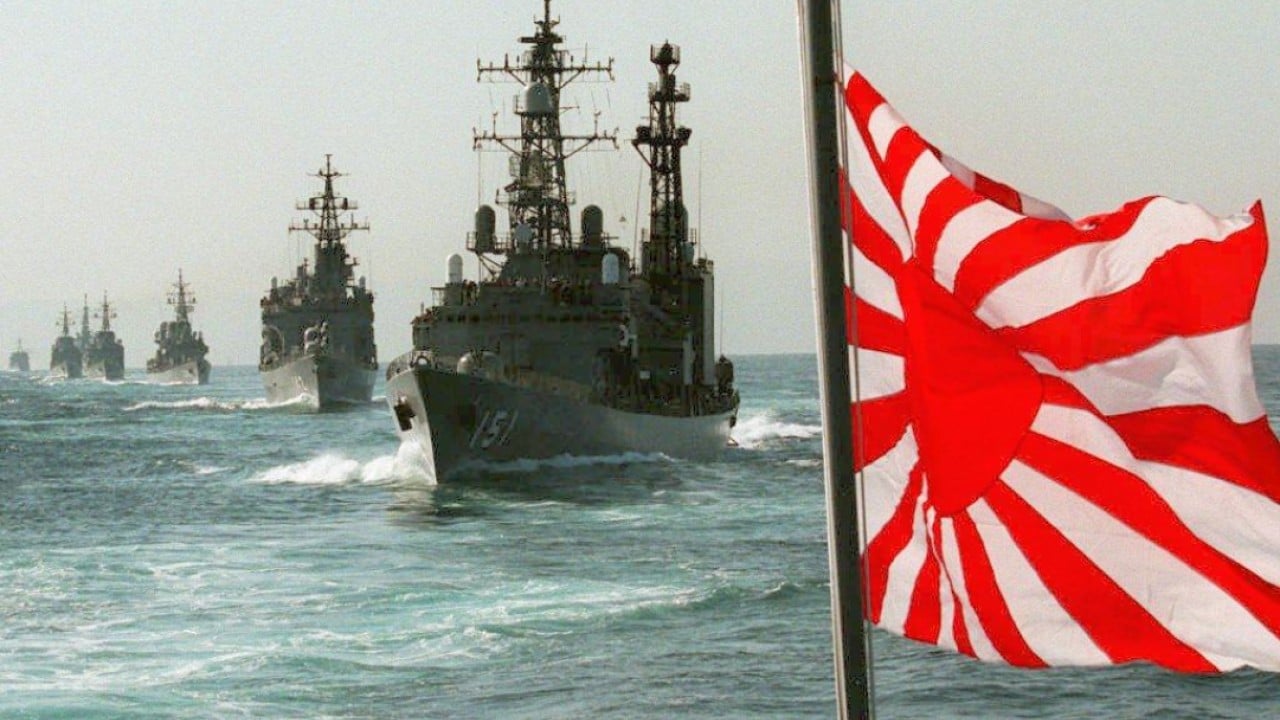
Tokyo is systematically expanding its network of naval partnerships, adding Indonesia to a strategic chain that already includes Australia and the Philippines. This move aims to secure critical sea lanes and counter Beijing's growing maritime assertiveness in the South China Sea. By providing patrol vessels, conducting joint exercises, and signing defense transfer agreements, Japan is moving beyond its traditional pacifist posture to build a coordinated maritime network among island nations.
This strategy marks a fundamental shift in regional security. For decades, Japan relied almost exclusively on its security alliance with the United States to guarantee regional stability. Today, Tokyo realizes that Washington's attention is split across multiple global theaters.
The Silent Architecture of Tokyo's Island Strategy
Tokyo is not building a formal military alliance. That would trigger constitutional issues at home and diplomatic crises abroad. Instead, the Japanese Ministry of Defense is constructing a web of bilateral maritime security arrangements.
The inclusion of Indonesia is a major piece of this puzzle. Jakarta controls the Malacca, Sunda, and Lombok straits. These narrow choke points are the lifelines of Japanese commerce. Nearly all of Japan’s energy imports pass through these waters. If a conflict breaks out in the Taiwan Strait or the South China Sea, the ability to secure or bypass these passages determines national survival.
Japan’s approach relies on capacity building. Tokyo supplies radar systems, coast guard vessels, and maritime surveillance equipment to Southeast Asian states. This is a deliberate choice. Providing white-hulled coast guard ships is viewed as less provocative than deploying gray-hulled warships, yet it achieves the same practical result: tracking Chinese maritime militia and naval movements in real-time.
Moving Past Historical Ghosts in Jakarta and Manila
Securing these agreements required overcoming deep historical scars. During the mid-twentieth century, Japanese imperial forces occupied the very archipelagoes Tokyo now seeks to protect.
For decades, Southeast Asian nations remained deeply suspicious of any Japanese military projection. Tokyo managed this friction through decades of meticulous economic diplomacy. Japan became the top infrastructure investor in the region, building highways, subways, and ports.
Now, the geopolitical calculus has changed. The immediate pressure from Chinese coast guard vessels near Indonesia’s Natuna Islands and the Philippines’ Second Thomas Shoal has eclipsed the memories of World War II.
Manila was the first to pivot fully. The Reciprocal Access Agreement signed between Japan and the Philippines allows for the deployment of troops on each other's soil for joint drills. Indonesia is taking a more cautious path due to its traditional non-aligned foreign policy, focusing on technical maritime security cooperation and hardware procurement rather than formal troop basing.
The Financial Engine Behind the Naval Network
Defense diplomacy is expensive. Japan is financing this strategy through a dedicated funding mechanism called Official Security Assistance.
Unlike traditional foreign aid, which is restricted to humanitarian and economic development, this program directly funds the defense capabilities of partner nations. It represents a major break from past policy.
Japan's Two-Pronged Maritime Assistance Architecture
├── Official Development Assistance (ODA): Funds civilian coast guards, ports, and salvage vessels.
└── Official Security Assistance (OSA): Funds military-grade radar, communication networks, and satellite tracking.
The budget allocations are growing. Tokyo has earmarked billions of yen to upgrade tracking stations and supply maintenance parts for patrol aircraft across the region. This financial commitment ensures that smaller navies remain operationally compatible with the Japanese Maritime Self-Defense Force.
Logistics and the Reality of Interoperability
Amassing hardware is only half the battle. The true test of this maritime network lies in logistical interoperability.
During a crisis, naval vessels must be able to share data, refuel at partner ports, and coordinate patrol routes without communication delays. This is where the network faces its steepest challenge. The navies of Australia, Japan, and the United States use highly encrypted, standardized systems. Indonesia and the Philippines operate a mix of legacy Western equipment, newer East Asian platforms, and domestic systems.
Communication Barriers on the High Seas
Radio frequencies and data links do not match seamlessly. When Japanese destroyers exercise with Indonesian patrol boats, they often rely on basic voice commands rather than automated data feeds. Tokyo is trying to fix this by installing standardized communication packages on the vessels it donates.
The Maintenance Bottleneck
Donated ships require specialized parts. If an electronic component fails on a Japanese-built patrol boat in the Banda Sea, the parts must often be shipped from Mitsubishi or Kawasaki facilities in Japan. This creates operational downtime that vulnerabilities can exploit.
China's Counter Strategy of Economic Leverage
Beijing is not watching this encirclement passively. Its response relies on economic leverage rather than naval confrontations alone.
China is Indonesia’s largest trading partner. Beijing funds massive industrial projects across the Indonesian archipelago, including high-speed railways and nickel processing plants critical to the electric vehicle supply chain.
Whenever Jakarta edges too close to Tokyo’s security orbit, Beijing utilizes economic pressure. This creates a constant diplomatic balancing act for Southeast Asian leaders. They welcome Japanese maritime security assets to protect their sovereign fishing rights, but they cannot afford to alienate Chinese capital.
The Limits of the Network
We must look at the structural flaws of this strategy. Japan's domestic defense industry is struggling. Decades of self-imposed export bans left Japanese defense contractors isolated from global markets, driving up production costs. A single Japanese patrol vessel can cost twice as much as a comparable Western or South Korean ship.
Furthermore, Japan’s own population is shrinking. The Maritime Self-Defense Force faces chronic recruitment shortages, regularly missing its recruitment targets by substantial margins. Tokyo can build and donate as many ships as its budget allows, but it lacks the personnel to deploy its own fleet extensively alongside these partner navies.
The strategy assumes that in a contingency, these disparate nations will act in unison. That is a dangerous assumption. Australia is bound by the ANZUS treaty. The Philippines has a mutual defense treaty with the United States. Indonesia remains fiercely independent. If conflict erupts over Taiwan, Jakarta’s immediate reaction may be to declare neutrality and close its straits to all combatants, disrupting Tokyo's plans.
Tokyo's naval network is changing the balance of power in the Western Pacific, forcing Beijing to calculate the cost of unilateral actions against a unified group of island nations rather than isolated neighbors. Success will not be measured by the signing ceremonies in Tokyo, but by whether these navies can successfully maintain a single, unbroken line of surveillance from the Sea of Japan down to the Java Sea.