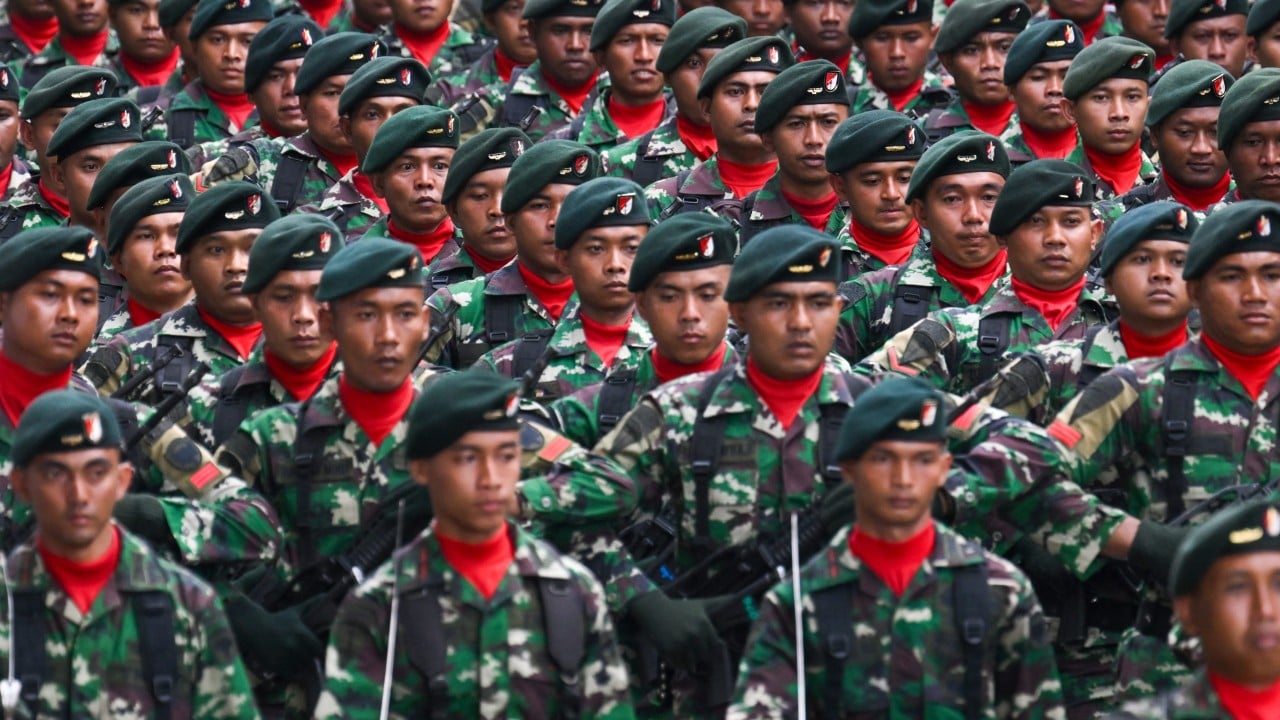
The Indonesian capital is taking a sledgehammer to a problem that requires a scalpel. Jakarta officials recently made a move that sent chills down the spines of older residents. They deployed military personnel to crack down on street muggers and petty criminals. On the surface, it looks like a government taking decisive action against a rising tide of urban violence. Street crime is a genuine menace in the sprawling metropolis. Residents want to feel safe when walking home from a bus terminal at night. But bringing the army into civilian policing isn't just an aggressive policy shift. It breathes life into old ghosts.
For anyone who lived through the late twentieth century in Indonesia, military boots on local streets mean something specific and terrifying. It points straight back to the dark days of authoritarian rule. The current deployment aims to curb a spike in street robberies, known locally as begal, alongside general thuggery. Yet, the strategy ignores the messy, historical reality of how state-sponsored violence leaves permanent scars on a society.
The Haunting Legacy of Petrus
You can't understand why people are panicking without understanding the 1980s. Under the late dictator Suharto, the New Order regime faced a similar public outcry over rising urban crime. The government response was swift, covert, and brutal. It came to be known as Petrus—short for Penembakan Misterius, or Mysterious Shootings.
Between 1983 and 1985, specialized military and police death squads executed thousands of suspected criminals without a shred of due process. Bodies were dumped in public places, left in ditches, or discovered floating in rivers. Many victims had tattoos, which the regime associated with gang membership.
- The Scale: Estimates of the death toll vary wildly, but human rights groups like KontraS suggest between 3,000 and 10,000 people were extrajudicially executed.
- The Method: Victims were often taken from their homes at night, strangled or shot, and left exposed to terrorize the local community into compliance.
- The Admission: Suharto himself later admitted in his autobiography that these killings were a deliberate shock therapy tactic to control crime.
When the military rolls into Jakarta neighborhoods today to handle local thieves, people don't just see security. They see the return of the state acting as judge, jury, and executioner. It's a psychological trigger for a generation that remembers waking up to find bodies on the sidewalk.
Why Soldiers Can't Do a Cop's Job
Using the military for domestic policing is inherently flawed. Soldiers are trained to eliminate enemies of the state. They operate on a combat mentality. Police officers, at least in theory, are trained to enforce civil law, protect citizens, and preserve evidence for a judicial process.
When you blur these lines, bad things happen. Military personnel lack training in civil rights law, crowd control, and the proportionate use of force against civilians. They don't know how to de-escalate a domestic dispute or handle a petty thief without treating them like a hostile combatant.
Human rights organizations have repeatedly warned that involving the Indonesian National Armed Forces (TNI) in civilian security matters bypasses the justice system. It creates a vacuum of accountability. If a soldier kills an unarmed teenager suspected of phone snatching, that soldier faces a military tribunal, not a civilian court. History shows these tribunals rarely deliver justice to civilian victims. This lack of transparency destroys trust between the community and the state.
The Real Roots of Jakarta Street Crime
Street crime doesn't happen because Jakarta doesn't have enough men with automatic rifles. It happens because of deep economic disparities. The city is a glittering hub of skyscrapers sitting right next to crushing poverty.
High youth unemployment, inflation, and a lack of social safety nets drive young men into street gangs and petty theft. Slum clearances and forced evictions have displaced communities, breaking down traditional neighborhood watch systems.
Jakarta Urban Reality:
[Glittering Skyscrapers & Wealth]
       |---> Extreme Economic Disparity
[Impoverished Kampungs & Unemployment] ---> Street Crime (Begal)
Deploying troops treats the symptom while ignoring the disease. It might clear the streets for a few weeks because criminals go underground to avoid getting shot. But the moment the troops return to their barracks, the crime rates creep right back up. You can't shoot your way out of systemic poverty and a failing education system.
Better Alternatives for a Safer Capital
We don't need a military state to fix bad neighborhoods. Cities across the globe have reduced violent crime without resorting to martial law tactics. Jakarta needs to pivot to proven, modern policing and social strategies.
First, invest in community policing. Cops need to be visible, approachable, and integrated into local kampungs (neighborhoods). They need to build trust so residents actually report crime instead of taking matters into their own hands or ignoring lawlessness out of fear.
Second, fix the urban infrastructure. Street lighting in many parts of North and East Jakarta is abysmal. Dark alleyways and unlit underpasses are breeding grounds for muggers. Installing widespread, functional street lighting and a reliable network of public CCTV cameras does more to deter crime than a truck full of soldiers patrolling once a night.
Finally, fund targeted youth intervention programs. Provide vocational training and job placement in high-crime districts. Give young people an actual economic alternative to joining a gang or grabbing a machete to rob a motorcyclist.
If you want a safer Jakarta, put money into light poles, jobs, and accountable policing. Leave the army in the barracks where they belong. The cost of ignoring the past is far too high for a democracy that fought so hard to escape military rule. Instead of demanding a show of military might, demand that your local leaders fix the broken streetlights and create jobs for the kids standing on the corner. That's how you build a city that is actually safe, rather than just terrified into silence.