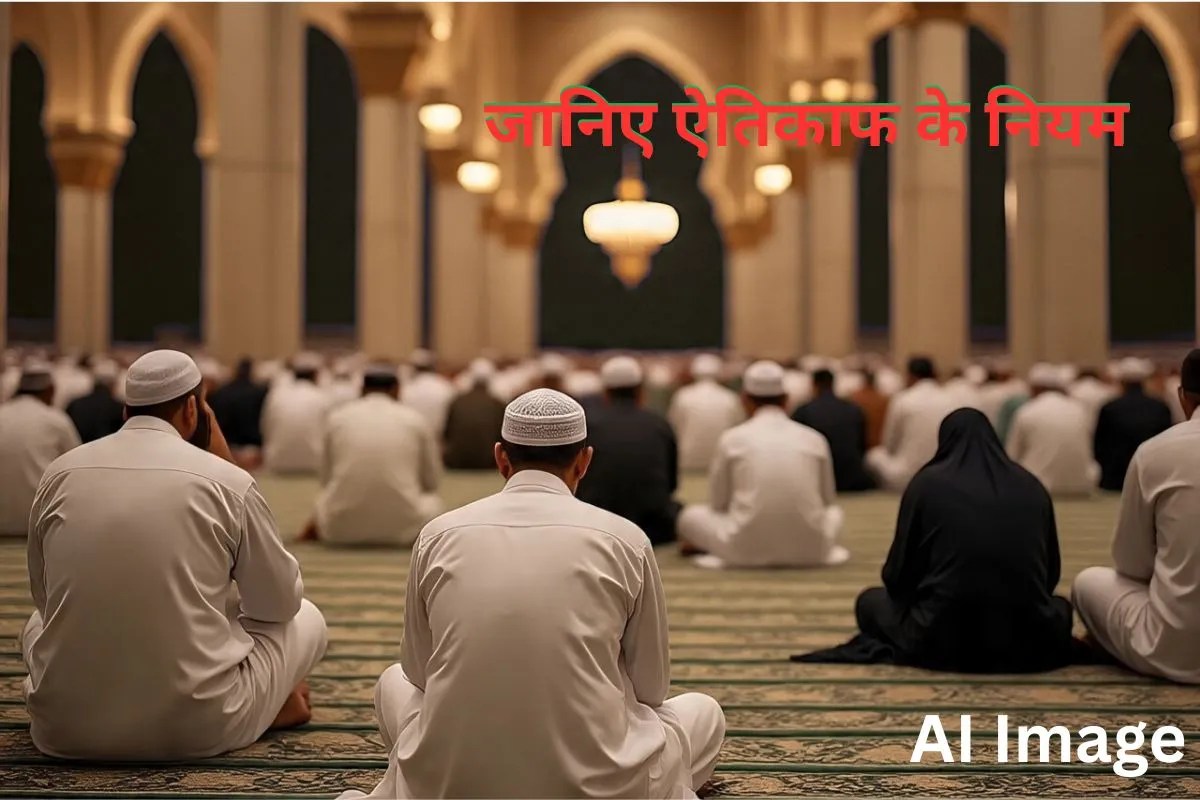
Qatar just dropped its official rulebook for Itikaf. The headlines are full of the usual fluff—lists of approved mosques, registration portals, and "guidelines" for spiritual seclusion. Most commentators are treating this like a travel itinerary for the soul. They are wrong.
By turning a radical act of spiritual rebellion into a government-regulated administrative task, we aren't "organizing" worship. We are killing it.
The standard narrative says Itikaf is about sitting in a mosque for ten days to find peace. That is a lazy consensus. Itikaf was never about "peace" in the way modern wellness apps define it. It was designed as a systemic shock to the human ego—a total severance from the social and economic grid. When you add QR codes and registration deadlines to that process, you’ve already lost the plot.
The Administrative Capture of the Soul
Most people look at Qatar’s Ministry of Endowments (Awqaf) and see "efficiency." I see the sterilization of the sacred. When the state dictates the parameters of your seclusion, the mosque stops being a sanctuary and starts being a dormitory with rules.
True Itikaf is meant to be a period of $t = 10$ days where the outside world ceases to exist. But how can the world cease to exist when you have to check in like you’re at a Marriott? The competitor articles will tell you how to register. I am telling you that the registration itself is the first distraction.
If you are spending your pre-Ramadan energy worrying about whether you’ve uploaded the right ID scan to a portal, your focus is already external. The friction of the "old way"—finding a corner, negotiating space with the community, and being truly anonymous—had a spiritual utility that a digital permit destroys.
The Myth of the "Quiet Mosque"
People ask: "How do I find the best mosque for Itikaf?"
This is the wrong question. You aren't looking for a spa. If your version of spiritual growth requires a specific high-end mosque in Doha with climate control and a streamlined entry process, you aren't seeking God; you’re seeking comfort.
The "laziness" in the current discourse suggests that the environment facilitates the worship. It doesn't. In fact, the more "perfect" the environment, the less work the spirit has to do. I’ve seen people spend ten days in the most beautiful mosques in the Gulf only to spend 40% of their time on their phones because the physical discomfort—the thing that usually forces the mind inward—was entirely removed.
The Digital Parasite in the Prayer Mat
Here is the truth nobody admits: 90% of modern Itikaf is performed in the presence of a smartphone.
Qatar’s rules focus on logistics—food, bedding, and cleanliness. They completely ignore the biggest threat to the sanctity of the act: the pocket-sized dopamine machine.
Doing Itikaf while your phone is in your pocket is just "camping in a mosque." It is a cosmetic change of scenery. If you are checking your stocks, your WhatsApp, or even "Islamic" social media during those ten days, you haven't entered seclusion. You’ve just moved your office to a carpeted floor.
The nuance the competitor missed is that Itikaf is a war against connectivity.
- Connectivity to the economy: No buying, no selling, no "checking in" on the business.
- Connectivity to the social hierarchy: You are no longer a CEO, a doctor, or a laborer. You are a body in a space.
- Connectivity to the self-image: No photos. No "Ramadan vibes" stories.
A Brutal Truth About "Spiritual Productivity"
We have a toxic obsession with making worship "productive."
The ministry guidelines focus on order. The attendees focus on "finishing" the Quran multiple times. This creates a checklist mentality.
"I read 600 pages, therefore I had a successful Itikaf."
This is spiritual accounting, not spiritual transformation. It is possible to read the entire Quran and feel absolutely nothing because you were racing against a clock. The real metric of Itikaf isn't the volume of recitation; it’s the degree of ego-dissolution.
If you come out of those ten days and you are the same person with the same anxieties and the same addiction to your screen, you didn't do Itikaf. You just had a very boring vacation.
The Counter-Intuitive Guide to Actual Seclusion
If you want to actually benefit from this, stop reading the government brochures and start making your own rules. The state cares about your physical presence; you need to care about your mental absence.
- The Black Hole Policy: Hand your phone to a friend outside. Do not keep it in your bag "for emergencies." If there is an emergency, the world will find a way to reach you. If you have your phone, you will find an "emergency" to justify looking at it.
- Embrace the Friction: Don’t pick the mosque with the best catering. Pick the one that challenges you. Growth happens in the gaps between comfort and necessity.
- The Silence Mandate: Most people spend Itikaf chatting with the person on the next mat. This is just a social club with better acoustics. If you aren't spending 22 hours a day in total silence, you are failing the prompt.
Why Qatar’s Rules are a Distraction
The rules issued by Qatar are designed for the "Average User." They are meant to prevent chaos in public spaces. They are not a roadmap for your internal journey.
When the news tells you that "Muslims are preparing for the meaning of this worship," they usually mean they are preparing their gear. They’re buying new portable mattresses and noise-canceling headphones. They are treating a spiritual surgery like a camping trip.
The downside to my approach? It’s lonely. It’s physically exhausting. It’s mentally terrifying to be alone with your own thoughts for 240 hours without the buffer of a screen or a conversation. Most people can't handle it. That’s why they prefer the bureaucratic version. They want the badge of "I did Itikaf" without the trauma of actually meeting themselves.
The Reality of the "Last Ten Days"
The industry around Ramadan wants to sell you a "peaceful experience." I’m telling you that a successful Itikaf should be a wrecking ball. It should ruin your appetite for the trivial. It should make your old life feel slightly uncomfortable when you return to it.
If you follow the government’s rules to the letter but fail to disconnect from the digital umbilical cord, you are just a statistic in a ministry report.
Stop worrying about the registration portal. Start worrying about the fact that you can't sit still for twenty minutes without reaching for a notification. That is the real prison, and no amount of government-sanctioned mosque-sitting will free you from it unless you decide to actually disappear.
Leave your phone in the car. Turn off the "spiritual" podcasts. Sit on the floor until your back hurts and your mind screams for a distraction. Then, and only then, sit some more.
The Ministry of Endowments can't give you a permit for that.
Go dark or don't go at all.


