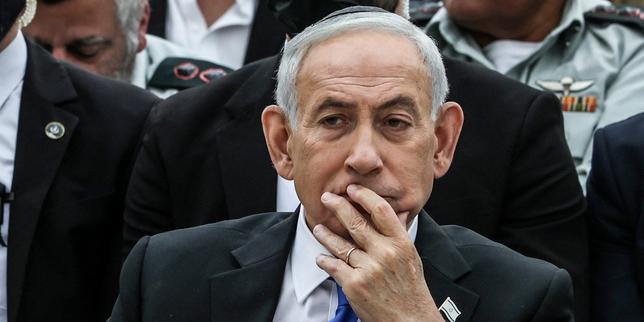
Benyamin Netanyahu is currently presiding over the most significant diplomatic fracture in the history of the State of Israel. For decades, the fundamental pillar of Israeli national security was the "no daylight" policy with the United States and a functional, if occasionally frosty, partnership with European capitals. Today, that pillar is cracking. This is not merely a disagreement over tactical military maneuvers in Gaza; it is a fundamental divergence of values and long-term regional visions. Netanyahu’s insistence on a path that lacks a viable political "day after" has forced even his most steadfast defenders in Washington and Brussels to recalibrate their support.
The rift is deep. It is structural. And for the first time, the consequences are manifesting as tangible shifts in military aid and diplomatic protection.
The Myth of Total Victory and the American Breakpoint
The friction with the Biden administration did not begin with the current conflict, but it has reached a fever pitch because of the lack of a coherent post-war plan. Netanyahu’s rhetoric revolves around "total victory," a term that military analysts and intelligence officials in the Pentagon view as more of a political slogan than a military objective. Washington’s frustration stems from a simple reality: you cannot kill an ideology with kinetic force alone.
Historically, the U.S. has provided Israel with a diplomatic shield at the United Nations. That shield is thinning. When the U.S. allowed a ceasefire resolution to pass by abstaining rather than vetoing, it was a shot across the bow. It signaled that American patience with Netanyahu’s domestic political considerations—specifically his need to appease far-right coalition partners like Itamar Ben-Gvir and Bezalel Smotrich—has limits. These partners have openly called for the resettlement of Gaza, a move that would be a legal and diplomatic catastrophe for the United States to defend on the world stage.
Netanyahu’s strategy appears to be a high-stakes gamble on the 2024 U.S. election. By dragging his feet and resisting Biden’s "red lines" regarding Rafah and humanitarian aid corridors, he is essentially betting that a change in the White House will restore the status quo. This is a dangerous miscalculation. The shift in American public opinion, particularly among younger voters and the progressive wing of the Democratic Party, is not a temporary trend. It is a demographic sea change. Even a Republican administration would find it increasingly difficult to write blank checks to an Israeli government that appears indifferent to American regional interests.
The European Pivot from Partnership to Sanctions
While the U.S. remains Israel's most vital ally, Europe provides the economic and cultural connective tissue that integrates Israel into the Western world. That tissue is being severed. For the first time, we are seeing serious discussions in European capitals about suspending trade agreements and imposing sanctions on extremist settlers.
Germany, traditionally Israel’s most reliable advocate in Europe due to historical responsibility, has shifted its tone. The German Foreign Office now regularly issues statements that were once unthinkable, questioning the proportionality of the response and the legality of settlement expansion in the West Bank. When Germany wavers, Netanyahu has lost his last line of defense in the European Union.
The issue isn't just about Gaza. The European leadership views the Netanyahu government’s judicial overhaul attempts and its empowerment of ultra-nationalists as a departure from shared democratic values. They no longer see Israel as a "villa in the jungle" that mirrors their own liberal democracy. Instead, they see a country drifting toward illiberalism, making it harder to justify the preferential treatment Israel receives in research grants, student exchanges, and trade.
The Tactical Success and Strategic Failure Pipeline
Netanyahu has always billed himself as "Mr. Security." He has built a career on the premise that he alone can navigate the complex pressures of the Middle East while keeping the world at bay. That image was shattered on October 7, and his subsequent actions have failed to rebuild it.
The Israeli Defense Forces (IDF) have achieved significant tactical goals. They have dismantled much of the Hamas battalion structure. They have uncovered vast tunnel networks. However, tactical success is irrelevant if it leads to strategic isolation. By refusing to engage with the Palestinian Authority or discuss a two-state framework, Netanyahu has effectively paralyzed the Abraham Accords. Saudi Arabia, the ultimate prize in regional normalization, has made it clear that the price of admission is now a credible path to a Palestinian state—a price Netanyahu’s coalition is ideologically incapable of paying.
This creates a vacuum. In the Middle East, vacuums are filled by adversaries. Iran and its proxies benefit every time Netanyahu clashes with Biden or ignores the concerns of President Macron. The more Israel is isolated from the West, the more its deterrence is undermined. Deterrence is not just about the quality of your fighter jets; it is about the strength of your alliances.
The Economic Toll of Diplomatic Friction
Israel’s economy is built on high-tech exports and foreign investment. Investors hate instability, and they especially hate international pariah status. The credit rating downgrades by Moody’s and S&P were not just reflections of the war’s cost; they were critiques of the government’s governance and its deteriorating international standing.
The "Startup Nation" relies on a globalized workforce and seamless integration with Western markets. When academic institutions in Europe begin to boycott Israeli researchers, and when tech giants rethink their R&D centers in Tel Aviv due to political risk, the long-term economic engine of the country begins to stall. Netanyahu’s domestic base may applaud his defiance of foreign leaders, but the tech sector—the sector that pays the taxes and drives the growth—is sounding the alarm.
The Far Right’s Stranglehold on Foreign Policy
To understand why Netanyahu is willing to alienate his closest allies, one must look at the math of the Knesset. He is a prisoner of his own coalition. Ben-Gvir and Smotrich hold the keys to his prime ministership. If they walk, the government falls, and Netanyahu faces the legal reckoning of his ongoing corruption trials without the protection of office.
This internal pressure forces him to reject American proposals for a "revitalized" Palestinian Authority to govern Gaza. It forces him to allow the expansion of settlements that the rest of the world considers illegal. In short, Netanyahu is prioritizing his personal political survival over the strategic interests of the state. It is a classic "principal-agent" problem where the leader’s incentives are diametrically opposed to the welfare of the entity he leads.
Allies see this. They recognize that they are not dealing with a leader who is making difficult choices for national security, but a politician making survival choices for a coalition. This realization has evaporated the trust that once defined the relationship between the Israeli Prime Minister's Office and the White House.
The Shift in the Diaspora and the Soft Power Collapse
Israel's isolation isn't just happening at the governmental level; it's happening in the streets and on the campuses of its allies. The "soft power" that Israel spent decades cultivating is evaporating. For the first time, the Jewish Diaspora, particularly in North America, is experiencing a profound internal rift.
Younger Jews are increasingly disconnected from the Netanyahu government's version of Zionism. They see a mismatch between the universal values they were taught and the policies of the current administration. When the Diaspora begins to fracture, Israel loses its most effective grassroots lobbying force. This isn't a problem that can be solved with a better PR campaign or "Hasbara." It is a policy problem. You cannot market your way out of a structural misalignment of values.
The images coming out of Gaza, coupled with the provocative statements from Netanyahu's ministers, have created a narrative that the Israeli government is unwilling or unable to distinguish between its enemies and civilian populations. Whether or not that perception is entirely fair is secondary to the reality that it is now the dominant global narrative. Once a country loses the narrative battle in the West, the policy shifts follow.
The High Cost of Defiance
Netanyahu often speaks of Israel "standing alone" if necessary. It is a powerful, evocative image rooted in Jewish history. But in the 21st century, standing alone is a recipe for national decline. Israel requires American munitions, European markets, and regional cooperation to survive in a hostile neighborhood.
The current trajectory is unsustainable. The "special relationship" with the U.S. is being downgraded to a transactional one. The partnership with Europe is being replaced by a policy of containment and occasional condemnation. The dream of regional integration is on life support.
The tragedy of the current situation is that it was largely avoidable. A different leader, one not beholden to the fringes of the political spectrum, might have used the global sympathy following October 7 to build a massive, international coalition against Hamas while simultaneously laying the groundwork for a new regional order. Instead, Netanyahu chose a path of friction, defiance, and short-term political gains.
The bill for this isolation is coming due. It will be paid in reduced military cooperation, increased economic pressure, and a diminished stature on the world stage. Israel is finding that the cost of Netanyahu's political survival is the very security he promised to protect.
Ensure the red lines are clearly understood. The U.S. and Europe are not walking away from Israel, but they are walking away from Netanyahu. The distinction is crucial, and it is one that the Prime Minister seems determined to ignore, even as the walls close in.