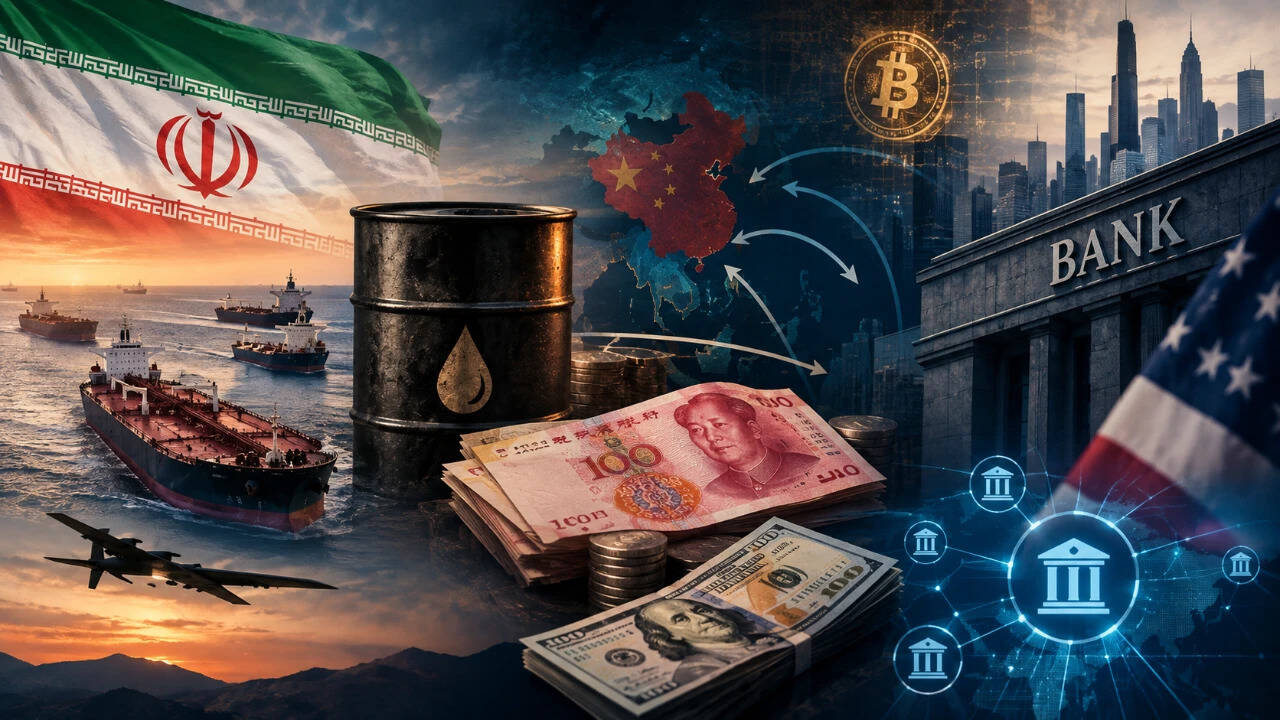
Sanctions are supposed to act like a brick wall, but financial plumbing always finds a leak. Washington wants Iran entirely squeezed out of the global economy, yet billions of dollars tied directly to Tehran still clear through American banks every single year.
According to data compiled by the U.S. Treasury's Financial Crimes Enforcement Network (FinCEN), roughly $9 billion in potential Iranian shadow banking activity slipped through U.S. correspondent accounts. How does a heavily sanctioned state keep tapping into the beating heart of Western finance? It comes down to exploiting the complex, automated architecture of global money movement.
The Mechanics of Shadow Banking
Iran doesn't open accounts directly at Wall Street institutions. That would trigger immediate alarms. Instead, a sophisticated network of intermediaries does the heavy lifting.
Data shows that foreign shell companies operating entirely on paper accounted for roughly $5 billion of this flow. These entities set up shop in financial hubs like Hong Kong, Singapore, and the United Arab Emirates. They mask their true ownership behind layers of corporate bureaucracy, local currency exchange houses, and front organizations.
Coupled with that, front oil companies based abroad transacted an additional $4 billion. When these funds move through local foreign banks that maintain traditional correspondent relationships with U.S. lenders, the dollar-denominated settlements clear automatically. The U.S. bank at the receiving end often sees a routine transfer from a seemingly legitimate overseas commercial client, completely unaware of the Iranian fingerprints hidden three layers deep.
The Real World Example
The vulnerability of correspondent networks isn't just theoretical. Washington took direct aim at the United Arab Emirates branch of Egypt's state-owned Banque Misr after finding it processed roughly $1.8 billion on behalf of more than 100 entities linked to Iranian networks.
Rather than imposing sweeping secondary sanctions that could freeze an entire national institution, the Treasury opted to block that specific branch from accessing its U.S. correspondent accounts. Major U.S. lenders like JPMorgan Chase and Citigroup often act as the underlying clearinghouses for these foreign institutions, highlighting just how difficult it is to police the outer edges of the international financial grid.
The Policy Dilemma for Washington
Stopping these flows completely creates a massive trap for U.S. regulators. If the Treasury cracks down with absolute aggression on every foreign bank that accidentally processes a tainted transaction, the global correspondent banking system starts to fracture.
Foreign lenders might simply decide that dealing in U.S. dollars carries too much regulatory risk. When that happens, nations look for exits. Tehran and its primary trading partners, such as China, already lean heavily on alternative settlements using the Chinese yuan, digital assets, and complex barter arrangements for oil. Pushing too hard to plug every $9 billion leak risks accelerating the long-term erosion of dollar dominance worldwide.
Financial institutions are now under immense pressure via enforcement actions like Operation Economic Outcast to catch these shadow networks before funds clear. Compliance teams must look past basic screening and aggressively map out the multi-jurisdictional shell companies moving modern illicit capital. The system relies on trust, and right now, bad actors are cashing in on that openness.

/voters-voting-in-polling-place-138711480-87a09f220a71438dbdff698a643c8cf1.jpg)