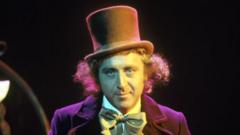
The backlash surrounding Netflix’s deployment of an artificial intelligence-generated clone of Gene Wilder’s voice in its Wonka property exposes a fundamental miscalculation in modern intellectual property management. Entertainment conglomerates increasingly treat legacy talent assets as static code deployment packages rather than dynamic ecosystem variables. When a studio uses deep-learning acoustic models to resurrect a deceased performer's voice, it treats the voice as an isolated technical asset. In doing so, the studio fails to calculate the broader economic friction generated across consumer sentiment, estate valuation, and labor market stability.
This friction is not an emotional byproduct; it is a measurable structural cost. The negative consumer response to synthetic voice cloning is a predictable reaction to the violation of an implied scarcity contract between content creators and audiences. When a studio replaces human performance with algorithmic mimicry, the perceived value of the intellectual property undergoes rapid degradation. Evaluating this phenomenon requires breaking down the economic, legal, and operational frameworks that govern synthetic talent deployment.
The Three Vectors of Synthetic Talent Risk
Studios looking to scale content production via synthetic voice cloning face three core risk vectors. These vectors directly impact the long-term capital value of entertainment franchises.
1. Consumer Asset Degradation
The economic value of a legacy performer’s voice depends entirely on its historical context and scarcity. When a synthetic model commoditizes a unique cultural asset—like Gene Wilder’s specific cadence, timbre, and emotional delivery—the asset loses its premium market positioning.
Audiences do not evaluate media solely on the technical accuracy of an acoustic waveform. They evaluate it based on the authenticity of the performance. By introducing a synthetic replica, a studio shifts the product from a high-value, scarce artistic asset to a low-cost, infinite digital commodity. This shift triggers immediate consumer rejection, lowering brand equity and reducing downstream licensing revenue.
2. The Estate-Studio Valuation Asymmetric Bottleneck
Licensing agreements between media estates and distribution platforms generally rely on historical intellectual property frameworks. These frameworks never anticipated infinite generative derivation. When an estate licenses the name, image, and likeness (NIL) of a deceased actor for a synthetic project, the transaction creates an asymmetrical valuation bottleneck.
- The Studio Premium: The studio secures an infinite generative license, allowing them to produce unlimited audio assets without paying recurring performance fees or dealing with scheduling friction.
- The Estate Discount: The estate receives a upfront payment or a fixed royalty stream based on traditional distribution metrics. This structure fails to capture the true value of the underlying training data used to build the model.
This asymmetry leaves the estate vulnerable to asset depreciation. The widespread availability of a synthetic voice lowers the market value of the original, authentic recordings.
3. Labor Market Friction and Collective Bargaining Contingencies
The use of un-authenticated synthetic voice assets violates the shifting regulatory and labor boundaries within the entertainment industry. The operational risk here involves long-term litigation costs and project shutdown threats from talent guilds.
Using synthetic models to bypass living performers creates structural instability across the creative ecosystem. This instability leads to retaliatory union actions, strict contract enforcement, and public boycotts that increase production costs far beyond the capital saved by cutting out human actors.
The Acoustic Quality and Authenticity Cost Function
The engineering choice to deploy a synthetic voice model relies on a flawed cost function. Studios assume that if the technical fidelity of an AI voice clone approaches a human baseline, consumer utility remains stable while production costs plummet.
We can analyze this dynamic using a basic operational cost function model:
$$C_{total} = C_{tech} + C_{licensing} + C_{friction}$$
Where:
- $C_{tech}$ represents the capital spent training, deploying, and refining the generative acoustic model.
- $C_{licensing}$ is the fee paid to the estate for the rights to the training data.
- $C_{friction}$ is the financial impact of consumer backlash, public relations management, legal challenges, and brand devaluation.
In traditional production, $C_{friction}$ is near zero because human performances carry an inherent authenticity premium. When a studio introduces a synthetic voice clone, $C_{tech}$ drops significantly after the initial model training, but $C_{friction}$ scales non-linearly.
The technical reality of voice cloning explains this non-linear surge in friction. Current deep-learning architectures use neural audio synthesis to map linguistic inputs to a target speaker’s acoustic profile. While these models capture macro-level traits like average fundamental frequency ($F_0$) and spectral envelope shapes, they regularly fail to reproduce micro-prosodic variations. These subtle variations include:
- Sub-phonemic emotional micro-shifts: Tiny changes in pitch and volume that communicate subtext.
- Aperiodic vocal tract noise: Small, unpredictable variations in airflow that give human speech its natural texture.
- Dynamic respiratory pauses: The natural breaths an actor takes, which dictate the rhythm and dramatic tension of a scene.
The absence of these micro-prosodic details creates an acoustic uncanny valley. The human auditory system detects these tiny synthetic anomalies instantly. Instead of experiencing the intended narrative immersion, the audience feels cognitive dissonance. The resulting consumer pushback is a direct response to this technical shortfall, driving $C_{friction}$ up until it wipes out any savings gained from lower production costs.
Legal Vulnerabilities in Generative Resurrections
The Wonka backlash highlights a complex landscape of shifting legal liabilities. Studios can no longer rely on old boilerplate contracts to defend their use of generative assets. The legal framework surrounding synthetic talent rests on three shifting pillars.
Statutory Right of Publicity and Post-Mortem Protection
The right of publicity governs an individual's right to control the commercial exploitation of their name, image, and likeness. However, post-mortem protection varies wildly across jurisdictions.
Some regions offer robust protection for decades after a performer's death, while others offer no protection at all once an individual passes away. This uneven legal reality creates a major compliance headache for global platforms like Netflix. A synthetic voice asset that is perfectly legal to distribute in one market could face immediate injunctions and statutory damages in another.
Federal Deceptive Advertising and Consumer Protection Risks
When a platform markets a project by highlighting a legacy actor's name, but delivers a synthetic model instead, it risks running afoul of consumer protection laws. If marketing materials mislead a reasonable consumer into believing they are purchasing or viewing an authentic historical performance, the platform faces liability for deceptive business practices.
Mitigating this risk requires clear, prominent on-screen disclosures. However, these very disclosures destroy the narrative illusion, reminding the audience of the synthetic nature of the content and accelerating asset degradation.
Intellectual Property Recharacterization and Derivative Works
The long-term ownership of synthetic models trained on copyright-protected audio remains an unresolved legal battleground. If a studio trains a generative model on audio files owned by a third-party record label or a rival film studio, the resulting model can be challenged as an unauthorized derivative work.
Even if the estate approves the voice clone, the underlying copyright owners of the training data can still file costly infringement claims. This vulnerability exposes the studio to unexpected litigation long after a project has launched.
Strategic Blueprint for Synthetic Asset Integration
To deploy synthetic talent without triggering catastrophic brand damage or legal liability, media enterprises must abandon ad-hoc licensing schemes. They need to adopt a rigorous, systematic deployment framework built around transparency, risk management, and shared value.
[Isolate Historical Training Data]
               │
               ▼
[Audit Legal and Estate Permissions]
               │
               ▼
[Establish Independent Human Performance Baseline]
               │
               ▼
[Execute Dual-Factor Authentication and Consent Verification]
Mandate the Hybrid Performance Architecture
Studios should avoid generating standalone audio assets directly from text-to-speech models. Instead, they must use a hybrid performance model where a professional voice actor provides the foundational performance, including the necessary emotional pacing, breath control, and emphasis.
The trained synthetic model is then applied as an acoustic filter over that human performance. This process preserves the vital micro-prosodic variations that prevent the acoustic uncanny valley, lowering consumer friction while respecting the craft of living voice actors.
Restructure Licensing via the Generative Equity Token Framework
Estates should stop signing away their rights in flat-fee or open-ended licensing deals. Future contracts must use a structured framework that ties compensation directly to computational usage and specific distribution metrics:
- Compute-Hour Royalties: The estate receives a fee based on the total processing time used to train and run the synthetic model.
- Granular Per-Project Authorization: Every distinct media asset, down to individual trailers or promotional clips, requires separate approval and payment.
- Asset Reclamation Rights: The estate retains the right to cancel the license and demand the destruction of the model if the studio uses it in a way that damages the performer’s legacy.
Deploy the Ethical Provenance Disclosure Protocol
To eliminate consumer protection risks and build trust with audiences, platforms must use a standardized, clear disclosure system. This protocol requires adding clear visual and metadata labels to any content featuring synthetic performances.
[SYNTHETIC PERFORMANCE NOTICE: Acoustic layer derived from historical recordings of Gene Wilder. Structural performance executed by voice actor.]
This disclosure must be embedded directly into the media file's metadata using secure cryptographic watermarks. This ensures the asset can always be identified as synthetic, preventing misinformation and protecting the long-term value of the original, authentic recordings.
The New Paradigm of Legacy IP Valuation
The industry backlash over the synthetic Gene Wilder voice proves that cutting human creators out of the production loop is a losing strategy. Savings in production costs are quickly wiped out by consumer rejection, legal challenges, and brand devaluation. Moving forward, the media companies that thrive will not be those that use AI to cheaply replicate the past, but those that use synthetic tools to responsibly extend human creativity. Studios must treat voice cloning as a collaborative, highly regulated tool rather than a cheap shortcut for production. Enterprise strategies must pivot from pure cost reduction to sustainable, long-term asset management. Studios that continue to prioritize short-term savings over authentic creative partnerships will find their expensive, AI-driven libraries rejected by an audience that refuses to accept synthetic imitations in place of true human performance.