The diesel engine vibrates through the worn wooden hull of the St. Jude, a modest fishing vessel bobbing sixty miles off the coast of Palawan. For Eduardo, a third-generation fisherman, that vibration used to be the sound of a living. It meant fresh grouper, a successful run, and tuition money for his daughter in Manila. Today, the engine’s rumble is drowned out by a deeper, metallic thrum.
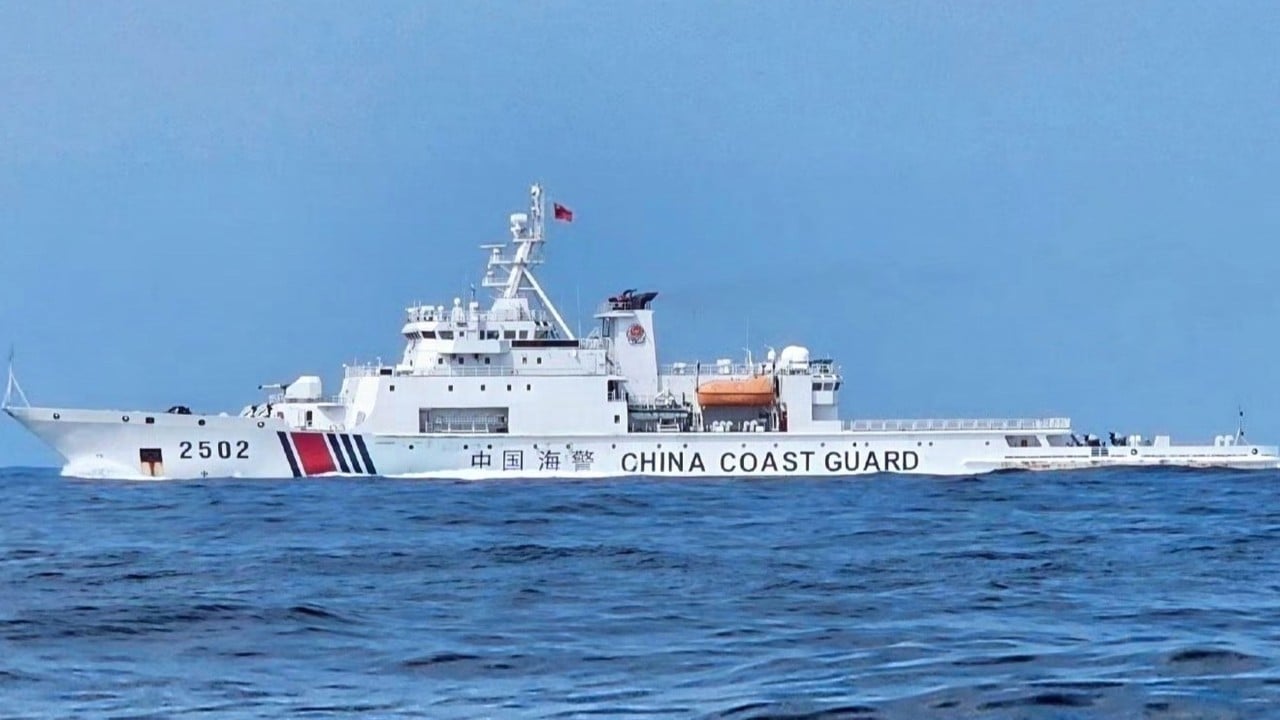
On the horizon, a silhouette grows larger. It is not another fishing boat. It is a Chinese white-hull coast guard vessel, thousands of tons of steel cutting through the turquoise water like an iron iron. It does not fire a shot. It does not need to. It simply sits there, massive and unmoving, a floating fortress casting a long shadow over Eduardo’s traditional fishing grounds.
Eduardo turns the wheel. He steers away. He has no choice.
This is the quiet reality of a modern geopolitical chess game. While diplomats in air-conditioned rooms in Manila, Tokyo, and Beijing trade sharply worded communiqués, the actual consequences of their words wash over the men and women who look at the ocean not as a map grid, but as a home. The recent escalation in sea patrols is not just a diplomatic spat. It is the steady, aggressive redrawing of invisible borders on the water.
The Midnight Pact
To understand why a massive coast guard cutter is suddenly shadowing a wooden fishing boat, you have to look north, to the meeting rooms where lines are drawn on paper.
For months, Japan and the Philippines have been quietly negotiating something fundamental: where one country’s influence ends and the other’s begins. Specifically, they have been working to formalize their overlapping maritime boundaries and defense cooperation. It makes sense on paper. Both nations are island democracies. Both watch the rising power across the sea with growing anxiety. By locking arms and clarifying their borders, Tokyo and Manila hoped to create a unified front, a legal and strategic wall against encroachment.
But in the complex psychology of East Asian politics, an alliance is never just an alliance. It is viewed as a threat.
Beijing watched these boundary talks with mounting irritation. To the Chinese government, the negotiations were not an innocent exercise in maritime mapping. They looked like a tightening knot. It appeared to be a coordinated effort by US allies to hem China in, to dictate terms in waters that Beijing historically views as its own backyard.
The reaction was swift. It was not a declaration of war, nor a dramatic naval blockade. Instead, it was an exercise in overwhelming presence. China launched an expanded wave of sea patrols, flooding the disputed zones with white hulls and maritime militia vessels.
The message was clear: You can draw whatever lines you want on your maps. We own the water.
The Geometry of Fear
The conflict is often described through acronyms and legal jargon—EEZs, UNCLOS, code of conduct agreements. But the mechanics of intimidation are intensely physical.
Think of it as a property dispute between neighbors, but writ large across thousands of square miles of open ocean. If a neighbor believes you are trying to build a fence too close to his property, he might not call the police. He might just park his massive, rusted pickup truck right on the property line, blocking your driveway, waiting for you to blink.
China’s expanded patrols utilize this exact strategy, often referred to by naval analysts as "gray zone" tactics. It is a brilliant, frustrating form of coercion because it deliberately stays just below the threshold of military conflict. The vessels deployed are coast guard ships, not gray-hulled navy destroyers. They carry water cannons and loudhailers instead of anti-ship missiles.
Yet, the power asymmetry is staggering. A thousand-ton steel cutter facing a forty-foot wooden outrigger is an act of psychological violence. The larger ship moves with a terrifying indifference, creating wakes that can easily capsize a smaller vessel, flashing searchlights into the eyes of terrified crew members at 3:00 AM, and blasting high-decibel acoustic warnings that rattle the teeth inside a fisherman's skull.
Consider what happens next when these tactics are scaled up. It creates a vacuum of lawlessness dressed in the uniform of law enforcement. By constantly patrolling, charting, and expelling others, Beijing is trying to establish what lawyers call a "fait accompli"—a done deal. If they patrol the waters long enough, loud enough, and aggressively enough, the rest of the world might eventually tire of protesting. The anomaly becomes the norm.
The Archipelago Chain
The stakes extend far beyond the livelihoods of local fishermen. The geography here tells a larger story, one that connects the fate of a small village in the Philippines directly to the high-tech factories of Tokyo and the global economy.
The waters currently being churned by these expanded patrols form part of the First Island Chain. This geographical construct runs from the Kuril Islands down through Japan, Taiwan, and the northern Philippines. It is a natural maritime choke point. Whoever controls these waters controls the throat of global commerce.
- The Trade Arteries: Over one-third of global maritime trade passes through the South China Sea. Every smartphone, every semiconductor, every barrel of oil heading to Japan or South Korea relies on these waters remaining open and neutral.
- The Resource Wealth: Beneath the shifting waves lie vast, untapped reserves of oil and natural gas, alongside some of the richest biodiversity and fishing stocks on the planet.
- The Security Umbrella: For Japan, a stable, friendly Philippines is vital for its southern flank. If the waters between Taiwan and Luzon become a Chinese lake, Tokyo’s security architecture crumbles.
This is why Japan has broken with decades of quiet, low-profile diplomacy to actively assist the Philippine Coast Guard, providing them with multi-mission response vessels and radar systems. Tokyo understands that a fire in the South China Sea will eventually smoke out the East China Sea.
But providing ships is one thing; changing the reality on the water is another. The Philippine fleet is small, brave, and utterly outmatched in numbers. Every time a Philippine vessel attempts to resupply its outposts or monitor its fishing grounds, it must navigate a gauntlet of Chinese ships that seem to multiply with each passing week.
The Psychological Toll of the Gray Zone
It is easy to get lost in the grand strategy of the island chains, but the true cost of this friction is psychological, paid in daily installments of anxiety by those who live on the frontier.
Imagine going to work every day knowing that a foreign power claims the hallway outside your office. Imagine the stress of knowing that a single miscalculation—a sudden wave, a misunderstood radio transmission, a nervous helmsman jerking the wheel—could trigger an international crisis, or cost you your life.
This anxiety creates a creeping paralysis. It forces communities to make impossible choices. Do you risk the open sea to feed your family, or do you stay close to shore, watching your catches dwindle and your savings disappear? Many are choosing to stay home. The sea is becoming too heavy a burden to bear.
The Chinese strategy relies entirely on this exhaustion. They are betting that the political will of Manila and the patience of Tokyo will wear out long before Beijing's deep pockets empty. They are betting that the world will eventually look away.
The Unyielding Sea
The sun begins to set over the South China Sea, painting the sky in bruised shades of purple and gold. On the deck of the St. Jude, Eduardo watches the distant white hull of the patrol ship fade into a silhouette against the dying light. It remains there, a silent sentinel, a permanent fixture of a changing world.
The boundary talks between Japan and the Philippines will continue. Documents will be signed, joint exercises will be conducted, and official statements will be broadcast to reassure the public. But out here, where the water is deep and the wind is raw, those words feel incredibly distant.
Eduardo restarts his engine. The old wood shudders once more. He does not head toward the rich reefs where his father used to fish; instead, he steers a cautious course back toward the coast, staying within the safe, shallow waters close to home. The invisible wall has done its job for the day. The ocean is vast, beautiful, and completely indifferent to the lines men draw upon it, but for tonight, it feels smaller than it ever has before.