Gulf monarchies are currently engaged in a high-stakes diplomatic gamble to prevent an all-out war between the United States and Iran, driven by a singular, cold reality: their entire economic survival depends on a handful of vulnerable maritime chokepoints and energy facilities. While public statements focus on regional stability and humanitarian concerns, the private maneuvering is about protecting the global oil supply from a catastrophic disruption that would bankrupt the region. These mediators are not acting as peacemakers out of altruism, but as insurance brokers for a global economy that cannot afford a $150 barrel of oil.
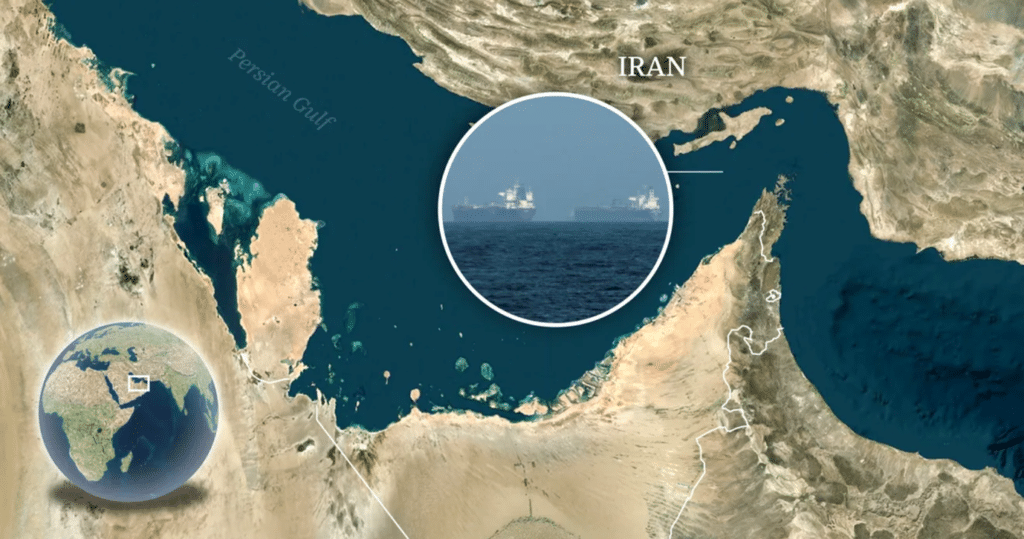
The current friction between Washington and Tehran has moved beyond the usual rhetorical sparring. It now threatens the physical infrastructure of the global energy market. Qatar, Oman, and the United Arab Emirates have stepped into the breach, utilizing back-channel communications to ensure that miscalculations do not lead to the closure of the Strait of Hormuz. Through this narrow waterway, nearly a fifth of the world's daily oil consumption passes. If the lights go out in the Gulf, they go out everywhere.
The Fragility of the Status Quo
To understand the desperation behind Gulf mediation, one must look at the geography of the energy trade. Most of the world views the Middle East as a monolith of oil wealth, but that wealth is anchored to specific, highly exposed points of failure. The Abqaiq-Khurais attack in 2019 proved that even the most sophisticated defense systems cannot fully protect a processing plant from a swarm of low-cost drones. That single event knocked out 5% of global production in a matter of hours.
Since then, the strategy has shifted from pure military defense to aggressive diplomacy. The Gulf states have realized that the United States no longer provides the absolute security guarantee it once did. With Washington pivoting its focus toward the Pacific and domestic shale production providing a buffer for American consumers, the local monarchies find themselves exposed. They are forced to play both sides, maintaining a security partnership with the U.S. while keeping a functional, if tense, dialogue open with Iran.
This dual-track approach is designed to prevent a "total loss" scenario. In such a case, Iran, feeling backed into a corner by economic sanctions, might decide that if it cannot export its oil, no one else will either. This is the nightmare that keeps energy ministers in Riyadh and Abu Dhabi awake at night.
Why Traditional Sanctions Failed the Energy Test
The U.S. policy of "maximum pressure" was intended to starve the Iranian government of resources, but it created an unintended consequence. It pushed Iranian oil exports underground, creating a "ghost fleet" of tankers that operate outside the view of international regulators. This shadow market keeps Tehran afloat and reduces the leverage Washington holds.
When Gulf mediators sit down with Iranian officials, the conversation isn't about human rights or nuclear enrichment. It is about the "energy corridor." They discuss the safety of tankers and the integrity of undersea cables. They are negotiating a set of unwritten rules of engagement. The goal is to keep the conflict contained within a manageable "gray zone" where tensions are high, but the oil keeps flowing.
For the Gulf states, the risk is not just a temporary price spike. It is the permanent acceleration of the global transition away from fossil fuels. If the Middle East becomes an unreliable supplier due to constant military conflict, Western and Asian economies will pour even more capital into renewables and nuclear power to achieve energy independence. The Gulf is fighting to remain relevant in a world that is already looking for an exit strategy.
The Omani and Qatari Backchannels
Oman has long functioned as the "Switzerland of the Middle East," but its role has become more critical as the U.S.-Iran relationship has deteriorated. Muscat provides a neutral ground where officials who cannot be seen together in public can hammer out technical agreements. These aren't grand peace treaties. They are small, tactical de-escalations—releasing a seized tanker here, unfreezing a specific set of assets there.
Qatar plays a different role, using its massive wealth and its position as a leading Liquefied Natural Gas (LNG) exporter to act as a financial intermediary. By hosting political offices for various factions and maintaining deep ties with both the Biden administration and the Iranian leadership, Doha makes itself indispensable. They aren't just passing notes; they are providing the financial scaffolding that makes de-escalation possible.
The Hidden Cost of Neutrality
This mediation comes with a price. By acting as a bridge, these states often draw the ire of hawks in both Washington and Tehran. There is a constant fear that a single rogue actor—a proxy militia or a hardline commander—could trigger a chain reaction that bypasses the diplomats entirely.
The military reality on the ground is increasingly disconnected from the diplomatic efforts in luxury hotels. While mediators talk about maritime safety, the technical capabilities of non-state actors in the region are improving. Ballistic missiles and suicide boats are now part of the standard toolkit for regional influence. The margin for error has never been thinner.
The Pivot to China and the New Energy Order
One factor often overlooked in Western analysis is the growing influence of Beijing. China is the largest buyer of Gulf oil and a significant purchaser of Iranian crude. Unlike the U.S., China does not have a "side" in the religious or political divides of the Middle East. It wants stability for the sake of its own industrial machine.
Gulf mediators are increasingly looking to China to act as a co-guarantor of regional peace. The 2023 restoration of ties between Saudi Arabia and Iran, brokered by Beijing, was a clear signal. The region is diversifying its security portfolio. They no longer trust a single superpower to keep the taps open. This shift creates a new dynamic where the U.S. must compete for influence not just through military might, but by proving it can be a constructive partner in regional stability.
The irony is that the U.S. remains the only power capable of truly securing the waterways, yet its political will to do so is at an all-time low. This power vacuum is what the Gulf states are desperately trying to fill with diplomacy.
The Infrastructure of De-escalation
Beyond the high-level meetings, there is a push to build physical infrastructure that bypasses the most dangerous zones. Pipelines that move oil to the Red Sea or the Gulf of Oman, bypassing the Strait of Hormuz, are being expanded. However, these are multi-year projects that cannot solve the immediate threat of a sudden escalation.
True security in the current climate is found in the "hotline" agreements. These are direct communication links between regional navies and coast guards designed to prevent a collision or a misunderstanding from turning into a naval battle. These technical measures are the unsung heroes of the energy market. They provide the "frictionless" communication necessary to keep global insurance rates from skyrocketing.
The reality of 2026 is that the energy market is more political than it has been in decades. The price of a gallon of gas in a suburb in the American Midwest is directly tied to the success of a Qatari diplomat in a meeting room in Tehran.
The Looming Threat of Miscalculation
Despite the best efforts of mediators, the threat of a "black swan" event remains high. The internal politics of Iran are opaque, and the upcoming election cycles in the U.S. create a period of unpredictability. A domestic political need to look "tough" on either side could lead to a decision that ignores the economic warnings of the Gulf states.
The mediators are essentially trying to manage a volatile chemical reaction. They can add stabilizers, but they cannot remove the underlying heat. The "Energy Fears" mentioned in the headlines are not just about profit margins; they are about the fundamental stability of modern civilization. Without the energy from the Gulf, the global supply chain collapses.
The strategy moving forward is not about finding a permanent solution to the U.S.-Iran rivalry. That is likely impossible in the current generation. Instead, it is about "conflict management"—keeping the fire contained so it doesn't burn down the house.
Every successful mediation effort buys another month of stability. It allows another hundred tankers to pass safely through the Strait. It keeps the global economy on life support while the world figures out what comes after the age of oil. For the Gulf monarchs, the goal is simple: stay relevant, stay rich, and stay out of the crossfire.
The moment the world stops fearing an energy crisis in the Middle East is the moment the Gulf loses its seat at the table. Their power is derived from the very instability they are trying to manage. It is a precarious balance that requires constant adjustment, a perpetual motion machine of diplomacy fueled by the very oil it seeks to protect.
The next time a tanker is seized or a drone is intercepted, watch the flight paths of private jets from Muscat and Doha. Those are the real indicators of where the global economy is headed.