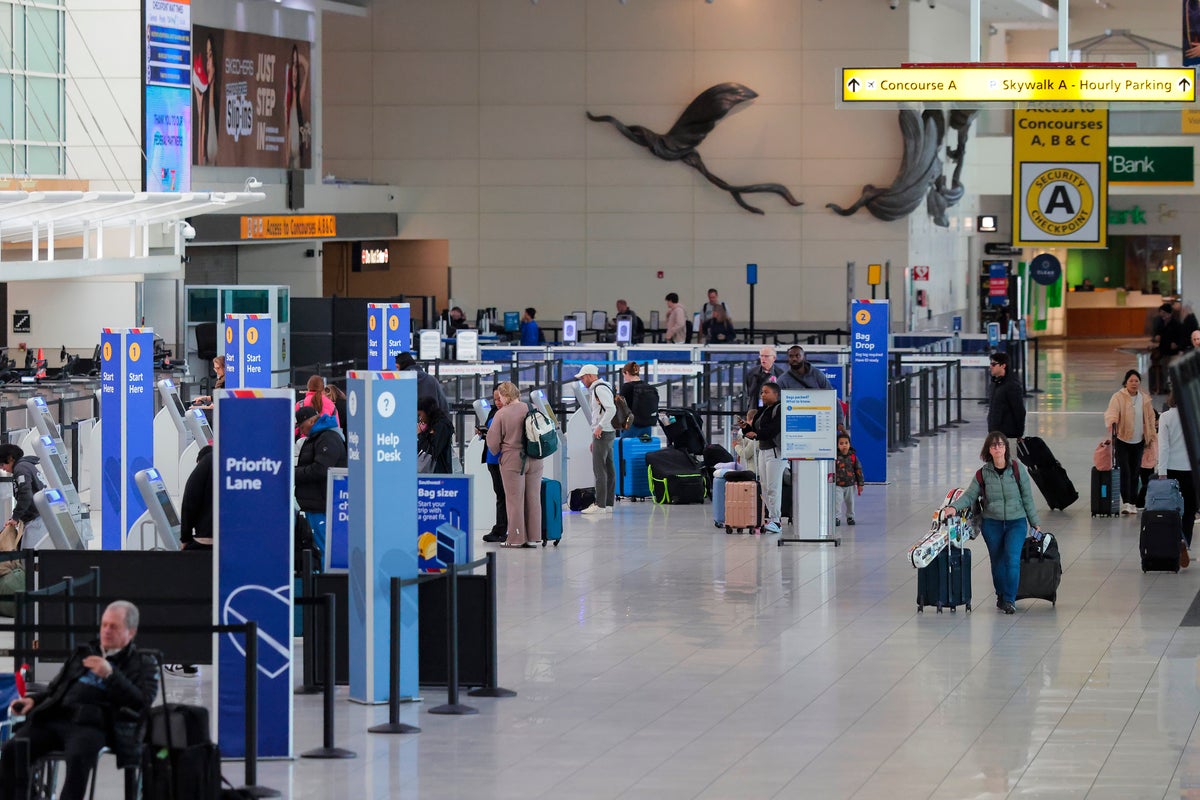
The air in Terminal 4 smells of stale espresso and anxiety. It is a specific, pressurized scent that only exists in the transition zones of the world, where thousands of people are suspended between who they were at home and who they need to be at their destination. For months, this air felt heavier. It was thick with the friction of standing still.
Everyone remembers the "Summer of the Snail." We saw the photos on our feeds: lines that snaked past the security stanchions, out the sliding glass doors, and onto the hot asphalt of the taxi stands. We saw the exhausted faces of families missing connections to funerals or weddings. We felt the collective pulse of a nation’s travel infrastructure skipping beats, then flatlining.
The cause was simple, yet devastatingly human. The people tasked with standing between us and the unthinkable—the TSA officers—were working for nothing. During the longest government shutdown in American history, those blue uniforms became symbols of a breaking point. They weren't just checking IDs; they were wondering how to pay rent.
Now, the paychecks have resumed. The tension has shifted. But as any traveler standing in the current, slightly faster flow can tell you, the system isn't healed. It is merely scabbed over.
The Man Behind the Plexiglass
Consider a hypothetical officer named Elias. He has been with the agency for eight years. He knows the difference between a nervous flyer and a suspicious one by the way they hold their breath when he asks for a passport. During the weeks when the paychecks stopped, Elias still showed up. He stood on his feet for ten hours a day, maintaining a professional veneer while his bank account dipped into the red.
When the news broke that agents were being paid again, the headlines suggested a "return to normal." It is a comfortable phrase. It implies a light switch being flipped. But Elias doesn't feel like a switch has been flipped. He feels like a marathon runner who was told the race was over, only to realize he’s just entered the next lap.
The "return" to work wasn't just about money hitting accounts; it was about the mass return of the "sick-out" workforce. At the height of the crisis, the TSA saw a national unscheduled absence rate of ten percent. In some hubs, it was higher. When you lose one out of every ten people in a system designed for maximum capacity, the math of misery is inevitable.
Today, those agents are back. The lanes are opening. The "wait time" monitors, those glowing digital oracles above the queues, are showing green numbers again: 15 minutes, 20 minutes, 12 minutes.
Yet, the recovery is haunted by a backlog that isn't measured in minutes, but in morale.
The Ghost of the Shutdown
Security is a game of focus. It is a high-stakes hunt for the needle in a haystack of four-ounce shampoo bottles and forgotten pocketknives. When an officer is preoccupied with the eviction notice on their kitchen table, the haystack becomes more dangerous.
While the lines are moving faster now, the TSA is grappling with the "invisible stakes" of a demoralized workforce. Industry experts and union representatives have been vocal: you cannot treat a security force like a temporary inconvenience and expect them to remain a "robust" shield.
The data confirms the improvement. In the days following the restoration of pay, wait times at major hubs like Hartsfield-Jackson Atlanta and Newark Liberty began to stabilize. The surge of agents returning to their posts meant more x-ray machines humming and more "divestiture" bins sliding across stainless steel rollers.
But the "normal" we are chasing is a moving target.
Aviation travel is increasing. We are a society that refuses to stay put. Even as the TSA recovers its footing, the sheer volume of passengers is rising faster than the agency’s ability to recruit and train new staff. The shutdown didn't just stop pay; it stopped the pipeline. Background checks, training cycles, and onboarding for the next generation of agents were frozen. We are now feeling the phantom pains of those lost weeks.
The Geography of Frustration
Not all airports are created equal. Travel is a localized experience. While a passenger in Denver might find themselves breezing through PreCheck in under five minutes, a traveler in Miami might still find themselves trapped in a bottleneck.
This regional disparity is the real story of the post-shutdown era. The recovery is lumpy. It depends on how many agents in a specific city decided that the stress wasn't worth the stability and walked away for good. The TSA has always struggled with retention; the shutdown served as a final nudge for many veteran officers to find work in the private sector.
Imagine a bridge. If you remove several key bolts, the bridge might stay up. You can put the bolts back later, but the structure has been stressed. It has groaned under the weight. You can't just pretend the stress never happened.
The aviation industry is that bridge.
The Passenger’s Burden
We, the travelers, have developed a sort of "travel PTSD." We arrive three hours early for domestic flights because we don't trust the green numbers on the screen. We look at the person in the blue uniform not just as a security guard, but as a barometer of the national mood.
There is a strange, unspoken negotiation happening at the bins now. A bit more eye contact. A bit more "thank you." We realized, briefly, how much our freedom of movement depends on the financial stability of people we usually try to ignore.
The lines are better. The statistics prove it. But the "human element"—the fatigue in an officer's eyes, the anxiety of a passenger who remembers the three-hour wait from last month—remains.
The system is functioning, but it is tired. It is like a bone that was broken and reset; it works, but it aches when the weather changes. We are moving again, shuffling our feet, pulling our rolling luggage, and checking our watches. We are through the bottleneck, for now.
Beyond the metal detectors, the terminal opens up. People rush toward their gates, clutching boarding passes like talismans. The machinery of global commerce and personal connection has resumed its frantic pace.
An officer at the end of the line watches them go. He picks up an empty gray bin and stacks it. The stack is heavy. He adjusts his gloves, takes a breath of that pressurized air, and looks at the next person in line.
"Laptops out, please," he says. His voice is steady. But he is still waiting to see if the ground beneath his feet is actually solid this time.