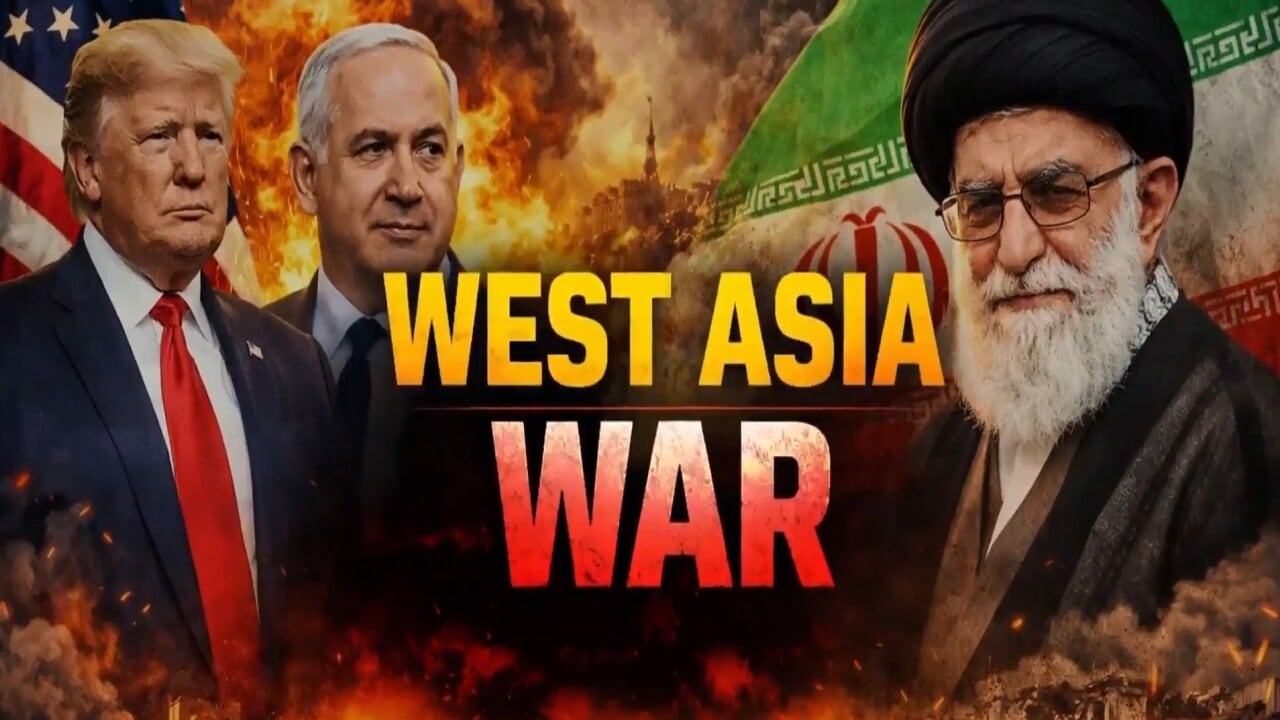
A heavy silence often falls over the Situation Room before the screens flicker to life. It is a room built for doctrines. For decades, the wood-paneled walls have absorbed the rigid logic of containment, the structured theories of deterrence, and the ironclad maps of Cold War alliances. But the maps currently being drawn in Washington don’t look like the ones that came before. They aren't etched in stone. They are written in water.
To understand the current state of American influence in Iran, you have to stop looking for a grand strategy. There is no dusty leather-bound book on a shelf labeled "The Iran Doctrine." Instead, there is a pulse. A rhythm. A series of moves that look less like chess and more like high-stakes poker played in a room where the lights keep blinking out.
Doug Sosnik, a man who has spent a lifetime reading the tea leaves of American power, describes the current approach to Iran as something transactional and fluid. Those words sound clinical on paper. In reality, they are chaotic. They represent a world where the old rules of "if X, then Y" have been shredded and tossed into the Potomac.
Imagine a merchant in a Tehran bazaar. He doesn’t care about the ideological purity of a Washington think tank. He cares about the price of saffron and whether the tankers in the Strait of Hormuz are moving or idling. To him, the "fluidity" of American policy isn't a political science term; it’s the difference between a storefront that stays open and a life’s work that collapses. This is where the abstract concept of a transactional foreign policy hits the pavement.
The Death of the Long Game
For the better part of a century, the United States operated on the "Big Idea." We had the Marshall Plan. We had the policy of Containment. These were North Stars. Even if a president changed, the ship generally steered in the same direction.
That ship has been swapped for a speedboat.
The current strategy regarding Iran is built on the immediate. It’s a series of "what have you done for me lately" exchanges. If Iran pulls back on a specific proxy, the pressure might ease. If a drone hits a specific target, the sanctions tighten. It is a constant, vibrating negotiation. While this keeps the opponent off-balance, it also leaves the allies—the ones who used to rely on that North Star—feeling like they are navigating in a thick fog.
Consider the perspective of a mid-level diplomat in Riyadh or Jerusalem. In the old world, they knew the script. They knew that certain actions would trigger certain American responses. Now, they wake up to a world where the script is being rewritten in real-time on social media.
The danger of a fluid strategy is that fluidity can easily turn into a leak. When there is no clear doctrine, every single event becomes a potential crisis. Without a framework to categorize a provocation, every spark looks like a forest fire.
The High Cost of the Handshake
In a transactional world, everything has a price tag. The "maximum pressure" campaign wasn't just a slogan; it was a valuation. It was an attempt to make the cost of Iran’s regional ambitions so high that the regime would have no choice but to sell its soul for a bit of economic oxygen.
But here is the catch about transactions: they require two people willing to trade.
When you treat foreign policy as a series of deals rather than a long-term relationship, you lose the "loyalty discount." You are constantly paying retail. You have to buy influence over and over again because you haven't invested in the infrastructure of a lasting alliance.
Think about the Strait of Hormuz. It is a narrow strip of water, a choke point through which a fifth of the world’s oil flows. In a doctrinal world, the U.S. presence there is a permanent fixture—a "don't even think about it" sign. In a transactional world, that presence becomes a bargaining chip.
"We stay here if you do this. We leave if you do that."
It’s a powerful lever. But it’s also an exhausting way to run a superpower. It requires a level of constant attention and tactical brilliance that is difficult to maintain over years, let alone decades. It turns the Secretary of State into a glorified claims adjuster, constantly scurrying from one fire to the next with a clipboard and a calculator.
The Human Shadow in the Data
We often talk about "Iran" as a monolith. We see a flag or a map. We forget the 85 million people living under the weight of these transactions.
There is a young woman in Isfahan. She is brilliant, she speaks three languages, and she wants to start a tech company. To her, the "fluidity" of American policy is a ghost that haunts her bank account. When the transactions go well, her internet works and she can dream of expansion. When the transactions fail, the currency devalues by sunset and her dreams are put on ice for another four years.
She is the invisible stakeholder in the Doug Sosnik analysis.
When a strategy lacks a doctrine, it lacks a moral center. It becomes about the "win" of the day rather than the world of tomorrow. If the goal is simply to keep the Iranian regime "off-balance," we have to ask who else is falling over in the process.
The unpredictability that serves as a weapon against an adversary also acts as a weight on the innocent.
The Mirage of Stability
There is a seductive quality to the transactional approach. It feels pragmatic. It feels "business-like." It avoids the quagmires of the past where America tried to "nation-build" or export democracy at the end of a bayonet.
"We aren't here to change you," the transactionalist says. "We are just here to make sure you don't hurt our interests today."
It sounds clean. It isn't.
Because the Middle East is not a spreadsheet. It is a complex ecosystem of grievances that date back centuries and aspirations that look forward generations. When you poke one part of the web, the whole thing shudders.
If you make a deal with a strongman to stop a specific shipment of missiles, you might solve a problem for six months. But if that deal undermines a local movement for reform or alienates a long-standing democratic ally, you’ve essentially traded a permanent asset for a temporary truce.
You’ve cashed out your 401k to pay for a weekend at the casino.
The Waiting Game
The Iranian leadership knows how to play the long game. They have been practicing it for four decades. They look at the fluidity of Washington and they see an opportunity. They don't need to win every transaction; they just need to outlast the person across the table.
They understand that in a system without a doctrine, the biggest weakness is the election cycle.
A transactional strategy is only as good as the person making the trades. When the administration changes, the ledger is wiped clean. This creates a "wait-and-see" culture among both our enemies and our friends. Why commit to a difficult deal today when the terms might be completely different in two years?
This is the hidden cost of being "fluid." You lose the power of your word. If the world knows your policy can be traded for a political win or shifted by a morning headline, your promises lose their premium.
The Weight of the Unseen
We are living in an era where the "Big Ideas" are out of fashion. We are skeptical of grand visions and weary of "forever wars." In that exhaustion, the transactional, fluid approach of the current era feels like a relief. It’s light. It’s fast. It’s unburdened by the baggage of the past.
But there is a reason we used to have doctrines.
Doctrines are like the foundations of a house. You don't see them, and they aren't particularly exciting to look at. But without them, the house eventually starts to lean. The doors stop latching. The windows crack.
As we look at the shifting sands of the Iran strategy, we see a masterclass in tactical agility. We see a series of maneuvers that have, undeniably, kept the regime in Tehran guessing. But guessing is not the same as behaving. And a lack of war is not the same as a presence of peace.
The map of the Middle East is being redrawn, but the ink is disappearing as fast as it’s applied.
In the quiet offices of the State Department and the noisy streets of Tehran, everyone is waiting for the same thing. They are waiting for the moment the music stops. They are waiting to see if, when the fluidity finally settles, there is anything solid left to stand on.
Until then, we are all just watching the ticker, hoping the next transaction doesn't cost more than we are willing to pay.
The merchant in the bazaar turns off his lights. He doesn't know what tomorrow's price will be. He only knows that the wind is blowing, and in this part of the world, the wind rarely brings anything good when it changes direction this fast.



