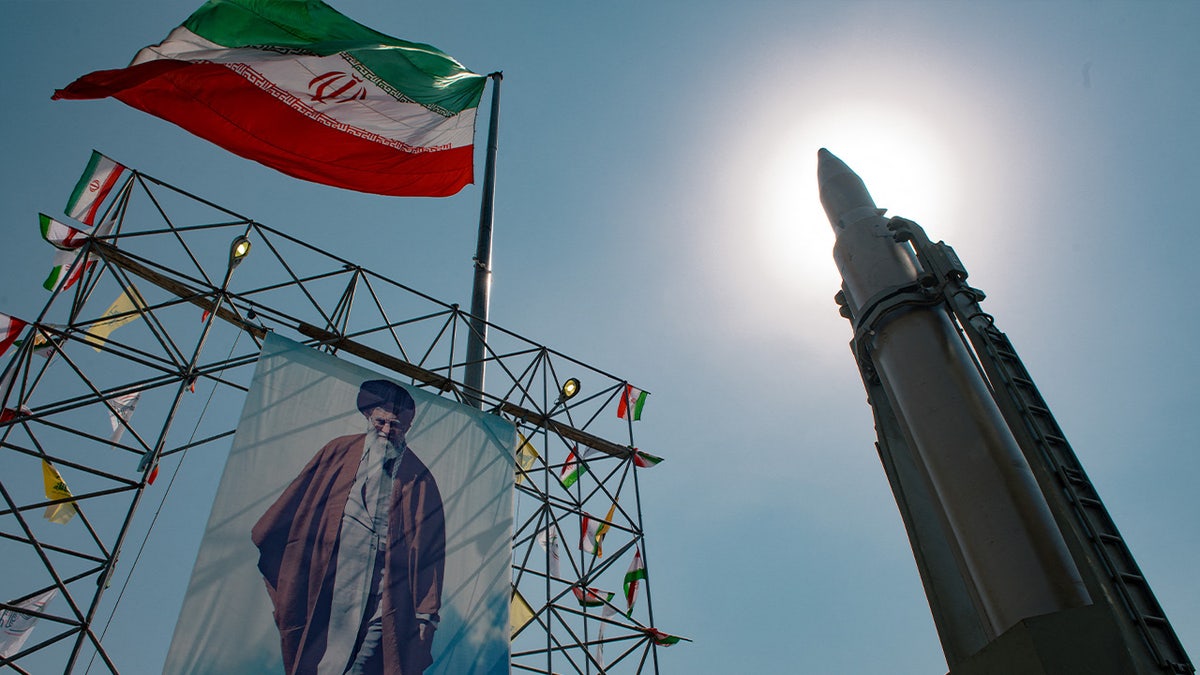
In a small, dimly lit apartment in suburban Tehran, a young woman named Sara sits before the blue light of a laptop. She isn't a spy. She isn't a politician. She is a graphic designer who wants to know if her currency will be worth half as much by breakfast. Every time a podium is gripped in Washington D.C., Sara’s heart rate climbs. When Donald Trump speaks about Iran, he isn’t just talking to a domestic audience or a room full of reporters; he is broadcasting directly into the nervous systems of millions of people who live in the crosshairs of "maximum pressure."
The debate over whether the United States seeks "regime change" or merely a "change in behavior" sounds like a semantic game for think-tank scholars. To Sara, it is the difference between a slow suffocation and a sudden explosion.
Donald Trump has often insisted that he is not looking for regime change. He speaks of a desire to make Iran great again—a rhetorical mirror of his own domestic slogan—claiming he wants the leadership to simply stop their nuclear ambitions and regional proxy wars. But words in the Middle East carry a weight that often exceeds their dictionary definitions. When a superpower systematically dismantles a nation’s economy, the distinction between wanting a government to change its mind and wanting that government to collapse becomes a ghost.
The Architecture of Pressure
To understand the stakes, we have to look past the headlines and into the mechanics of isolation. The strategy deployed during the first Trump administration, and the one being signaled for a potential second act, is built on the logic of a vise. You turn the handle. Then you turn it again.
Economic sanctions are often described in clinical terms—"targeting sectors" or "freezing assets." The reality is more visceral. It is a pharmacy in Isfahan running out of specialized cancer medication because the banking channels required to pay for them have been cauterized. It is an elderly man watching his life savings evaporate as the rial tumbles against the dollar.
When the Trump administration exited the Joint Comprehensive Plan of Action (JCPOA) in 2018, the stated goal was to force Tehran back to the table for a "better deal." The logic was simple: make the status quo so painful that the Iranian leadership would have no choice but to surrender their ballistic missile program and their influence in Lebanon, Iraq, and Yemen.
But here is where the narrative splits. If you squeeze a regime so hard that it can no longer provide basic services to its people, are you asking for a policy shift? Or are you architecting a revolution? Trump’s critics argue that by demanding everything at once—a total cessation of nuclear enrichment, an end to all regional involvement, and the release of all prisoners—the U.S. is essentially demanding that the Islamic Republic cease to be the Islamic Republic.
The Ghosts of 1953
History isn't a book on a shelf in this part of the world; it’s the soil. Every Iranian schoolchild knows about the 1953 coup, where the CIA and British intelligence helped topple the democratically elected Prime Minister Mohammad Mosaddegh. That event is the original sin of U.S.-Iran relations.
When Trump or his surrogates speak about the Iranian people being "tired of their leaders," it triggers a specific, historical muscle memory. The Iranian government uses this rhetoric to paint every internal protest—regardless of how legitimate the grievances are—as a foreign-backed plot.
Consider a hypothetical scenario: A grocery store owner in Shiraz is angry because he can no longer afford to stock his shelves. He goes to the street to shout his frustration. If the White House tweets in support of him, saying the regime’s days are numbered, that shopkeeper is no longer just a frustrated citizen. In the eyes of the state, he has become a foot soldier for an American-led regime change operation.
The paradox is cruel. The more the U.S. signals a desire to see the government fall, the more it provides that government with the justification to crush internal dissent. The hardliners in Tehran and the hawks in Washington often find themselves in a strange, symbiotic dance. They both need the other to be the ultimate villain to justify their own existence.
The Digital Battlefield
The conflict is no longer fought just with oil tankers and centrifuges. It is fought in the digital ether. Under the previous Trump administration, the use of cyber operations and social media messaging became a primary tool of "gray zone" warfare.
Information is weaponized to bypass the Iranian state media, reaching people directly on Telegram and Instagram. The goal is to highlight the corruption of the elite, contrasting the luxury lives of the "Aghazadehs"—the children of the regime—with the struggles of the working class.
But this digital outreach is a double-edged sword. When the U.S. government funds "civil society" programs or Persian-language broadcasting, it creates a "toxic touch." Legitimate Iranian activists, who are risking their lives for genuine democratic change, often find themselves forced to distance themselves from American support. They know that in the courtrooms of Tehran, an American compliment is a death sentence.
Trump’s approach relies on the idea that the Iranian people are a coiled spring, ready to pop if the pressure from outside is high enough. It assumes that the pain of sanctions will eventually outweigh the fear of the security forces. It is a gamble with human lives as the currency.
The Mirage of the Better Deal
Trump has frequently stated that he could settle the Iran issue "in one week" if he were in power. This is the hallmark of his "Art of the Deal" persona—the belief that everything is a transaction and everyone has a price.
However, the Iranian leadership views the conflict not as a business dispute, but as an existential struggle. To them, the nuclear program isn't just a bargaining chip; it is a guarantee against the fate of Muammar Gaddafi or Saddam Hussein. They saw what happened to leaders who gave up their unconventional weapons. They watched the videos. They remember.
When Trump claims he doesn't want regime change, he might be telling his version of the truth. He might genuinely prefer a scenario where Ayatollah Khamenei sits down, signs a piece of paper, and agrees to be a "normal country." But for the Iranian leadership, the concessions required to satisfy Trump’s "Twelve Demands" (as outlined by his former Secretary of State Mike Pompeo) would effectively end the ideological foundation of their state.
If the requirements for peace are synonymous with the dismantling of your identity, is there really a choice?
The Human Cost of Ambiguity
The gray area between "behavior change" and "regime change" is where the most vulnerable people live.
Imagine a young scientist in Tehran who has spent a decade studying renewable energy. Because of the "maximum pressure" campaign, his laboratory can’t import the sensors he needs. He is told that this is for his own good—that if the economy collapses, a better government will rise from the ashes. He looks at Libya. He looks at Syria. He looks at Iraq. He wonders if "better" is a luxury he can survive.
There is a profound exhaustion that settles into a society under perpetual threat. People stop planning for next year. They stop planning for next month. They live in a state of high-alert paralysis.
The rhetoric coming out of the U.S. election cycle suggests a return to this volatility. Trump’s supporters see it as the only way to deal with a "bully" regime that spreads terror across the region. They point to the Abraham Accords and the killing of Qasem Soleimani as proof that strength, not diplomacy, is the only language Tehran understands.
But strength is often indistinguishable from provocation in a region where everyone is holding a match.
The Weight of the Next Chapter
The question isn't just whether Trump wants the Iranian government to fall. The question is what happens to the eighty-five million people caught in the machinery of that desire.
If the goal is truly behavior change, it requires a "golden bridge" for the adversary to retreat across. It requires giving them a way to save face and a tangible reason to say yes. If the goal is regime change, then the bridge is burned before the conversation even starts.
As the political gears in Washington begin to turn toward the next cycle, the signals are being read with panicked precision in the streets of Tehran. People are watching the polls not out of political curiosity, but out of a survivalist instinct.
They are waiting to see if the next four years will bring a chance to breathe, or the final turn of the vise.
The sun sets over the Alborz mountains, casting long, jagged shadows across a city that has survived empires, revolutions, and wars. In the quiet moments before the evening news begins, there is a collective holding of breath. The world’s most powerful man might say he doesn't want to topple a government, but when he speaks, the foundations of houses thousands of miles away begin to tremble.
Decisions made in air-conditioned rooms in D.C. manifest as empty plates in Shiraz. They manifest as a father telling his daughter that, no, they cannot go to university abroad this year. They manifest as a thin, vibrating line of anxiety that stretches across the globe, connecting a voter in Ohio to a designer in Tehran.
The line is invisible, but it is taut enough to snap.