The Summer Salad
It starts with a crisp, refreshing bite of fresh cilantro on a warm July afternoon. You do not think twice about it. Why would you? Vegetables are the cornerstone of good health, the vibrant centerpiece of every sensible diet.
Then, two weeks pass. Also making headlines in related news: Inside the Cyclospora Crisis Crippling the CDC.
Suddenly, your body turns against you. It begins with a low-grade fatigue that drags your limbs down like lead weights. Soon after comes the relentless, gut-wrenching cramping, followed by watery diarrhea that refuses to stop. Days turn into weeks. You lose your appetite, your energy, and your weight. You visit a doctor, get tested for the standard stomach bugs, and wait. The test comes back negative for food poisoning staples like E. coli or Salmonella. You are left exhausted, dehydrated, and utterly baffled.
You have become a quiet statistic in one of the most elusive outbreaks sweeping across America. Further information on this are detailed by National Institutes of Health.
The Phantom Microbe
The culprit behind this misery goes by the name Cyclospora cayetanensis. It is not a bacteria, nor is it a virus. It is a microscopic, single-celled parasite that targets the small intestine.
Unlike common foodborne pathogens that make you sick within hours, Cyclospora plays a long game. When the parasite leaves a host, it is not immediately infectious. It needs time—often days or weeks in ambient temperatures—to mature and become capable of causing harm. This delayed reaction creates a massive blind spot for public health investigators. By the time a patient feels the first sharp pang in their abdomen, the meal that infected them is an ancient memory, long cleared from their fridge and forgotten from their mind.
This delay is precisely why the Centers for Disease Control and Prevention now finds itself tracking thousands of cases across a growing number of states. The official numbers—over 7,400 cases stretching across at least nine states—represent only the sharp tip of a massive iceberg. For every person who goes to a clinic, gets the specific stool PCR test required to detect a parasite, and reports it to local health authorities, dozens more simply suffer in silence at home, assuming they caught a stubborn stomach flu.
Following the Microscopic Paper Trail
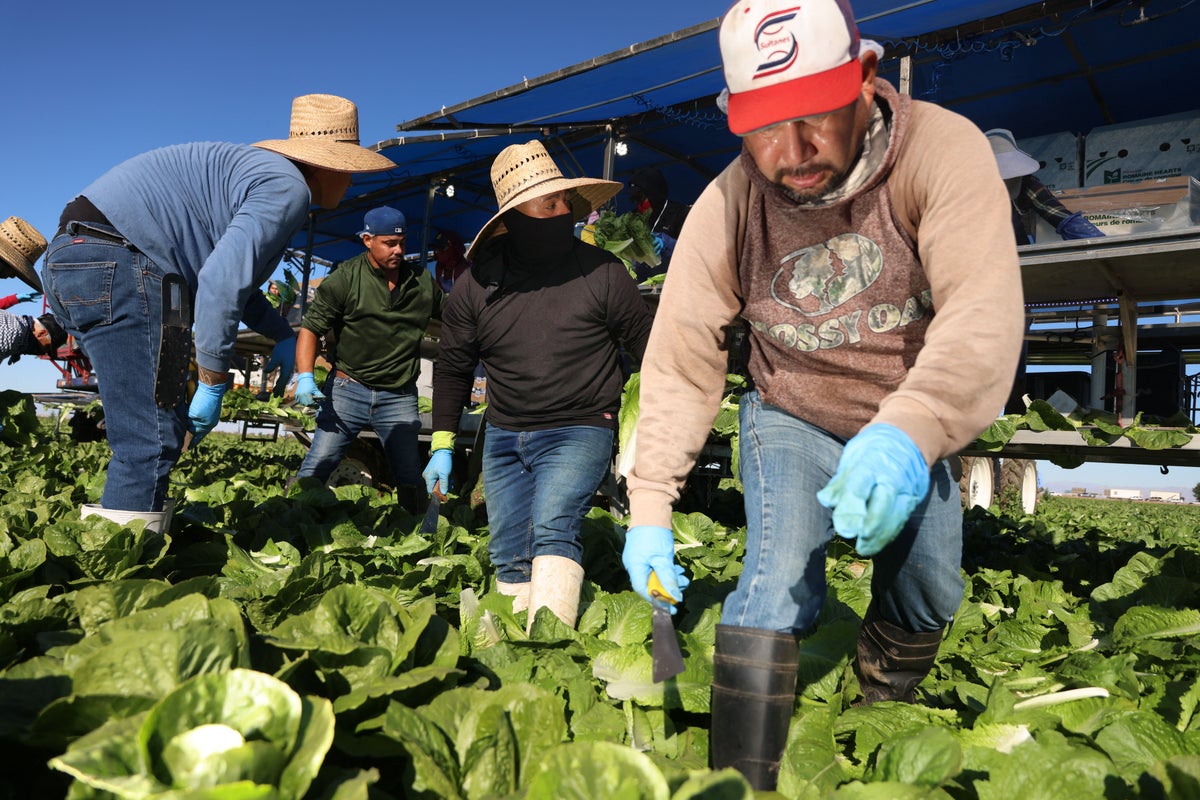
How does a microscopic parasite find its way into mainstream supply chains? The journey of our produce is complex, spanning thousands of miles, hundreds of hands, and intricate irrigation networks.
Cyclospora is typically transmitted through food or water contaminated with human feces. In rural farming regions where fresh produce like leafy greens, fresh herbs, raspberries, and snow peas are grown, water is life. If an irrigation canal or washing basin is exposed to untreated sewage or inadequate sanitation facilities, the microscopic oocysts of Cyclospora cling tightly to the rough surfaces of leaves and stems.
Washing your salad at home helps, but it is rarely enough. The parasite produces a tough, resilient outer shell that acts like armor. Standard chemical sanitizers and cold tap water washes often fail to dislodge or kill it.
Consider a hypothetical local grocery store clerk stocking fresh basil on a Tuesday morning. The leaves look vibrant, green, and wholesome. Yet, invisible to the eye, tiny parasitic capsules rest on those delicate leaves, waiting for a host.
Contaminated Water Source
       │
       ▼
Agricultural Crop (Herbs, Berries, Greens)
       │
       ▼
Harvest & Distribution Network
       │
       ▼
Consumer Consumption
       │
       ▼
1 to 2 Week Incubation Period
       │
       ▼
Prolonged Gastrointestinal Illness
The Human Toll Behind the Case Counts
Beyond the epidemiological maps and state health advisories lies a deeply disruptive human experience.
Public health officials often talk about "gastrointestinal illness" in clean, clinical terms. The reality is far harsher. A severe Cyclospora infection, known as cyclosporiasis, can persist for a month or longer if left untreated. Patients experience cyclical bouts of symptoms—feeling slightly better for a day, only to be hit by another wave of severe nausea, bloating, and explosive diarrhea forty-eight hours later.
The psychological toll is real. People become hesitant to eat, afraid of triggering another painful episode. Workdays are lost. Summer vacations are canceled. For vulnerable populations—the elderly, young children, or those with compromised immune systems—the severe dehydration can lead to hospitalization.
Treatment exists, but it requires accurate diagnosis. Common over-the-counter anti-diarrheal medications offer little relief against a parasite that has anchored itself into the lining of your gut. Resolving the infection typically requires a specific combination antibiotic, trimethoprim-sulfamethoxazole. Without that specific key, the body remains locked in a prolonged war of attrition.
Fixing a Fractured System
The rapid spread of cyclosporiasis across multiple state lines highlights a structural vulnerability in our modern food distribution network. Food today travels through high-speed, centralized hubs. A single contaminated field can distribute infected produce to distribution centers that supply thousands of grocery stores across half a continent within forty-eight hours.
Traceability remains the primary hurdle. When an outbreak hits, health officials must conduct painstakingly detailed interview surveys with hundreds of sick individuals, asking them to recall every ingredient in every salad or garnish they ate weeks prior. Linking an outbreak to a single farm or washing facility demands complex traceback investigations through supply chain invoices that are often still kept on paper.
Systemic changes are quietly under way. Agricultural standard protocols are tightening around water testing and field sanitation guidelines. Advanced genomic sequencing is allowing researchers to "fingerprint" parasitic strains faster, linking seemingly isolated cases in different states to the same original source before the case count multiplies further.
The Produce Aisle
You walk past the misted display cases in your local market. The fresh berries shine under the bright lights. The cilantro smells bright and sharp.
The goal is not to live in fear of fresh food. Fresh vegetables and fruits remain essential to our survival and well-being. But understanding the invisible pathways of our supply chain changes how we see the plate in front of us.
Clean water, rigorous farm labor standards, and rapid public health response are not abstract regulatory concepts. They are the invisible shields standing between a fresh summer meal and weeks of profound illness.
The parasite is microscopic, but its message is massive: our health is inextricably bound to the soil, the water, and the hands that harvest our food thousands of miles away.