The Wire in the Wet Sand
Stand on the misty cliffs of Pacific City or the cold, salt-sprayed beaches of Tillamook County, and the Pacific Ocean looks utterly wild. It feels untouched, untamed, endless. Grey waves smash against jagged basalt rocks. Gulls scream into the wind.
Look closer at the surf. Beneath that churning water, tucked five feet under the wet seafloor, lies a silent, pulsing artery of modern human existence.
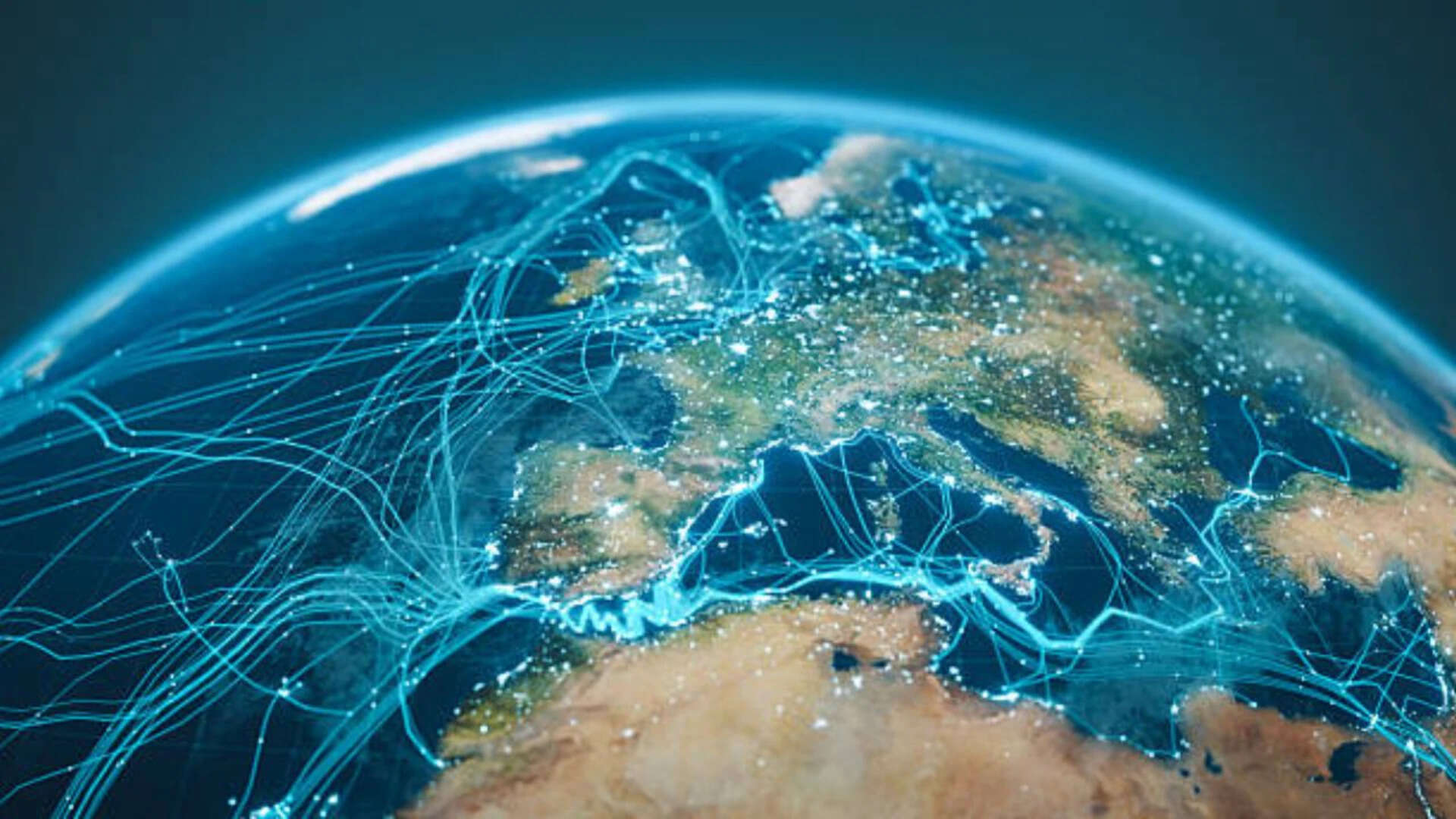
It is a fiber-optic cable, no thicker than a garden hose. Inside its heavy protective armor, microscopic strands of glass carry trillions of pulses of light every second. High-frequency stock trades, video calls, streamed movies, cloud-stored family photos, and infinite lines of code speed across the ocean floor at nearly the speed of light, connecting North America to Asia.
Tech giants and telecommunications conglomerates laid these deep-sea highways across Oregon’s publicly owned seabed. For years, the state charged relatively modest administrative costs to let these massive corporations pipe their digital gold standard through public land.
Now, Oregon is asking a simple question: If the world’s wealthiest tech firms want to park their digital highways on the ocean floor owned by the citizens of Oregon, shouldn’t the children of Oregon see a return on that land?
A new state proposal aims to charge telecommunications companies up to nearly $5 million per cable for using Oregon's submerged coastal land. The money wouldn't disappear into an ambiguous administrative void. Instead, it would flow directly into the Common School Fund, directly funding public education across every corner of the state.
Two Worlds, Separated by Five Feet of Sand
To understand why this proposal matters, consider a hypothetical yet painfully common scene in a rural Oregon public school.
Picture a sixth-grade classroom in a coastal timber town that has seen better decades. The heater clanks loudly in the corner. The teacher buys colored pencils and copy paper out of her own paycheck because the school budget was slashed again last spring. A student sits at a scuffed laminate desk, waiting three minutes for a single educational web page to load on a decade-old desktop computer.
Meanwhile, three miles west of that very classroom, buried beneath the crashing surf, lies one of the fastest fiber-optic links on Earth.
The contrast is staggering. Billions of dollars of global economic activity pass through the wet sand every hour, while the school down the road struggles to replace twenty-year-old textbooks.
Public land has always carried an implied social contract. When a railway cuts across state land, the railway pays rent. When an oil pipeline or a power grid crosses public space, the operating company compensates the community for the right-of-way.
Submarine cables were long treated differently, partly because they sit out of sight, down in the quiet darkness of the continental shelf. Out of sight, out of mind. But as global internet traffic exploded over the past decade, Oregon's coast became a premier gateway for transatlantic and transpacific infrastructure. The state’s Pacific shoreline offers a direct, low-latency pathway to Asian markets, making its coastal sea bed immensely valuable real estate.
The Cost of the Ocean Floor
Under the proposed fee structure developed by Oregon's Department of State Lands, companies applying to land fiber-optic cables on state-owned submerged territory would pay a new rate tied to the footprint and value of the easement. For major international transpacific cables, those fees could reach close to $5 million per landing over the lifetime of the lease.
predictable resistance followed. Industry representatives argued that high fees could disincentivize telecommunication investments in Oregon, pushing companies to look northward to Washington or south to California. They pointed out that subsea cables provide crucial broad infrastructure that benefits everyone, acting as the quiet backbone of the modern economy rather than a private toll road.
These concerns deserve fair evaluation. If a state prices itself out of the market, infrastructure moves elsewhere, leaving the state with zero revenue instead of five million dollars.
Yet, Oregon holds a unique geographical card.
Laying subsea cables requires specific coastal geology: stable shorelines, gentle slope drop-offs, minimal seismic fault risks, and short terrestrial routes to major data center hubs like Hillsboro. You cannot simply plug a transpacific cable into any random beach. Oregon’s coast happens to offer the ideal landing zones.
The state isn't selling the seabed. It is leasing a right-of-way across a priceless public asset.
Where the Money Lands
When an individual pays property tax or state income tax, tracing where those specific dollars land can feel abstract. This proposal operates differently because of how Oregon law structures the Common School Fund.
Established when Oregon became a state in 1859, the Common School Fund was designed as a perpetual trust. Income generated from state-owned lands—whether from timber sales, land leases, or submerged ocean easements—is invested by the Oregon Investment Council. The annual earnings are then distributed twice a year to every public school district in Oregon, based on student headcount.
Small rural school districts often rely heavily on these state distributions. A million dollars funneling into the Common School Fund from a single cable landing doesn't just evaporate. It compounds. It generates interest year after year, providing stable, predictable funding for art teachers, special education aides, updated science labs, and modern broad-band access inside the classrooms themselves.
There is a poetic symmetry here.
The very technology carrying the global digital economy through Oregon's soil would help fund the basic education of the kids growing up right on top of it.
The Human Stake in the Deep Ocean
It is easy to get lost in regulatory jargon: easements, submerged land leases, administrative rules, and valuation metrics.
Strip away the policy dialect, and the conversation boils down to shared community value.
The ocean floor off the Pacific Northwest coast belongs to no single corporation. It belongs to the public. For decades, global corporate titans accessed that land at bargain prices because digital infrastructure felt novel, complex, and intangible.
Today, data is as essential and lucrative as oil, electricity, or freight rail.
Asking multinational entities to pay fair market rates for using public land to move millions of gigabytes of commercial data is not punishment. It is sound stewardship. It acknowledges that local communities bearing the environmental and logistical presence of this massive infrastructure deserve a tangible, lasting return.
Walk back to that windy beach in Pacific City. Watch the waves crash over the grey sand.
Underneath the sea foam, the light continues to flash through microscopic strands of glass, carrying the conversations, commerce, and entertainment of a connected planet. Thanks to a bold policy shift, those silent flashes of light might soon help pay for a child's reading tutor, a new set of library books, or a working computer in a classroom just a few miles inland.
That is how cold digital infrastructure turns into warmth, opportunity, and human potential.