The skies over Moscow are no longer a sanctuary. Within the past seventy-two hours, a massive logistics hub serving the Russian capital was reduced to a blackened skeleton by a coordinated wave of Ukrainian unmanned systems. This is not an isolated incident of sabotage. It represents a fundamental shift in the geometry of the conflict, where the distance between a field in southern Ukraine and the heart of the Russian retail economy has been collapsed by cheap, long-range aerial technology.
The strike on the Wildberries warehouse, located approximately 45 kilometers south of Moscow, marks a transition from tactical skirmishes to a strategic campaign of economic attrition. By targeting the logistical arteries that sustain civilian life and commerce, Kyiv is attempting to force a societal reckoning with a war that the Kremlin has long managed to keep at a comfortable distance for most urbanites.
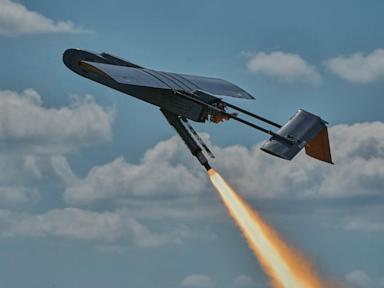
At the center of this effort is the 413th Raid Unmanned Systems Regiment. Their methodology is defined by austerity and speed. Unlike traditional military strikes that require multi-million dollar airframes or high-end ballistic platforms, these operators utilize domestically produced drones, such as the FP-1. The mechanics are simple. A small team, often composed of civilians-turned-soldiers—programmers, artists, and musicians—transports portable launch kits to pre-determined coordinates. They set up in open terrain, initiate a swarm, and vanish before the echoes of the launch fade.
The reliance on these low-cost, high-frequency strikes creates an asymmetric burden on Russian air defenses. Every drone shot down represents a finite expenditure of Russian interceptors, while those that penetrate the perimeter yield compounding economic damage. The recent fire at the logistics hub is merely the latest in a series of blows against retailers accused by Kyiv of facilitating dual-use supply chains for the Russian military.
Beyond the direct loss of inventory—billions of dollars in goods—the psychological impact is deepening. For nearly four and a half years, the Russian public largely viewed the conflict as a distant, state-sanctioned endeavor. The persistent threat of drone attacks forces a domestic reality check, effectively demanding that Muscovites experience the same subterranean existence that residents of Kyiv have endured for years.
This campaign is not designed to win the war through a single decisive explosion. It is designed to create a state of chronic instability. By targeting the energy facilities, supply chains, and industrial capacity that underpin the Russian state, the operators in the sunflower fields are betting that the internal cost of the war will eventually outweigh the perceived gains of continued aggression. The Kremlin’s ability to project power abroad is inextricably linked to its ability to maintain order at home; as the smoke rises over Moscow, that order is becoming increasingly difficult to guarantee.
The efficacy of this strategy rests on the endurance of the supply chain in Ukraine and the ability of its domestic industry to outpace the Russian military's capacity to adjust its defensive posture. It is a war of numbers, where the cost-per-kill ratio favors the attacker, forcing a continuous, reactive sprawl of Russian air defenses across vast territories. As the 413th Regiment packs up their equipment in the quiet of the morning, their next mission is already being mapped. The logistical hub in Moscow is not the final target. It is simply the latest line item in a long-term project to make the war impossible to ignore.
View the drone launch site footage
This footage provides a visual record of the 413th Regiment's tactical assembly in the field, highlighting the small-scale, mobile nature of the operations that have increasingly targeted Russian logistics infrastructure.
http://googleusercontent.com/youtube_content/1