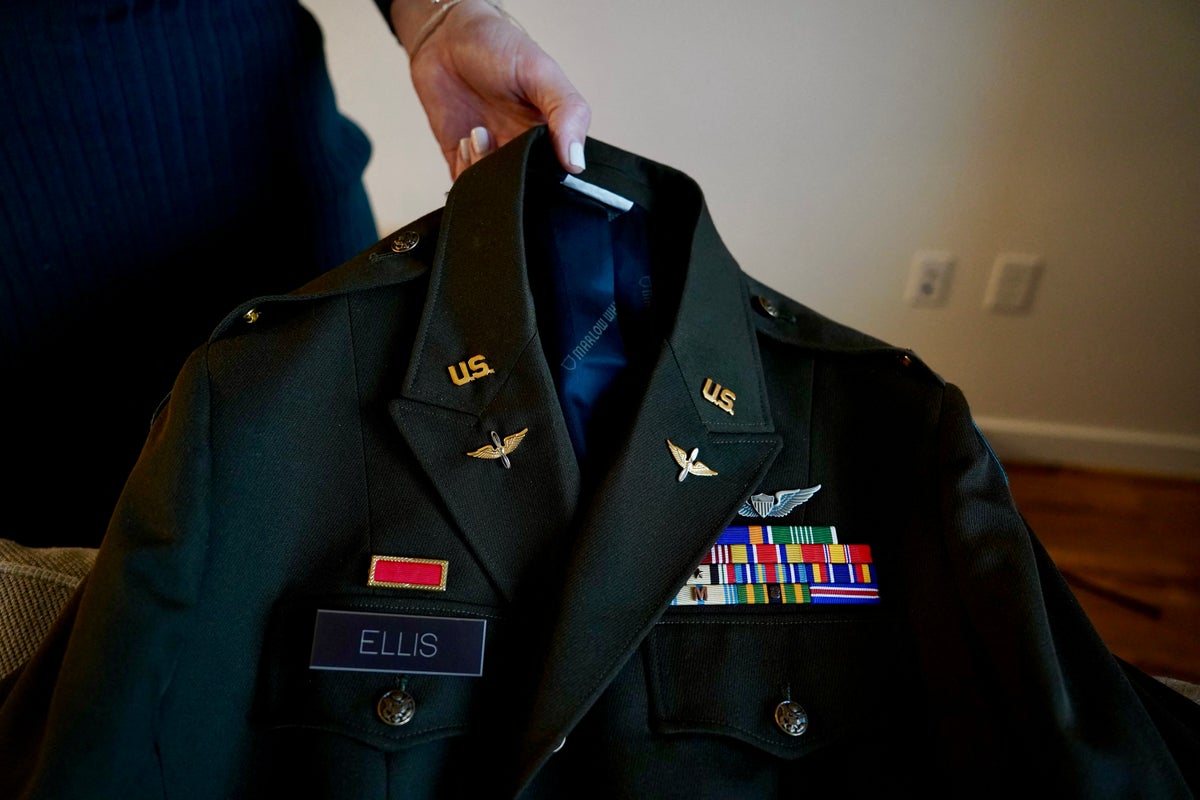
Hundreds of highly trained transgender service members are currently receiving full pay and benefits while being barred from performing the jobs they were recruited to do. This is not a clerical error. It is the result of a tangled web of shifting policy directives, medical readiness debates, and a bureaucratic purgatory that leaves specialized talent sitting on the sidelines. While the public debate often centers on identity politics, the internal reality is one of wasted human capital and a significant drain on the defense budget. Taxpayers are essentially funding a shadow force of personnel who are ready to deploy but legally or administratively shackled to their desks.
The core of the issue lies in the "deployability" status. In the military, you are either a green light or a red light. If you are undergoing medical transitions, the current framework often flags you as non-deployable for extended periods. Unlike a soldier recovering from a broken leg or a standard surgery, the administrative timeline for transgender care is frequently treated with a unique level of scrutiny that halts career progression and operational utility.
The Logistics of Forced Idleness
Military efficiency relies on the seamless integration of personnel into active units. When a service member is "benched," their workload doesn't vanish. It is distributed among their peers, leading to burnout and resentment within the ranks. This isn't just about the individuals being told not to work; it is about the structural integrity of the units they are supposed to lead.
Consider the cost of training a single fighter pilot or a cyber-intelligence analyst. These roles require millions of dollars in investment and years of specialized schooling. To have those individuals filing paperwork or, in some cases, told to stay home while their paychecks continue to clear, represents a massive failure of resource management. It is a quiet crisis of readiness.
The current situation creates a strange, unintended welfare state within the Department of Defense. Service members who want to be in the field, on ships, or in the air are instead relegated to "administrative hold" status. They are stuck in a loop of medical evaluations and commander reviews that can last for years. This isn't a vacation for them. It is professional stagnation. For a high-achiever in the military, being told you are "non-essential" is a psychological death sentence.
Medical Readiness or Administrative Red Tape
The Pentagon often cites "medical readiness" as the primary reason for these restrictions. The argument is that individuals undergoing hormone therapy or gender-affirming surgeries require specialized care that isn't available in a forward-deployed environment. While this has some basis in logistical reality—ships and remote outposts have limited pharmacies—the application of the rule is often inconsistent.
Service members with chronic conditions like asthma, sleep apnea, or even certain mental health diagnoses are often granted waivers to continue their duties. Yet, transgender personnel frequently find that waivers for their care are harder to secure. This discrepancy suggests that the "limbo" status isn't just about medicine. It is about an organization that hasn't figured out how to integrate a specific type of healthcare into its global supply chain.
We are seeing a clash between 20th-century bureaucracy and 21st-century medical reality. Modern hormone therapy is not as restrictive as it was thirty years ago. Many treatments are self-administered and require minimal oversight once a maintenance level is reached. However, military policy often views these individuals through a lens of permanent fragility. This creates a bottleneck where talented soldiers are kept in a state of perpetual "prep," never allowed to actually execute.
The Budgetary Black Hole
If you look at the numbers, the financial argument becomes impossible to ignore. The average cost of an active-duty service member, including salary, housing allowances, and healthcare, runs well into the six figures annually. Multiply that by the hundreds of personnel currently caught in this administrative trap, and you are looking at tens of millions of dollars in "lost" labor every year.
This is a business problem as much as it is a social one. No Fortune 500 company would keep five hundred of its top-tier engineers on the payroll while explicitly forbidding them from touching the code. The shareholders would revolt. In the military, the "shareholders" are the taxpayers, and the "product" is national security. Currently, both are getting a raw deal.
- Training Waste: Skills atrophy when they aren't used. A linguist who doesn't translate or a mechanic who doesn't turn a wrench loses their edge within months.
- Recruitment Friction: The military is already facing a historic recruitment crisis. When potential recruits see a system that benches qualified people for administrative reasons, the value proposition of service drops.
- Retention Issues: It’s not just the transgender service members who leave. Their commanders and peers, frustrated by the staffing gaps created by these policies, often choose to exit the service as well.
The Cultural Friction on the Ground
Beyond the spreadsheets and the policy memos, there is the reality of the motor pool and the wardroom. Military culture is built on the concept of "pulling your weight." When a member of a squad is seen as getting full pay without doing the "dirty work," it erodes unit cohesion. The tragedy is that most of these service members want to pull their weight. They are being stopped by a chain of command that is often more afraid of making a policy mistake than they are of losing a capable soldier.
The tension is palpable. On one side, you have service members who feel like they are being treated as a liability despite their proven skills. On the other, you have middle management—the NCOs and junior officers—who are stuck trying to run a mission with a "paper" strength that doesn't match their "actual" strength. It is a recipe for toxic command climates.
There is also the factor of "selective enforcement." In some units, a supportive commander might find ways to keep a transgender service member working in a meaningful capacity. In others, a more rigid or hostile leader might use the policy as a tool to push that person out of sight and out of mind. This inconsistency is the enemy of good discipline.
Solving the Deployment Gap
To fix this, the military needs to stop treating transgender healthcare as a unique category of "un-readiness" and start treating it as a manageable logistical requirement. If the military can get refrigeration for vaccines and specialized medication for heart conditions to the middle of a desert, it can manage hormone therapy.
The "full pay, no work" model is the worst of all worlds. It costs the government money, it weakens the force, and it alienates the very people the military spent thousands of hours training. The solution isn't to kick these people out—that would be a further waste of the millions already invested in them. The solution is to streamline the waiver process and modernize the deployment criteria.
We need a system that evaluates an individual's actual physical and mental capacity to do a job, rather than relying on a blanket administrative status. If a soldier can pass their fitness test and perform their tasks, their medical history should be a footnote, not a barrier. The current obsession with "potential" future medical needs is being used as a pretext to sideline people today.
The Strategic Cost of Indecision
Every day a qualified specialist sits at a desk doing nothing is a day the United States is less prepared for a high-intensity conflict. Our adversaries do not care about our internal policy debates. They care about our operational capacity. By keeping hundreds of trained personnel in a state of forced idleness, we are effectively self-sabotaging our own readiness.
The "limbo" isn't just a personal grievance for those affected. It is a systemic leak in the hull of the military machine. Until the Pentagon decides whether it wants a force based on merit and capability or one based on administrative convenience, the checks will continue to be cashed for work that isn't being done.
The military prides itself on being a meritocracy where the only thing that matters is the mission. Right now, for a specific group of people, the mission has been replaced by a waiting room. This is a luxury a modern military can no longer afford. The Department of Defense must either integrate these service members fully or admit that its current policies are intentionally designed to fail.
The path forward requires a cold, hard look at the data. We have the people. We have the funding. What we lack is the administrative courage to let them do their jobs. Stop the checks or start the engines.