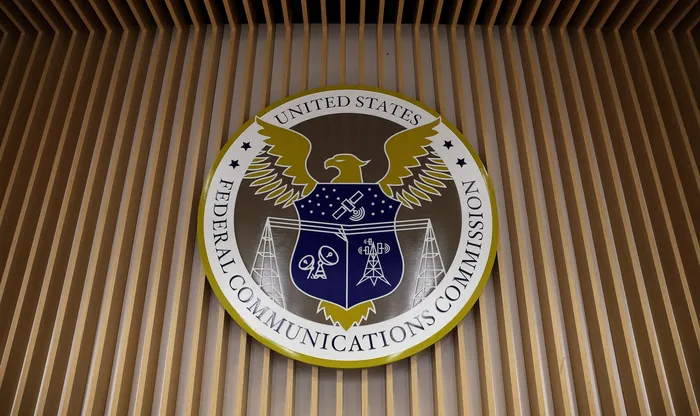
The screen flickers to life in a darkened living room in Philadelphia. A local news anchor delivers the evening’s headlines, her voice steady and familiar, a comforting presence that has occupied that specific frequency for decades. To the viewer, this is simply "the news." To the Federal Communications Commission, this is a sacred trust—a temporary stewardship of the public airwaves that belongs to the people, not the corporation broadcasting the signal.
Now, that stewardship is under a microscope earlier than anyone expected. Learn more on a related subject: this related article.
The FCC has officially moved to accelerate the review of broadcast licenses for television stations owned by The Walt Disney Company’s ABC subsidiary. This isn’t a routine check-up. It is a sudden, sharp interrogation of how one of the world’s most powerful media empires manages the local portals through which millions of Americans receive their reality.
The Ghost in the Machine
Public airwaves are a finite resource. Unlike the internet, which feels infinite and lawless, the electromagnetic spectrum is a strictly partitioned territory. When a company like Disney operates a station like WABC-TV in New York or WPVI-TV in Philadelphia, they are essentially renting a piece of the public’s soul. The rent is paid not in cash, but in "public interest." More reporting by MarketWatch highlights comparable views on this issue.
But what does that actually mean?
It means that in exchange for the right to beam Grey’s Anatomy or Monday Night Football into your home, a broadcaster must prove they are serving their specific community. They must provide local news. They must offer educational programming. They must be a reliable voice during a hurricane or a civic crisis.
The FCC’s decision to pull the review date forward suggests a growing anxiety in Washington about whether the current corporate model of broadcasting still honors that bargain. Imagine a small-town baker who is granted a prime spot on the town square on the condition that they provide fresh bread for the hungry. If that baker starts shipping in frozen dough from a central factory a thousand miles away, the town council might start asking questions.
Disney is the baker. The FCC is the council. And the bread is getting cold.
A Calculated Collision
The timing of this move is no accident. The broadcast industry is currently a battlefield of shifting loyalties and collapsing revenue models. Cord-cutting has gutted the traditional cable bundle, leaving local broadcast stations as some of the last remaining pillars of massive, simultaneous audience reach.
However, the "Big Media" era has led to an unprecedented centralization of content.
Consider a hypothetical local reporter in a mid-sized market. Twenty years ago, that reporter lived in the community, drank coffee at the local diner, and knew the specific grievances of the school board. Today, that same reporter might be part of a "regional hub," filing stories that are broadcast in four different cities, written by a producer in a high-rise in Los Angeles who has never set foot in the zip code they are covering.
This isn’t just a loss of flavor; it’s a loss of accountability. When the FCC orders an early review, they are asking if the "ABC" on the screen still stands for something local, or if it has become a mere repeater for a global brand’s interests.
The Weight of the Signal
The tension here isn't just about corporate paperwork. It's about the very architecture of American democracy. We rely on the broadcast license system to prevent any single entity from monopolizing the flow of information.
The FCC’s "Early Review" is a signal flare. It warns that the old ways of rubber-stamping license renewals are over. The commission is looking closely at issues of ownership concentration and the diversity of voices. If Disney owns too much of the pipe, do the people living at the end of that pipe still have a choice in what they hear?
There is a visceral fear among regulators that as Disney pivots its entire strategy toward streaming services like Disney+ and Hulu, the "old-fashioned" broadcast stations are being treated as cash cows to be milked rather than community assets to be nurtured. The early review acts as a leash, tugging the giant back to the table to explain its intentions.
The Silence of the Tower
Broadcasting is an act of faith. You send a signal out into the void, hoping it reaches someone on the other side. For decades, that signal was a two-way street. The station listened to the community, and the community watched the station.
But as algorithms begin to dictate what we see and corporate balance sheets dictate what gets produced, that two-way street has become a highway where the traffic only flows one way. The FCC is standing in the middle of that highway with a stop sign.
They are looking for the human element. They are looking for the moments where the broadcast interrupted the profit-making to save a life, to expose a local scandal, or to educate a child. If they find only a void filled with syndicated content and national talking points, the license—that golden ticket to the airwaves—could be at risk.
The Mouse is now on notice. The review will not be a quiet affair handled in the backrooms of D.C. It will be a public accounting of what we owe each other in an age of digital noise.
The red light on the camera is glowing. The teleprompter is scrolling. And for the first time in a long time, the regulator is actually watching the show.