The air does not just warm; it tightens. You step outside, and the afternoon hits your chest like a warm, wet wool blanket dropped from a height. Your skin prickles. Sweat springs to your forehead, instantly turning the city pavement into a low-grade skillet. We talk about the weather in degrees and humidity percentages, as if survival were a simple math problem of staying in the shade and drinking from a plastic bottle.
We look at the thermometer and think we understand the danger.
We do not.
Because while the news anchors warn us about heatstroke, dehydration, and asphalt hot enough to fry an egg, they completely miss the quiet, insidious thief that rides into town on the back of every heatwave. It is a slow-motion internal short circuit. It is the medication in your bathroom medicine cabinet turning against you.
Let us drop the clinical detachment for a moment and look at what actually happens inside a living room when the mercury climbs past ninety-five and stays there.
Imagine Arthur, seventy-one years old, living in a second-floor apartment where the afternoon sun beats directly against single-pane glass. Arthur takes a handful of pills every morning with his toast: a diuretic for his heart, a little something to quiet the nerve pain in his lower back, and a gentle stabilizer for his mood. To Arthur, these little colored capsules are the architecture of his routine. They keep him upright. They keep him functioning.
What Arthur does not know—and what standard weather warnings rarely mention—is that his medications are waging a silent war against his body's air conditioning system.
When ambient temperatures spike, a healthy human body performs a magnificent, desperate physics trick. It shunts millions of gallons of blood from the core to the skin, opening up capillary highways so heat can radiate out into the atmosphere. Simultaneously, sweat glands open the floodgates, relying on evaporative cooling to drop the engine temperature.
Now, introduce Arthur’s diuretic. Its entire biological job description is to flush water and sodium out of his system. The medicine is doing its job, but suddenly, the sky turns into a convection oven. Arthur needs that water and sodium to sweat and maintain blood volume. The diuretic says no.
Add the nerve pain medication to the mix. Many drugs prescribed for chronic neuropathy, depression, or anxiety have a sneaky side effect: they inhibit the body's ability to sweat. They throw sand in the gears of the central nervous system's thermostat.
Arthur sits in his living room, feeling warm, feeling a bit sluggish. He thinks he just needs to drink a glass of water. But his body cannot cool itself. His core temperature begins to creep upward, not with the dramatic collapse of a sudden heatstroke, but with the quiet efficiency of a pot simmering on a back burner. This is drug-induced heat intolerance, and it kills thousands of people every year who thought they were doing everything right by staying inside and sipping tap water.
We have built our public safety messaging around a cartoonish version of danger. We picture the marathon runner collapsing on the asphalt, or the construction worker dizzy in the glaring sun. Those are tragedies, yes. But they are visible. They happen out in the open, screaming for an ambulance.
The real crisis of extreme heat is domestic. It happens behind closed curtains, in silent rooms where elderly residents, people managing chronic psychiatric conditions, and those with cardiovascular diseases sit quietly while their prescription bottles turn into ticking clocks.
Consider the sheer scale of this pharmacological trap. Millions of people walk around with prescriptions that interfere with thermoregulation. Antihistamines dry up our mucous membranes and our sweat glands. Antipsychotics disrupt the hypothalamus, the brain’s master thermostat. Blood pressure medications blunt the heart's ability to pump faster when the body desperately needs increased circulation to shed heat.
When a heatwave arrives, these medications do not stop working. They keep doing their specific, narrow jobs, completely oblivious to the fact that the external world has transformed into a furnace. The heart tries to compensate. It beats faster, working twice as hard to push thick, dehydrated blood through narrowed pathways. Blood pressure drops. Dizziness sets in. Kidneys, starved of fluid and blood flow, begin to stutter and fail.
It is a terrifying chain reaction. And it happens without a single drop of sweat to warn you that the engine is seizing up.
We must talk about how society fails to bridge the gap between meteorology and medicine.
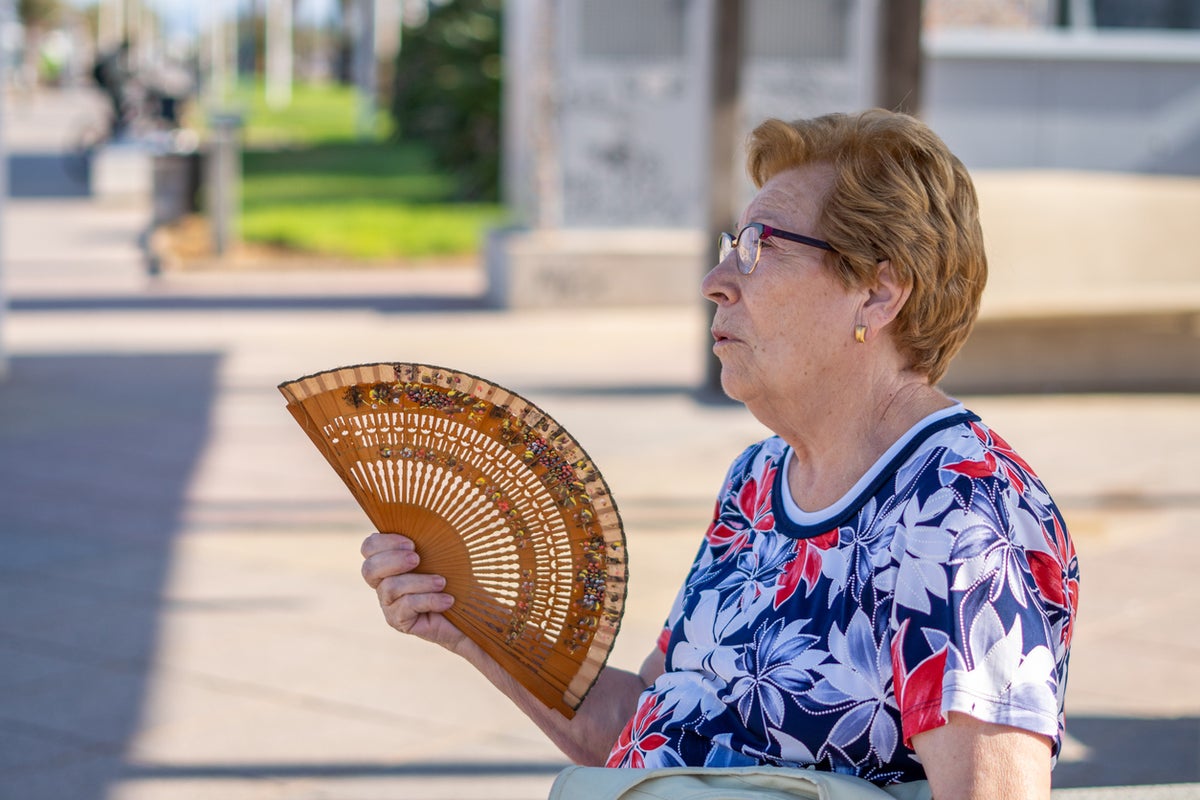
For decades, heat warnings have been treated as an environmental issue. Weather forecasters put up red maps, tell us to check on our neighbors, and advise us to drink plenty of fluids. Public health departments hand out paper fans and direct people to air-conditioned cooling centers.
These measures are not useless, but they are profoundly incomplete. They treat extreme heat as if it were a sunburn—something happening to the outside of you. They ignore the biochemical cocktail sloshing around inside the bloodstream of nearly every vulnerable person in the city.
A red flag from the National Weather Service should trigger an automatic mental shift in how we view our medicine cabinets. Your cardiologist knows your heart. Your neurologist knows your nerves. But when the temperature hits one hundred degrees, do either of them call to remind you that your specific prescription might block your body from sweating? Do pharmacies print warning stickers on pill bottles that light up like neon signs when a heat advisory is issued?
Not yet. Right now, the burden falls entirely on the individual—often an elderly person already confused by the oppressive weight of hot, stagnant air—to connect the dots between a pill they swallow at 8:00 AM and a trip to the emergency room at 3:00 PM.
This is an administrative failure disguised as a natural disaster.
When we look back at historical summers, we tend to count the dead by looking at heatstroke certificates. We tally the bodies of those found in un-air-conditioned apartments or collapsed on hiking trails. But the coroner's report rarely tells the whole story. It lists cardiac arrest. It lists renal failure. It lists electrolyte imbalance.
It rarely lists the invisible friction between a warming planet and a pharmaceutical industry designed for a climate that no longer exists.
Most drugs currently in circulation were tested, dosed, and approved in a world with different climatic baselines. They were calibrated for normal summers, standard seasonal rhythms, and predictable thermal ranges. They were never engineered for an era where summer feels like a permanent, slow-rolling siege.
Every time global temperatures inch upward, the safety margins of modern pharmacology shrink. A dosage that was perfectly safe in 1995 can become a hazard when ambient indoor temperatures hover at ninety degrees for a week straight without relief.
We are living through a mismatch between our medical technology and our atmospheric reality.
To fix this, we have to change how we talk about vulnerability during heatwaves. We have to stop treating heat safety as common sense. Common sense fails when your hypothalamus is chemically suppressed and your blood vessels are handcuffed by a beta-blocker.
We need to empower pharmacists as front-line climate responders. When a heat advisory drops, prescription management software should automatically flag high-risk medications, prompting automated check-ins or direct pharmacist consultations. Families need to know that checking on an aging parent isn't just about making sure the window unit is humming; it is about looking at the lineup of brown plastic bottles on the kitchen counter and understanding how they interact with the sky outside.
Because the weather is no longer just a backdrop to our lives. It is an active participant in our biology.
The next time the air turns heavy and the news anchors begin flashing warnings across the bottom of the screen, look past the red maps and the temperature numbers. Look at the people you love. Look at the invisible chemistry holding them together.
The heat does not just break the pavement. It exploits every hidden crack in our design, whispering through our veins until the body forgets how to protect the life burning quietly inside it.
The windowpane radiates heat like a low oven. Somewhere down the street, an ambulance siren cuts through the heavy air, sharp and sudden, swallowed almost instantly by the oppressive weight of the afternoon.