The tarmac at Stansted doesn't usually feel like a site of geopolitical tension. It smells of scorched rubber, cheap coffee, and the metallic tang of rain. On any given Tuesday in May, it is a machine of relentless efficiency. Suitcases disappear into bellies. Families argue over passports. Pilots run through checklists. But lately, there is a ghost in the machine. It is a liquid ghost, clear and volatile, and it is starting to run dry.
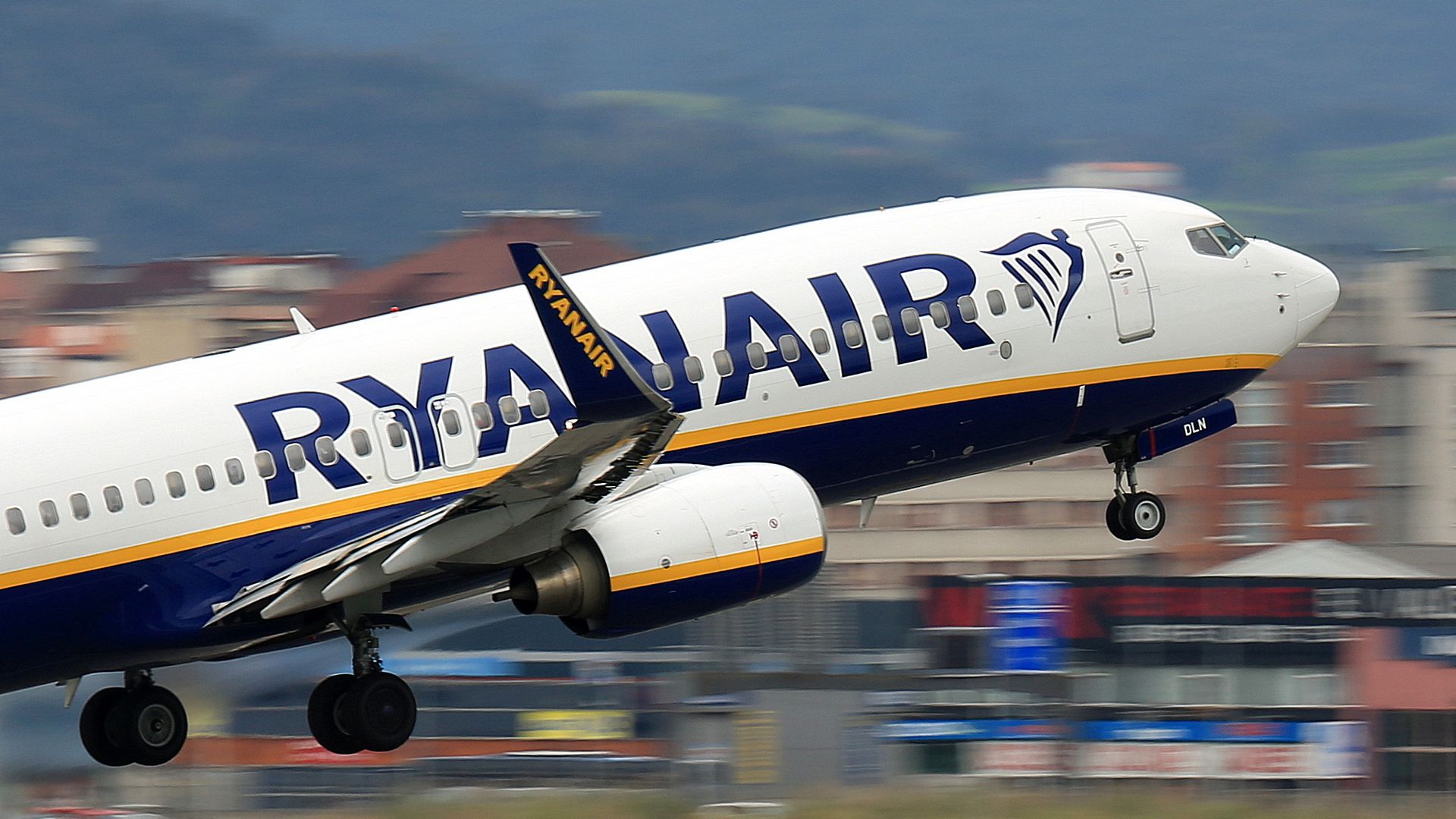
Michael O’Leary isn't known for whispering. When the Ryanair CEO speaks, it usually sounds like a thunderclap or a barroom challenge. So, when he issued a warning about jet fuel supply disruptions hitting the industry this May, it wasn't just a corporate footnote. It was a flare sent up from a sinking ship. The airline—Europe’s largest low-cost carrier—is staring at a logistics bottleneck that could turn thousands of holiday dreams into a series of bleak notifications on a smartphone screen.
Think about Sarah. She is hypothetical, but her frustration is entirely real. She has spent fourteen months saving for a week in Corfu. She’s calculated the cost of every Freddo cappuccino and every airport transfer. To her, the "supply chain" is an abstract term heard on the evening news, something involving ships in the Suez Canal or semiconductor factories in Taiwan. It has nothing to do with her 6:15 AM flight. Until it does.
When the fuel stops flowing at the pace the industry demands, Sarah doesn't see a spreadsheet. She sees a "Delayed" sign flicker into "Cancelled." She sees the exhaustion of a ground crew who have no answers. She feels the sudden, sharp weight of a vacation evaporating before it even began.
The Geography of a Shortage
Fuel doesn't just appear in the wings of a Boeing 737. It is the end product of a precarious, global relay race. Crude oil is pulled from the earth, refined into kerosene-type jet fuel, and transported via pipelines, barges, and trucks to the massive storage tanks that sit on the periphery of our airports.
The problem hitting the market this May is a perfect storm of timing and geography. Refineries across Europe and the Mediterranean are entering their "turnaround" season—a period of scheduled maintenance where production slows down or stops entirely. Normally, this is a choreographed dance. But the dance floor is currently cluttered with the debris of a changing world.
Ongoing regional conflicts have forced tankers to take the long way around the Cape of Good Hope, adding weeks to transit times and millions to the bill. At the same time, the transition toward Sustainable Aviation Fuel (SAF) is creating a two-tier system where traditional infrastructure is being stretched thin while new green alternatives aren't yet ready to shoulder the load.
Ryanair’s warning is specifically focused on the Greek islands and parts of the Mediterranean. These are the extremities of the network. It is one thing to keep Heathrow or Charles de Gaulle hydrated. It is quite another to ensure a steady, high-pressure stream of fuel reaches a small island landing strip where the supply infrastructure was designed for the traffic of the 1990s, not the hyper-mobile surge of 2026.
The Math of a Middle Seat
The economics of a low-cost carrier are built on a knife’s edge. There is no "slack" in the system. To keep fares at thirty euros, the planes must be in the air. A grounded plane is a liability that burns cash even when its engines are silent.
If fuel supplies at a destination like Rhodes or Santorini become unpredictable, the airline faces a brutal choice. They can "tanker" fuel—carrying enough on the outbound leg to make the return trip without refilling. But fuel has weight. Carrying extra weight requires burning more fuel just to stay aloft. It is an expensive, inefficient loop that drives up carbon emissions and kills the profit margin on that thirty-euro seat.
When the margins disappear, the flights follow.
It is a sobering realization for the modern traveler: our mobility is entirely dependent on a substance we rarely see and a logistical chain we never think about. We treat air travel like a utility, as reliable as the water from a kitchen tap. But the tap is sputtering.
Why May Matters
May is the gateway. It is the month when the travel industry shakes off the winter lethargy and begins the sprint toward summer. It’s when the "shoulder season" travelers—pensioners, digital nomads, and young couples—flock to the Mediterranean to beat the July heat.
By sounding the alarm now, Ryanair is trying to manage expectations. They are signaling to airport authorities and fuel suppliers that the current status quo is unsustainable. But they are also talking to the passengers. They are saying, "The price of your ticket isn't the only thing that matters. The availability of the fuel to fly you there is no longer a given."
There is a strange, quiet anxiety in the cockpit when the fuel gauges don't match the flight plan. Pilots are masters of contingency. They have Plan B, Plan C, and Plan D. But those plans all assume that when they land, there will be a hose waiting to plug into the wing. If that certainty vanishes, the entire architecture of European travel begins to crumble.
We have spent decades building a world where distance is an inconvenience rather than a barrier. We can cross continents for the price of a nice dinner. But that world was built on the assumption of infinite, frictionless supply. We are now learning that friction is everywhere. It’s in the blocked shipping lanes. It’s in the aging refineries. It’s in the political instability of the nations that sit atop the oil fields.
The Human Cost of Logistics
If you walk through an airport terminal during a supply disruption, you don't hear much talk about "refinery turnarounds." You hear the sound of a father trying to explain to a crying toddler why they aren't going to see the beach today. You hear the frantic tapping of keys as a business traveler tries to find a train that will get them to a meeting four hundred miles away.
The stakes aren't just financial. They are emotional. We trade our time and our labor for these moments of escape. When a fuel shortage at a regional airport cancels a flight, it isn't just a logistical hiccup. It is a theft of time.
The industry is currently caught in a transition that is as painful as it is necessary. We are moving toward a future that must be less dependent on the very fuels that are currently in short supply. But we aren't there yet. We are in the "in-between." This May is a window into that messy, uncertain middle ground.
The Thirst of the Machine
The jet engine is a marvel of engineering, but it is also an insatiable beast. It has a singular, uncompromising thirst. We have built our global economy around the hunger of that beast. Now, as the supply lines tighten, we are forced to confront the fragility of our connections.
The warning from Ryanair isn't a call to panic, but it is a call to pay attention. It is a reminder that the miracle of flight is not a fundamental right—it is a complex, high-stakes achievement that requires every gear in the global machine to turn in perfect unison.
When one gear slips, the vibration is felt by everyone.
The sun will still rise over the Mediterranean this May. The turquoise waters of the Ionian Sea will still lap against the white sands of the islands. But for many, the view will be from a terminal window or a living room couch, rather than a balcony. The invisible drought is here, and it doesn't care about your vacation days.
The machine is thirsty, and the tanks are running low.