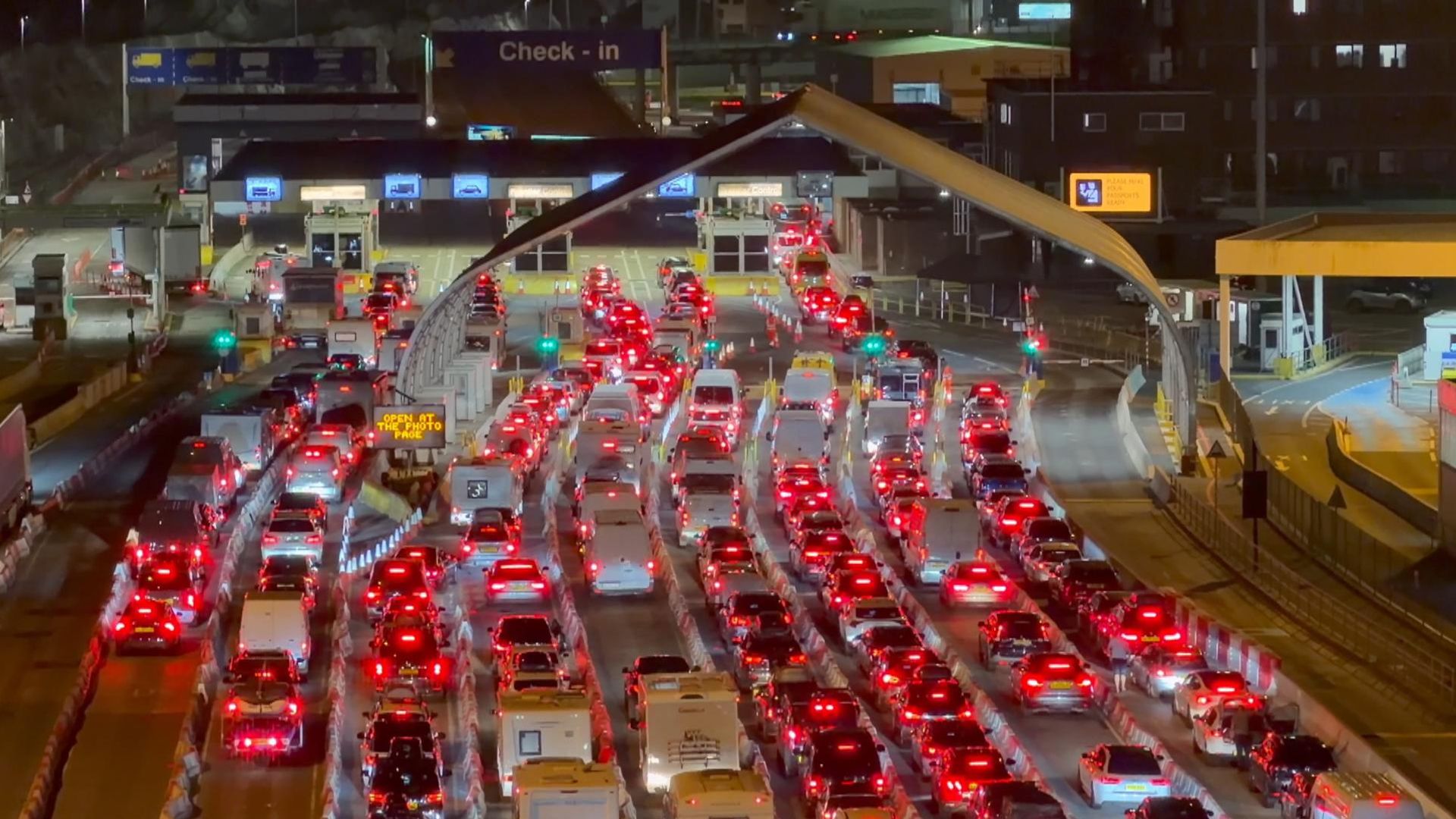
The hour-long queues building at the Port of Dover this weekend are not a temporary traffic fluke. They are the predictable manifestation of a structural bottleneck that has been decades in the making. While mainstream reports treat these delays as seasonal anomalies triggered by summer holidaymakers, the reality is far more systemic. The infrastructure connecting the United Kingdom to mainland Europe is operating on a knife-edge, where a single tech glitch, a minor surge in passenger volume, or a meticulous border check can trigger a logistical cascade that paralyzes regional transport arteries.
The immediate culprit for the current delays is the peak summer getaway, but blaming holiday drivers misses the point entirely. The underlying mechanics of the cross-Channel crossing have fundamentally shifted, creating a permanent state of vulnerability at the border.
The Friction Mechanics at the Border
Cross-Channel travel used to rely on rapid throughput. Today, it is a game of marginal gains and massive losses. When the UK left the European Union, the passport checking process shifted from a quick visual glance to a mandatory, multi-step inspection.
French border officials—the Police Aux Frontières—are legally required to wet-stamp passports, check for entry and exit compliance, and interrogate travelers regarding their length of stay and financial means. This has fundamentally altered the math of the port.
Consider the arithmetic of a standard tourist vehicle. If a border check takes 40 seconds per car under the old regime, and increases to 90 seconds under the current rules, the impact is not a simple doubling of wait times. In queuing theory, a minor increase in service time when a system is operating near maximum capacity causes an exponential spike in backlog.
[Old System: 40s per vehicle] ---> Continuous Flow
[New System: 90s per vehicle] ---> Exponential Backlog Accumulation
When thousands of vehicles arrive per hour, that extra 50 seconds per car translates into miles of stationary traffic on the A20 and M20 approaches. The port itself becomes a giant holding pen, incapable of processing vehicles at the speed the ferry operators can load them.
The Geopolitical Constraints of Kent Geography
You cannot engineer your way out of a geographical prison. The Port of Dover is squeezed into a narrow strip of land between towering white chalk cliffs and the open sea. It cannot expand outward.
Unlike modern airports designed with sprawling terminal footprints that can absorb thousands of delayed passengers in indoor comfort, Dover relies on a linear sequence of check-in booths, French border controls, and assembly lanes.
This tight physical footprint means that any backup immediately spills out of the port gates and onto the public highway network of Kent. The implementation of the European Union’s upcoming Entry/Exit System (EES)—which requires biometric registration, including facial images and fingerprints for non-EU citizens—threatens to shatter this fragile setup entirely.
While the port has invested millions in creating new covered structures to process these biometric checks, the physical space remains static. Testing by transport authorities suggests that registering a family of four could take up to several minutes, a timeline that would turn current one-hour delays into multi-day gridlocks during peak periods.
The Fragile Illusion of Ferry Flexibility
Ferry operators face their own invisible constraints. A common misconception is that if the queues are long, the ships should simply run faster or more frequently.
Marine logistics do not work that way. Ferries operate on strict timetables dictated by berth availability at both Dover and Calais. A ship cannot simply arrive early or depart late without disrupting the entire day's sailing rotation across multiple fleets.
Furthermore, crew rest requirements and fuel optimization protocols limit the ability of operators to run "extra" unscheduled crossings. When traffic stalls at the border booths, ships frequently depart with empty space on their vehicle decks, even as miles of frustrated motorists sit on the approach roads. The capacity is there, floating in the harbor, completely inaccessible because the landside processing cannot feed the ships fast enough.
Freight Versus Families
The tension between commercial logistics and leisure travel is at an all-time high during these summer peak periods. The UK economy relies on a constant, Just-In-Time supply chain that moves through Dover and the Eurotunnel.
Perishable food, pharmaceuticals, and manufacturing components move via roll-on/roll-off (RoRo) freight. When tourist traffic surges, these two completely different economic activities compete for the same narrow strips of asphalt.
- Leisure Traffic: Highly seasonal, unpredictable arrival patterns, high occupant density per vehicle (slowing down passport checks).
- Commercial Freight: Constant volume, strict regulatory time-slots, vital for macroeconomic stability.
To keep freight moving, authorities frequently deploy traffic management systems like Operation Brock on the M20. This system segregates lorries from cars, turning the motorway into a temporary truck park while forcing tourist traffic onto secondary local roads. The result is a secondary wave of economic paralysis across Kent, impacting local businesses and residents who have nothing to do with the port itself.
The Cost of Political Short-Sightedness
For years, successive administrations treated the Dover-Calais crossing as a localized transport issue rather than a piece of critical national infrastructure.
The French border booths inside the UK port are a product of the Le Touquet Agreement of 2003. This treaty established juxtaposed controls, meaning French checks happen on British soil before departure, and vice versa. While this prevents illegal migration from disrupting arrivals on either side, it places the entire administrative burden of European border enforcement squarely inside the cramped confines of the Kent coastline.
There is no easy bureaucratic escape hatch. Moving the border checks to France would require renegotiating international treaties and building massive new infrastructure in Calais, a move that the French government has zero political incentive to fund or facilitate. The UK is left holding the logistical bag, forced to manage European border security within its own borders using infrastructure designed in the mid-20th century.
The False Promise of Digital Solutions
Tech advocates often point to digital borders and pre-registration apps as the ultimate solution to the Dover bottleneck.
This is a profound misunderstanding of border dynamics. An app can collect data in advance, but it cannot verify the physical identity of the vehicle's occupants, scan for contraband, or check for valid travel intent. The physical verification step must still happen at the port barrier.
If a digital system flags even five percent of vehicles for manual secondary inspection due to data mismatches or biometric anomalies, the system slows to a crawl. Technology changes where the data is stored; it does not change the physical reality that a car must stop in front of a barrier while an official verifies the occupants.
The current one-hour wait times are a warning light on the dashboard of national infrastructure. They are the baseline friction of a post-friction world, a permanent tax on the geographical reality of being an island nation operating adjacent to a massive, highly regulated trading bloc. Drivers heading to the coast are not just caught in traffic; they are caught in the gears of an unresolved geopolitical transition.
Pack food, fill the water bottles, and expect the worst. The bottleneck is not going away.