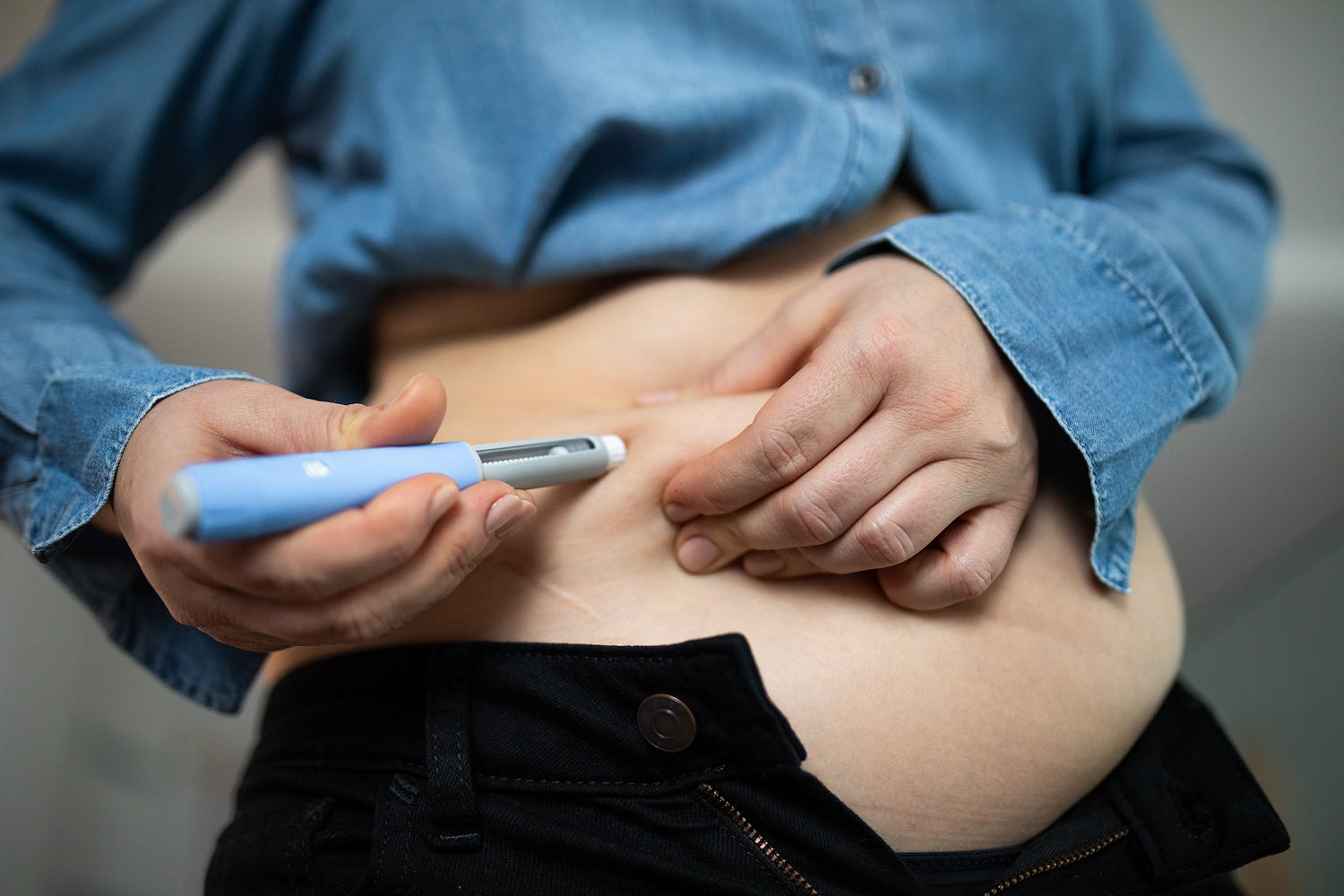
The kitchen clock reads 2:14 AM. The house is silent, save for the rhythmic, unsettling sound of dry heaving coming from the bathroom floor. On the cool tile sits Sarah—a hypothetical composite of the dozens of patients poison control centers are now tracking weekly. Her skin is clammy. Her heart races. In her hand, she clutches a sleek, frosted-glass pen bought from a website that promised a friction-free path to a newer, thinner self.
She took the dose three hours ago. She thought she was doing everything right. But the clicks on the dial didn't match the math in her head, and now her body is paying a price she never anticipated. For an alternative look, consider: this related article.
Sarah is not alone in that dark bathroom. Across the country, calls to poison control centers involving semaglutide and other GLP-1 receptor agonists have skyrocketed. Data from America’s Poison Centers reveals a staggering reality: reports of overdoses related to these specific medications increased by thousands of percent over a recent multi-year span. What began as a breakthrough medical intervention for type 2 diabetes and chronic obesity has mutated into a digital gold rush. The wild west of online pharmacies and compounding labs has opened the floodgates.
We are witnessing the consequences of a society that has successfully decoupled powerful, metabolic-altering pharmacology from actual medical oversight. Related reporting regarding this has been provided by National Institutes of Health.
The Alchemy of the Modern Fix
To understand how we arrived at a crisis of accidental overdoses, we have to look at what these medications actually do. GLP-1 drugs mimic a natural hormone our bodies release after eating. They slow down stomach emptying. They signal the brain that we are full. For someone struggling with chronic metabolic dysfunction, this isn't about vanity; it is a vital lifeline. It rewires a broken communication system between the gut and the mind.
But the delivery system mattered. Originally, these drugs were locked behind strict insurance walls, high price tags, and the watchful eyes of endocrinologists.
Then came the shortage. Demand exploded, fueled by Hollywood whispers and viral social media transformations. When the name-brand manufacturing lines couldn't keep up, federal regulations allowed compounding pharmacies to step into the breach. These labs create custom formulations of the drug to help meet public need. Suddenly, the strict, standardized pre-filled pens were replaced by something much more archaic: multi-dose vials and tiny, disposable syringes.
Consider the mental leap we are asking people to make. For decades, we have been conditioned to take a pill with a glass of water. Now, everyday citizens are being asked to act as their own clinicians. They must peer through a magnifying glass at microscopic hash marks on a plastic barrel, translating milligrams to milliliters, calculating units while staring down a needle.
A single misplaced decimal point is all it takes.
Draw the fluid to the "50" mark instead of the "5" mark, and you haven't just taken a slightly higher dose. You have flooded your system with ten times the recommended amount of a hormone that dictates how your gastrointestinal tract moves.
The Mirage of the Frictionless Click
The shift from standard medical care to the digital marketplace happened almost overnight. Telehealth platforms emerged, designed specifically to strip away the friction of the traditional doctor's visit. No waiting rooms. No awkward conversations about lifestyle choices. No physical exams. Just a questionnaire, a credit card authorization, and a brown cardboard box arriving on your doorstep a few days later.
This friction-free ecosystem exploits a fundamental human vulnerability: our deep, generational exhaustion with body image standards.
The internet understands this exhaustion. Algorithmically driven advertisements target users at their lowest moments—late at night, scrolling through curated feeds of flawless bodies. The ads don't look like medical notices. They look like wellness branding. They feature pastel color palettes, elegant fonts, and language that reframes a powerful prescription medication as an act of routine self-care, no different than buying a premium facial moisturizer or a green juice subscription.
But a metabolic regulator is not a moisturizer.
When you bypass the brick-and-mortar clinic, you lose more than just a blood pressure check. You lose the gatekeeper. A screen cannot easily detect an underlying eating disorder. A digital form cannot feel the subtle cues of a patient who is seeking a dangerous shortcut rather than chronic disease management. The technology has made access seamless, but human biology remains stubbornly complex, requiring nuance, patience, and individualized care.
When the Biological Brake Stays Locked
What actually happens when a body receives too much semaglutide? The answer lies in the drug’s primary mechanism of action. By告诉 the stomach to slow down, it essentially acts as a biological brake on digestion.
In a normal dose, this creates a gentle, prolonged sense of satiety. In an overdose scenario, the brake locks entirely. The stomach paralyzes.
Food sits stagnant. The body, realizing something is profoundly wrong, attempts to purge systemically. The resulting nausea is not the mild discomfort mentioned in the brief television commercials; it is a violent, intractable illness that can last for days or even weeks due to the extended half-life of these medications.
Emergency room physicians are now regularly admitting patients who are profoundly dehydrated, their kidney function compromised not by a disease, but by the sheer volume of fluids lost to an accidental overdose. The irony is bitter. In the pursuit of health and societal acceptance, individuals are pushing their bodies to the brink of organ failure.
The burden of this crisis does not fall equally. The wealthy can afford concierge doctors who track every symptom and provide immediate, round-the-clock guidance. The rise in poison control calls is overwhelmingly driven by people navigating the confusing gray market of unbranded, compounded alternatives without a dedicated medical safety net. They are left to decipher online forums, crowd-sourcing medical advice from strangers on Reddit to figure out why they cannot stop vomiting.
The Cost of the Quick Equation
We have built a culture that worships efficiency. We want our packages delivered in hours, our videos clocked in seconds, and our bodies transformed in weeks. The digital pharmacy is the logical conclusion of this mindset. It promises that you can bypass the messy, slow work of systemic healthcare with a subscription model.
But our bodies do not operate on digital timelines. They are ancient, complex ecosystems that respond poorly to sudden, uncalibrated inputs.
The real danger of the current GLP-1 boom isn't the molecule itself. Semaglutide is a remarkable scientific achievement that has saved lives and altered the trajectory of preventative medicine. The danger is our collective hubris—the belief that we can democratize powerful, life-altering pharmacology through internet storefronts without consequence.
The light in the bathroom stays on. Sarah sits against the wall, waiting for the waves to pass, watching the sky outside the window slowly turn from black to a pale, cold gray. The glass pen sits on the counter, catching the early morning light, looking entirely harmless, beautiful, and utterly indifferent to the living being on the floor below it.
/i.s3.glbimg.com/v1/AUTH_5dfbcf92c1a84b20a5da5024d398ff2f/internal_photos/bs/2022/7/q/6M5eaAQBGuPVBPz0xKuQ/whatsapp-image-2022-12-24-at-17.52.03.jpeg)