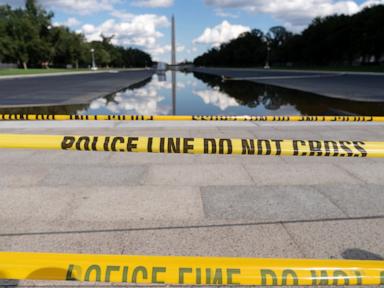
When an elite athlete is arrested and subsequently cleared in a high-profile public incident, the legal narrative rarely stops at the dismissal of charges. Instead, the legal machinery pivots from defense to accountability, targeting the investigative bodies that initiated the process. The recent demand by legal counsel representing an exonerated former Olympian for government watchdog investigations into the Reflecting Pool arrest exposes the structural friction between public security enforcement, institutional overreach, and the preservation of athlete reputation.
Understanding this escalation requires deconstructing the incident not as an isolated public disturbance, but as a compounding sequence of institutional decisions. The core architecture of this case involves three distinct phases: the initial enforcement action, the evidentiary threshold required for prosecution, and the secondary fallout involving administrative and reputational damage. By examining how legal teams deploy watchdog petitions, analysts can map the playbook used when state actors overreach during high-visibility public operations. If you found value in this article, you might want to read: this related article.
The Mechanics of Institutional Overreach
When law enforcement or park authorities detain a high-profile individual in a public space, the immediate operational priority is containment and narrative control. However, public visibility often incentivizes aggressive charging decisions that outpace the available evidence. In the Reflecting Pool case, the transition from detention to formal charges created a severe liability loop for the prosecuting authorities.
The primary mechanism of defense in such scenarios relies on exposing the gap between probable cause at the scene and the evidentiary standard required for a sustainable case. When charges are ultimately dropped or dismissed, it signals a structural failure in the pre-charging screening process. Legal representatives do not merely celebrate an acquittal; they weaponize the dismissal to establish administrative negligence, pointing out procedural shortcuts taken under the pressure of media scrutiny. For another perspective on this story, see the recent coverage from Al Jazeera.
This dynamic introduces a quantifiable cost to institutional overreach. When a government body brings charges against an Olympian or public figure without a robust evidentiary foundation, they absorb two types of risk: legal exposure through potential civil rights or malicious prosecution claims, and reputational degradation of the agency itself. The call for an independent government watchdog is a strategic escalation designed to institutionalize this risk, forcing external oversight onto agencies that failed internal quality controls.
The Divergence of Public Optics and Legal Reality
Public perception during high-profile arrests is governed by instantaneous media reporting, whereas legal exoneration operates on a delayed, highly formalized timeline. This temporal asymmetry creates a permanent deficit for the accused. Even when charges are completely expunged or dropped, the initial digital footprint of the arrest remains accessible, altering public perception and commercial viability.
For an elite athlete, reputation functions as a primary commercial asset. Sponsorship agreements, brand partnerships, and career trajectories depend entirely on public trust and clean optics. When an agency initiates a flawed legal process, the damage extends far beyond the courtroom. This reality dictates the aggressive posture taken by defense counsel after a dismissal. Demanding a watchdog investigation is not just about holding specific officers accountable; it is a necessary procedural step to establish official documentation of state error, which can later be leveraged in civil proceedings or reputational remediation efforts.
The legal strategy here utilizes a dual-track approach:
- Procedural Audit: Petitioning inspectors general or independent watchdogs to review communications, body-worn camera footage, and internal decision-making memos to identify bias or incompetence.
- Evidentiary Preservation: Securing all records of the arrest to establish a clear factual baseline that disproves the original allegations, ensuring that the public record reflects absolute exoneration.
The Systemic Function of Government Watchdogs
Internal affairs units within law enforcement agencies frequently suffer from institutional insularity, prioritizing agency protection over objective error correction. Consequently, defense teams bypass standard internal channels to demand external watchdogs, such as municipal inspectors general or federal oversight bodies, depending on the jurisdiction.
External watchdogs operate under a different mandate. Their function is to evaluate systemic vulnerabilities, operational protocol adherence, and supervisory failures. By shifting the focus from individual officer conduct to institutional policy, legal advocates can challenge the broader framework that permitted a flawed arrest to occur.
If a watchdog investigation is initiated, it typically examines several critical vectors:
- Supervisory Sign-off: Determining whether superior officers applied pressure to fast-track charges due to the media attention surrounding an Olympic athlete.
- Protocol Adherence: Evaluating whether standard operating procedures for public space enforcement were uniformly applied or if the individual was subjected to selective enforcement.
- Information Leakage: Investigating how details of the arrest were disseminated to the press, which often exacerbates reputational harm before formal charges are even evaluated by a magistrate.
Strategic Precedents and Future Accountability
The demand for oversight in the wake of the Reflecting Pool exoneration highlights a growing trend where legal defense strategies aggressively counter-attack the investigative apparatus. Exoneration is no longer viewed as the terminal point of a case. Instead, it serves as the baseline for institutional accountability initiatives.
As administrative bodies face increasing scrutiny from independent watchdogs, the calculus surrounding high-visibility arrests must shift. Agencies can no longer rely on the inertia of an initial arrest to justify the downstream consequences. When legal teams successfully compel external investigations, they impose a tangible operational cost on sloppy police work and politically motivated charging decisions. The ultimate resolution of this case will not be measured solely by the absence of a criminal record, but by the structural changes forced upon the agencies that attempted to penalize an individual without cause.