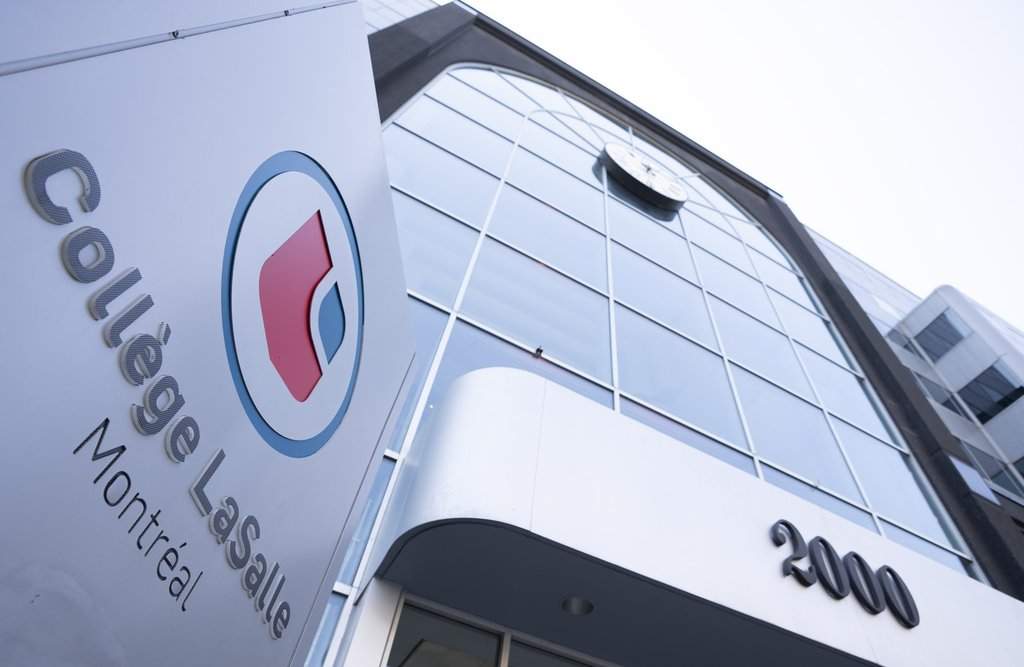
When an educational institution enters insolvency proceedings while students remain enrolled and staff await compensation, the immediate public narrative usually focuses on emotional distress and administrative mismanagement. A deeper examination of the situation at Lasalle College reveals a structural failure driven by cash flow insolvency, misaligned tuition-to-operating-cost ratios, and the specific vulnerabilities of private, for-profit or tuition-dependent higher education models facing sudden credit freezes.
Understanding the collapse requires looking past the picket lines and protest chants to analyze the underlying mechanics of institutional bankruptcy. Higher education institutions operate on delayed revenue cycles, heavy fixed overhead, and regulatory compliance burdens that make them uniquely fragile when enrollment volatility hits capital reserves.
The Operating Model and Revenue Dependency
Private educational entities like Lasalle College rely almost entirely on continuous cash influxes from student tuition and enrollment fees to service ongoing payroll, facility leases, and debt obligations. Unlike public universities cushioned by state appropriations or large endowments with diversified investment portfolios, private institutions operate on tight cash buffers.
- Tuition Concentration: When tuition represents upward of eighty percent of operating revenue, any disruption in enrollment continuity creates an immediate liquidity crisis.
- Fixed Overhead Asymmetry: Facility costs, faculty contracts, and institutional accreditation maintenance require fixed capital expenditures that cannot be rapidly adjusted downward during a sudden enrollment decline.
- Working Capital Gaps: Tuition is typically collected at the start of a semester, but expenses accrue continuously. If reserves from previous terms are consumed to cover legacy debts, the institution enters a structural deficit.
When court protection or bankruptcy proceedings freeze operations, the primary failure is not merely a lack of planning, but a complete depletion of the working capital cycle. Students paying for an ongoing service find themselves holding unfulfilled educational credits, while staff face unrecoverable wage arrears due to creditor priority rules in liquidation or restructuring.
The Mechanics of Academic Insolvency
The transition from operational viability to formal bankruptcy follows a predictable financial trajectory characterized by cascading indicators. Observers often misinterpret sudden closures as isolated events, but they are typically the trailing indicator of a multi-year cash burn.
Credit exhaustion represents the first phase. Financial institutions lose confidence in the college's ability to generate future cash flows, leading to the withdrawal of lines of credit and factoring agreements used to smooth out seasonal tuition gaps.
Vendor default follows closely behind. As cash tightens, institutions defer payments to software vendors, utility providers, and maintenance contractors. This degrades the quality of the educational product, accelerating student attrition and compounding the revenue decline in a destructive feedback loop.
Payroll distress signals the terminal phase. When an institution misses payroll or relies on emergency tuition advances to cover staff salaries, regulatory agencies and accrediting bodies intervene. This intervention usually triggers disclosure requirements that destroy prospective enrollment for subsequent terms, sealing the institution's fate.
Stakeholder Impact and Creditor Hierarchy
The protests and rallies organized by students and staff highlight the human cost of structural insolvency, but they also expose a fundamental misunderstanding of bankruptcy law and financial priority. In a restructuring or liquidation scenario, unsecured creditors face severe recovery losses.
- Secured Creditors: Banks, bondholders, and asset-backed lenders hold first claim on remaining institutional assets, including real estate, equipment, and accounts receivable.
- Employees and Staff: Wage claims receive statutory priority up to specific legal limits, but in cases of total asset depletion, staff frequently receive pennies on the dollar for accrued vacation time, benefits, and final pay periods.
- Students: Enrolled students occupy the lowest rung regarding financial recovery of tuition for uncompleted terms. While federal student loan forgiveness or institutional teach-out plans may provide partial relief, the direct financial loss of time, momentum, and prepaid fees remains unrecoverable.
The friction between administrative leadership and campus stakeholders stems from this hierarchy. Administrators operating under fiduciary duties must manage the legal wind-down or court-supervised restructuring, while students and faculty demand operational continuity in an environment where cash physically no longer exists to sustain it.
Systemic Vulnerabilities in Private Higher Education
The situation at Lasalle College reflects broader pressures confronting sub-scale private colleges across North America. Demographic shifts resulting in declining traditional college-age populations have intensified competition for tuition dollars. Simultaneously, rising operational costs, particularly technology infrastructure and compliance mandates, have inflated the baseline cost of delivering education.
Institutions lacking substantial endowment protection or distinct academic value propositions face severe pricing pressure. They cannot raise tuition without accelerating enrollment drops, nor can they cut costs further without violating accreditation standards.
To prevent catastrophic failure, governing boards must monitor leading indicators such as the ratio of liquid reserves to monthly operating expenses, enrollment retention rate trends by cohort, and the exact duration of the cash runway under varying enrollment scenarios. Waiting for external credit markets to force the issue transforms a manageable strategic pivot into an unavoidable insolvency event.
Execute an immediate audit of institutional liquidity buffers by stress-testing cash reserves against a consecutive three-term enrollment decline of twenty percent, ensuring that fixed-cost commitments can be systematically unwound before statutory insolvency triggers court-supervised liquidation.