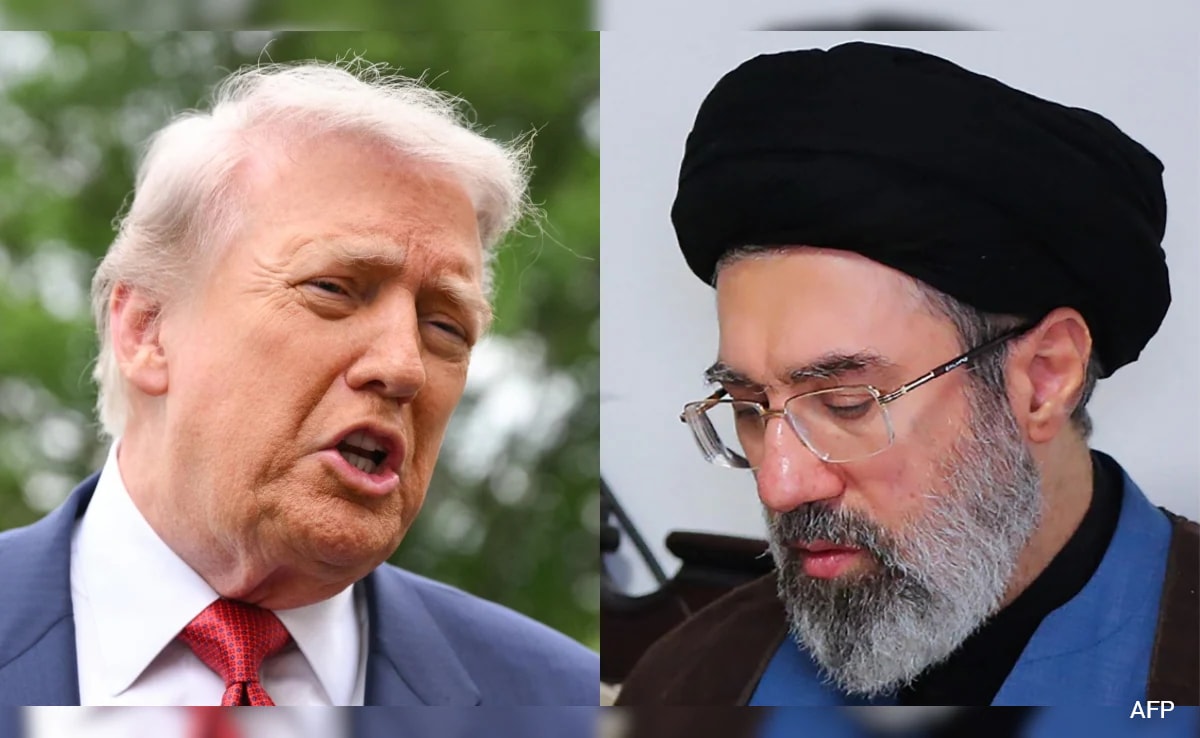
White House clocks had barely struck midday on Thursday when President Donald Trump declared an end to the war with Iran, catching global allies and his own national security apparatus off guard. Speaking from the Oval Office, Trump announced that a "great settlement" had been reached and that a formal signing ceremony could take place in Europe over the weekend. The declaration halted a scheduled wave of American airstrikes intended to seize Iran's oil infrastructure, sending global energy markets into a tailspin and forcing diplomats from Jerusalem to Tehran into emergency sessions.
The primary reality behind this dramatic announcement is far more volatile than a simple diplomatic victory. Behind the scenes, the United States and Iran are wrestling over a highly conceptual memorandum of understanding, not a fully detailed treaty. While Trump expressed high confidence that Vice President JD Vance and advisors Jared Kushner and Steve Witkoff would ink the deal within days, Iranian officials quickly pushed back, stating that a final decision has not yet been reached in Tehran. The sudden shift from imminent bombing to a weekend signing ceremony highlights a presidency relying on maximum military leverage to force a rapid diplomatic breakthrough.
Whiplash Politics on the Brink of Escalation
The announcement followed a week of intense military combat, the heaviest since a tentative ceasefire was brokered in April. Tensions reached a boiling point on Monday when Iranian forces downed an American Apache attack helicopter over the Strait of Hormuz. The White House responded with two consecutive nights of intense airstrikes targeting Iranian air defense systems and communication hubs.
By Thursday morning, the administration was preparing a massive expansion of the air campaign. Trump publicly threatened to seize Kharg Island, the nerve center of Iran's oil export economy, to assume total control over their energy markets.
The military machinery was stopped only hours before the bombers were scheduled to launch. Trump reversed course after receiving what Western mediators described as a diplomatic breakthrough channeled through regional emissaries. A Qatari delegation returning from Tehran reportedly delivered a draft text indicating that Iran's leadership was ready to accept the core parameters of an American-backed memorandum of understanding. Trump took to social media to announce he had canceled the evening's bombings because discussions had been approved at the highest levels of Iranian leadership.
The Fragmented Deal on the Table
What Trump describes as a completed settlement is, in architectural terms, a foundational blueprint rather than a finished house. Senior administrative sources confirm the emerging agreement addresses the core issue of Iran's nuclear material only conceptually.
Under the proposed framework, the immediate mechanics are straightforward.
- The Naval Blockade: The United States will immediately lift its tight naval blockade of Iranian ports the moment the document is signed.
- Maritime Reopening: Iran will formally reopen the Strait of Hormuz to international shipping, restoring the unhindered flow of global oil.
- Asset Liquidation: Washington will permit the release of frozen Iranian overseas financial assets, transferring the funds back to Tehran.
- Nuclear Constraints: Tehran must commit to permanent verifiable restrictions ensuring it cannot assemble a nuclear weapon.
The administration appears unconcerned by the lack of fine print regarding Iran's nuclear infrastructure. Trump noted to reporters that previous American airstrikes had already left Iran's nuclear material deeply buried under mountain complexes, limiting their immediate breakout capability.
The strategic gamble relies entirely on a change in Iranian leadership dynamics. Trump remarked that the current team running negotiations under Supreme Leader Mojtaba Khamenei is fundamentally different and more rational than the previous generation of Iranian officials. The White House believes that months of continuous economic blockades and precise military strikes have exhausted Tehran's second-tier leadership, making them uniquely pliable to a rapid diplomatic exit.
The Disconnect Between Washington and Tehran
The view from Tehran reflects a far more cautious and calculated approach to the weekend timeline. Shortly after the Oval Office briefing, Iranian Foreign Ministry spokesman Esmaeil Baqaei issued a blunt statement clarifying that Iran has not yet reached a final conclusion on the agreement.
While state-affiliated media channels in Iran conceded that the likelihood of an agreement remains high because Washington conceded to several Iranian text revisions, they emphasized that no document has been formally accepted. The Islamic Revolutionary Guard Corps continues to project defiance. Following the mid-week American strikes, the Guard claimed its forces successfully targeted multiple regional military bases hosting American fighter jets across Kuwait, Bahrain, and Jordan.
This friction highlights the primary risk of the current diplomatic push. A memorandum of understanding is a non-binding declaration of intent. Translating a conceptual agreement into a rigid, enforceable framework while navigating the deep mistrust between the two militaries remains an extraordinary hurdle. If the weekend signing ceremony in Europe materializes, it will mark the beginning of an incredibly tense technical negotiation, not the absolute end of the geopolitical crisis.
Regional Allies Left in the Dark
The sudden diplomatic pivot created immediate waves among regional partners who have spent months coordinate military strategies with Washington. Israeli Prime Minister Benjamin Netanyahu was reportedly in the middle of a high-level security discussion regarding Iranian operations when Trump's social media announcement caught his cabinet by surprise.
The Israeli government quickly issued a statement clarifying that while Israel is not an active party to the proposed memorandum of understanding, it welcomed the American commitment to stripping Iran of enriched material. Privately, Israeli defense officials remain highly skeptical of any deal that addresses nuclear capabilities purely in conceptual terms.
To bridge the diplomatic gap, Trump held a flurry of phone calls with Middle Eastern leaders immediately after leaving the Oval Office briefing room. He also praised Turkish President Recep Tayyip Erdogan for playing a significant role in mediating the back-channel communications that averted the planned strike on Kharg Island.
The domestic economic reaction provided the only immediate indicator of success. Wall Street responded to the de-escalation with a massive rally, sending the Dow Jones Industrial Average up 750 points as oil futures stabilized after a day of wild fluctuations. The markets are betting heavily on the president's ability to turn a volatile military standoff into a signed document before Monday morning. Everything now hinges on whether Tehran is willing to match Washington's rapid pace, or if the unresolved technical details will collapse the weekend summit before the ink hits the paper.


