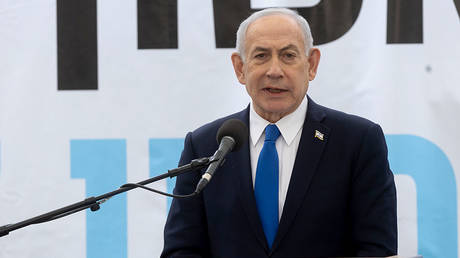
The United States is pressing Israeli Prime Minister Benjamin Netanyahu to publicly condemn a multi-day extremist settler siege trapping Palestinian families inside their homes in the West Bank village of Qusra. For nearly a week, residents have endured a blockade cut off from municipal water and electricity lines, surrounded by militant groups attempting to carve up strategic corridors of land. Washington's demand exposes a widening fracture between diplomatic rhetoric and the realities on the ground, highlighting how domestic political survival in Jerusalem continues to trump international law and basic human security.
This standoff is not a spontaneous flare-up. It is the logical culmination of years of state-sanctioned impunity and a deliberate strategy of territorial attrition executed across the occupied West Bank.
Anatomy of an Encirclement
In Qusra, a northern West Bank flashpoint, extremist settlers descended upon private Palestinian properties, sealing entry points and cutting off vital utilities. Among the properties trapped in the blockade is a home owned by a Palestinian-American family, a detail that sharply accelerated diplomatic anxieties within the White House. For six consecutive days, families watched from windows as armed groups pitched tents in their yards, hurled stones, and harassed anyone attempting to bring humanitarian aid.
Rights groups and local monitors point out that these tactics follow a calculated blueprint. Settlers occupy strategic parcels on village outskirts, gradually choking off access until local landowners are forced to abandon their properties. Once emptied, these footholds are formalized into illegal outposts, stitching together a continuous band of Jewish-only settlements that systematically bisect any viable territory for a future Palestinian state.
What makes the Qusra siege uniquely revealing is the open paralysis of state security forces. While the Israel Defense Forces eventually deployed troops to the area and dismantled makeshift outposts, enforcement remains hesitant and fragmented. Soldiers frequently find themselves caught between operational mandates to maintain public order and a political leadership that relies heavily on the radical right.
The Political Calculus of Silence
Benjamin Netanyahu’s refusal to issue a direct condemnation is rooted in survival math. Leading the most right-wing coalition in the history of the Israeli state, his government depends for its parliamentary life on ultranationalist factions that champion unbridled settlement expansion. Figures within the security and political apparatus have actively loosened administrative restrictions on nationalist activists, creating an ecosystem where violent agitators operate with the tacit assurance that law enforcement will look the other way.
Condemning the actions of these groups risks blowing apart Netanyahu’s governing coalition just months ahead of a closely contested election. Yet, remaining silent invites an escalating rebuke from Washington, where even historically pro-settlement figures have been forced to react to mounting public outrage. U.S. Ambassador to Israel Mike Huckabee took the extraordinary step of labeling the perpetrators of the siege as terrorists, a rhetorical designation usually reserved for Palestinian militants.
This rare public friction underscores a deep diplomatic bind. Washington wants regional stability and an end to actions that threaten a two-state horizon, but it continues to provide the diplomatic cover and military aid that sustains the broader apparatus of occupation. Pressuring Netanyahu for a verbal denunciation while supplying the architecture of control is a contradiction that observers on both sides recognize as entirely hollow.
The Ground Reality Beyond the Headlines
The crisis in Qusra reflects a broader statistical surge. According to United Nations humanitarian tracking, violent incidents and land seizures by West Bank settlers have scaled drastically, with Qusra recording a disproportionate share of total flashpoints. Military investigations and police statements often point fingers at one another, with law enforcement arguing they lack jurisdiction without formal annexation, and the military treating settler criminality as a secondary distraction from broader defense priorities.
Meanwhile, the families inside the besieged homes face an untenable existence. Foreign and local human rights activists attempting to deliver bottled water and canned goods are routinely blocked by military cordons declaring the area a closed zone, turning humanitarian relief into a bureaucratic obstacle course.
The pressure from Washington may extract a reluctant statement from the prime minister's office, but words will alter little on the dusty tracks of the northern West Bank. As long as territorial expansion remains official policy in practice if not always in name, small villages like Qusra will remain laboratories for a slow-motion displacement that no amount of diplomatic scolding can reverse.
US Delivers Blunt Message As Netanyahu Faces Growing Pressure Over West Bank Settler Attacks
This video provides important context regarding the United Nations warnings and international reactions surrounding the mounting pressure on Netanyahu's government over West Bank security and settler attacks.
http://googleusercontent.com/youtube_content/1