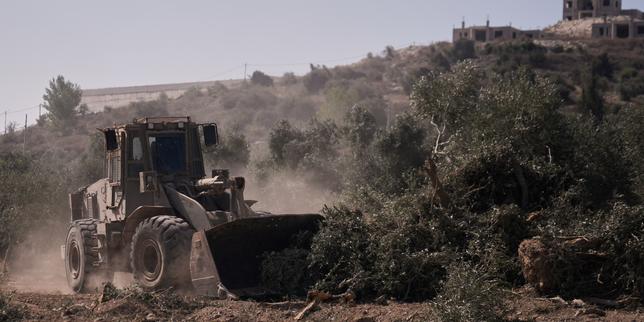
The eviction notice does not arrive on paper. It arrives via the roar of an armored caterpillar and the sudden, terminal silence of a severed power grid. Over the course of military operations designated as Operation Iron Wall, more than thirty-three thousand Palestinians were driven from their homes in the Jenin, Nur Shams, and Tulkarm refugee camps across the occupied West Bank. Months later, the United Nations Human Rights Office released a comprehensive documentation of these events, pointing explicitly toward the crime against humanity of forcible transfer and raising alarms regarding ethnic cleansing.
Journalists covering the region have watched the incremental reshaping of the West Bank for decades, but the scale and permanence of this recent devastation mark a stark departure from past incursions. This is not temporary crowd control or a routine counter-terrorism sweep. According to UN findings, over half of the structures in the Jenin camp and substantial portions of Nur Shams and Tulkarm were reduced to rubble or rendered uninhabitable. Water mains were crushed, roads pulverized, and a formal military order issued in late February barred residents from ever returning. Meanwhile, you can find other events here: The Distance Between a Desk in Kyiv and a Phone in Moscow.
To understand why this moment represents a dangerous structural pivot, one must examine the mechanics of displacement on the ground. When an entire urban sector is systematically flattened using airstrikes and controlled detonations, the objective shifts away from tactical engagement toward total environmental erasure. Displaced families fleeing into neighboring towns report hearing explicit declarations from military personnel on the ground. The message delivered at gunpoint was unambiguous: the camps would cease to exist, and the population should look eastward toward Jordan.
This calculated expulsion strategy exposes a profound institutional failure within global diplomacy. Western capitals issue routine statements expressing deep concern, yet trade agreements, diplomatic shields, and military aid remain largely untouched. The international framework designed to prevent atrocities relies on the fiction that warnings alone can alter the behavior of an occupying power committed to territorial absorption. When the High Commissioner for Human Rights, Volker Türk, publicly states that the operations were designed to clear land for illegal settlements, he is identifying a long-term geopolitical blueprint that has operated in plain sight for years. To explore the full picture, we recommend the recent analysis by NBC News.
The human cost of this blueprint is measured in shattered lives and blocked futures. More than a hundred Palestinians were killed during the active phases of these specific incursions, including children and pregnant women attempting to flee the zone of fire. Those who survived now languish in makeshift shelters or overcrowded host communities, subsisting on diminishing humanitarian aid while international bodies debate legal definitions. The threshold between forced displacement as a war crime and its escalation into a crime against humanity has been crossed, yet the machinery driving the expulsions continues to accelerate.
Looking at the broader map of the occupied territories, these events in the northern West Bank are tethered to a parallel surge in settler violence and institutional land confiscation. The strategy relies on dual pressures. State military forces clear urban concentrations under the guise of security, while state-backed settlers expand outposts across rural acreage. The resulting squeeze leaves Palestinian communities with shrinking enclaves that lack economic viability or basic security.
Decades of monitoring conflict zones teach a harsh lesson. Words like ethnic cleansing and crimes against humanity carry immense legal weight, but without enforcement mechanisms, they function merely as historical footnotes written while the tragedy unfolds. The displaced families of Jenin and Tulkarm do not need another panel report or a diplomatic reprimand. They need a fundamental realignment of international power that matches the gravity of the violations on the ground. Until that political will materializes, the bulldozers will keep rolling, and the map of the West Bank will continue to contract.