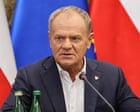
When President Donald Trump stood before reporters in Maryland on October 10, 2026, and declared that "it’s time for Ukraine to get a new president," Washington’s foreign policy establishment treated it as another off-the-cuff remark. They were wrong. The statement was the public culmination of a months-long pressure campaign rooted not in democratic idealism, but in global oil markets, stalled peace talks, and an impending diplomatic summit in China.
Trump wants Volodymyr Zelenskyy replaced because Kyiv’s deep-strike campaign against Russian oil refineries disrupted global diesel supplies right as the White House was negotiating an energy-and-ceasefire framework with Moscow. By demanding wartime elections, the Trump administration is attempting to force a leadership change in Kyiv—a move blocked by Ukrainian constitutional law, opposed by nearly 60 percent of the Ukrainian public, and likely to backfire by handing power to leaders even less willing to cede territory.
The Diesel Deal That Broke the Alliance
To understand why the Oval Office suddenly decided Zelenskyy’s tenure had expired, you have to follow the refined fuel.
For months, Ukrainian long-range drones systematically dismantled Russia’s domestic refining infrastructure, knocking out a massive share of its processing capacity. While military analysts in London and Warsaw viewed the strikes as a textbook asymmetric strategy to starve the Russian war machine of fuel and revenue, the White House saw a threat to global energy prices.
In early October, Trump struck a controversial bilateral arrangement with Russian President Vladimir Putin—easing select sanctions in exchange for Moscow releasing diesel supplies onto international markets. Zelenskyy publicly condemned the diesel agreement, refusing to halt Ukrainian strikes on Russian energy infrastructure. Within hours, Trump retaliated at the microphones, accusing Zelenskyy of sabotaging peace and calling for his removal.
"I think it’s time for Ukraine to get a new president who can make a deal with Russia," Trump told journalists, framing Zelenskyy not as a wartime ally, but as the primary obstacle to a negotiated settlement.
This was not the first time Trump had weaponized the question of Ukrainian elections. Throughout 2025 and 2026, demands for a vote flared up in Washington whenever Kyiv pushed back against unfavorable settlement terms. Administration officials even cited the 1864 United States presidential election during the American Civil War as precedent, arguing to Ukrainian delegates that active warfare is no excuse to suspend the ballot box.
Why Wartime Elections in Ukraine Are a Legal and Logistical Fantasy
The 1864 comparison collapses under five minutes of scrutiny. During the American Civil War, the Union did not face hypersonic missiles hitting polling stations in Boston or Chicago, nor were millions of its citizens living under foreign military occupation or scattered across Europe as refugees.
Ukraine’s legal framework is explicit. Under the Law on the Legal Regime of Martial Law, national elections—presidential, parliamentary, and local—are strictly prohibited while martial law is in effect. The Ukrainian parliament, the Verkhovna Rada, has extended martial law in 90-day intervals since February 2022, most recently voting in October 2026 to extend it through January 29, 2027.
Even if parliament amended the statute tomorrow, holding a credible vote remains physically impossible for four reasons:
- The Frontline Disenfranchisement: Roughly 800,000 to one million Ukrainian troops are deployed along active combat zones. Pulling soldiers out of trenches to campaign or stand in line at mobile polling stations invites Russian artillery strikes.
- The Refugee Crisis: Millions of Ukrainians remain displaced across Poland, Germany, the United Kingdom, and North America. Ukraine’s diplomatic missions lack the physical capacity to process millions of overseas ballots in a single day.
- Occupied Territories: Roughly a fifth of Ukraine remains under Russian military control, meaning millions of citizens are cut off from Ukrainian electoral rolls and state administration.
- Infrastructure Collapse: Ukraine’s Central Election Commission concluded earlier in 2026 that it would require a minimum of six months of peacetime preparation just to rebuild the voter registry and secure damaged polling sites.
Ukrainian voters understand this reality better than Washington pundits do. Polling conducted by the Kyiv International Institute of Sociology (KIIS) in early 2026 found that 59 percent of Ukrainians believe elections should only take place after the war completely ends. Another 23 percent said voting could happen only after a formal truce backed by binding international security guarantees. Just 10 percent supported holding a ballot while the shooting continues.
The Diplomatic Timetable Behind Trump's Ultimatum
If wartime elections are legally barred and logistically unworkable, why is the White House pushing so hard for them right now? The answer lies on the diplomatic calendar.
Trump is preparing for high-stakes meetings on the sidelines of the Asia-Pacific Economic Cooperation (APEC) summit in China, alongside technical negotiations in Berlin led by envoys Steve Witkoff and Jared Kushner, all leading up to the Group of 20 summit in mid-December. Washington wants a frozen conflict before year-end.
In the transactional view of the current White House, Zelenskyy is a sunk cost. After their fiery confrontation in the Oval Office in February 2025, personal trust between the two men evaporated. By floating the idea of a "new president," Trump is signaling to Moscow that Washington will not prop up Zelenskyy politically if he rejects a territorial compromise. Simultaneously, he is attempting to fracture Ukraine’s domestic political truce—known as the United News consensus—by dangling the prospect of American backing in front of Zelenskyy’s domestic rivals.
Be Careful What You Wish For The Post-Zelenskyy Lineup
Here is the fatal flaw in Washington’s calculation. Trump assumes that replacing Zelenskyy will produce a pliable statesman eager to sign away the Donbas and Crimea in exchange for an immediate ceasefire.
Ukrainian polling tells the exact opposite story.
According to an October 2026 survey by the Kyiv-based Rating Group, Zelenskyy maintains a 53 percent trust rating—down from his 2022 peaks and bruised by domestic corruption scandals, yet still remarkably resilient for a leader in his fifth year of total war. Crucially, external attacks from Washington historically boost his standing; after his clash with Trump in early 2025, Zelenskyy’s approval surged to 67 percent as Ukrainians rallied around the flag.
More importantly, the men who could actually beat Zelenskyy in a free election are not peaceniks. They are hardened wartime figures whose views on Russian aggression are often more uncompromising than the incumbent’s.
Valerii Zaluzhnyi The Silent Favorite
Ukraine’s former Commander-in-Chief and current Ambassador to the United Kingdom remains the only figure who consistently defeats Zelenskyy in head-to-head polling. The Rating Group poll puts Zaluzhnyi’s trust rating at 64 percent, with only 25 percent expressing distrust.
The "Iron General" who orchestrated the defense of Kyiv and the 2022 Kharkiv counteroffensive rarely gives interviews and has never formally launched a political party. Yet insiders confirmed in mid-2026 that Zaluzhnyi has privately signaled his intention to run once the war ends. Would a general who watched tens of thousands of his soldiers die defending eastern Ukraine sign a capitulation deal to appease the White House? Unlikely. Zaluzhnyi’s writings consistently emphasize total victory, deep technological mobilization, and ironclad Western security guarantees before any settlement can hold.
Kyrylo Budanov The Spymaster in the Presidential Office
In a major 2026 government reshuffle, Zelenskyy brought his longtime military intelligence chief, Lieutenant General Kyrylo Budanov, directly into the center of power as Head of the Office of the President.
Budanov, 40, is the architect of Ukraine’s covert strikes deep inside Russian territory—the very campaign targeting oil refineries and airfields that infuriated Trump. Polls show Budanov is competitive in a hypothetical second-round runoff. Putting him in charge of negotiations would not soften Kyiv’s stance; it would institutionalize asymmetric warfare.
Mykhailo Fedorov The Reformer Breakaway
The wildcard in Kyiv’s political ecosystem is Mykhailo Fedorov, the former Minister of Digital Transformation and Defense Minister who broke ranks in August 2026 after his dismissal to publicly advocate for wartime elections. Fedorov commands strong support among younger, tech-oriented Ukrainians and Western-backed anti-corruption activists, and polling indicates he could pose a serious runoff challenge. Yet his platform centers on modernizing Ukraine’s drone warfare capacity and rooting out domestic graft—not surrendering sovereignty to Moscow.
| Potential Candidate | Current / Recent Role | Public Trust / Polling Outlook | Stance on Russia & Elections |
|---|---|---|---|
| Volodymyr Zelenskyy | Incumbent President | 53% trust, 40% distrust (Oct 2026) | Opposes wartime voting until security guarantees exist; open to stepping down post-war. |
| Valerii Zaluzhnyi | Ambassador to the UK; ex-Armed Forces Chief | 64% trust, 25% distrust; leads runoff polls | Privately preparing a post-war bid; demands hard Western security guarantees. |
| Kyrylo Budanov | Head of the Office of the President | Competitive in hypothetical runoff polls | Architect of deep strikes inside Russia; declines to rule out a future run. |
| Mykhailo Fedorov | Former Defense & Digital Minister | Competitive in runoff scenarios | Publicly called for wartime elections in Aug 2026; focused on military tech reform. |
| Petro Poroshenko | Former President (2014–2019) | Low ceiling; high negative ratings | Announced intention to run post-war; staunchly anti-Kremlin. |
Europe's Tightrope and the Danger of a Legitimacy Trap
European capitals watched Trump’s outburst with quiet alarm. Leaders in Berlin, Paris, London, and Warsaw have spent the past year building a "coalition of the willing" to provide postwar security guarantees for Ukraine, while simultaneously insisting that Moscow cannot hold a veto over Ukraine’s European Union membership or NATO’s defensive posture.
European diplomats recognize what the White House ignores: forcing an illegitimate, rushed wartime election hands the Kremlin its greatest political victory since 2022.
Russian state media has spent two years claiming Zelenskyy is a "usurper" because his original five-year term expired in May 2024. If Kyiv holds a chaotic election under missile fire—where millions of soldiers and refugees cannot vote—Moscow will immediately declare the resulting government fraudulent, regardless of who wins. Even worse, a bitter election campaign during an active war would tear apart Ukrainian civil society, pitting military factions against civilian administrators while Russian forces press their advantage on the ground.
Senior Republicans in Washington are privately and publicly breaking with the White House over this strategy. Senate Armed Services Committee Chairman Roger Wicker took to the Senate floor in November 2026 to warn against easing pressure on Moscow, arguing that Putin wants conquest rather than peace and reminding colleagues of Trump’s own earlier pledge to help Ukraine win back its territory.
The Sovereign Reality Check
In Kyiv, the reaction to Trump’s demand was a mix of exhaustion and defiance. Ukrainian officials know they cannot win a war of attrition without American air defense interceptors, satellite intelligence, and financial backing. They also know that capitulating to a foreign demand to overthrow their own constitution would destroy the very democracy they have bled for four years to defend.
A president in Washington can freeze arms shipments, cut energy deals with Moscow, and threaten to walk away from the negotiating table in China or Berlin. What he cannot do is cast a ballot in Kyiv. Until the missiles stop falling and the borders are secure, Ukraine’s next president will not be chosen in Maryland—and the leader who eventually replaces Volodymyr Zelenskyy will answer to Ukrainian voters, not the White House.