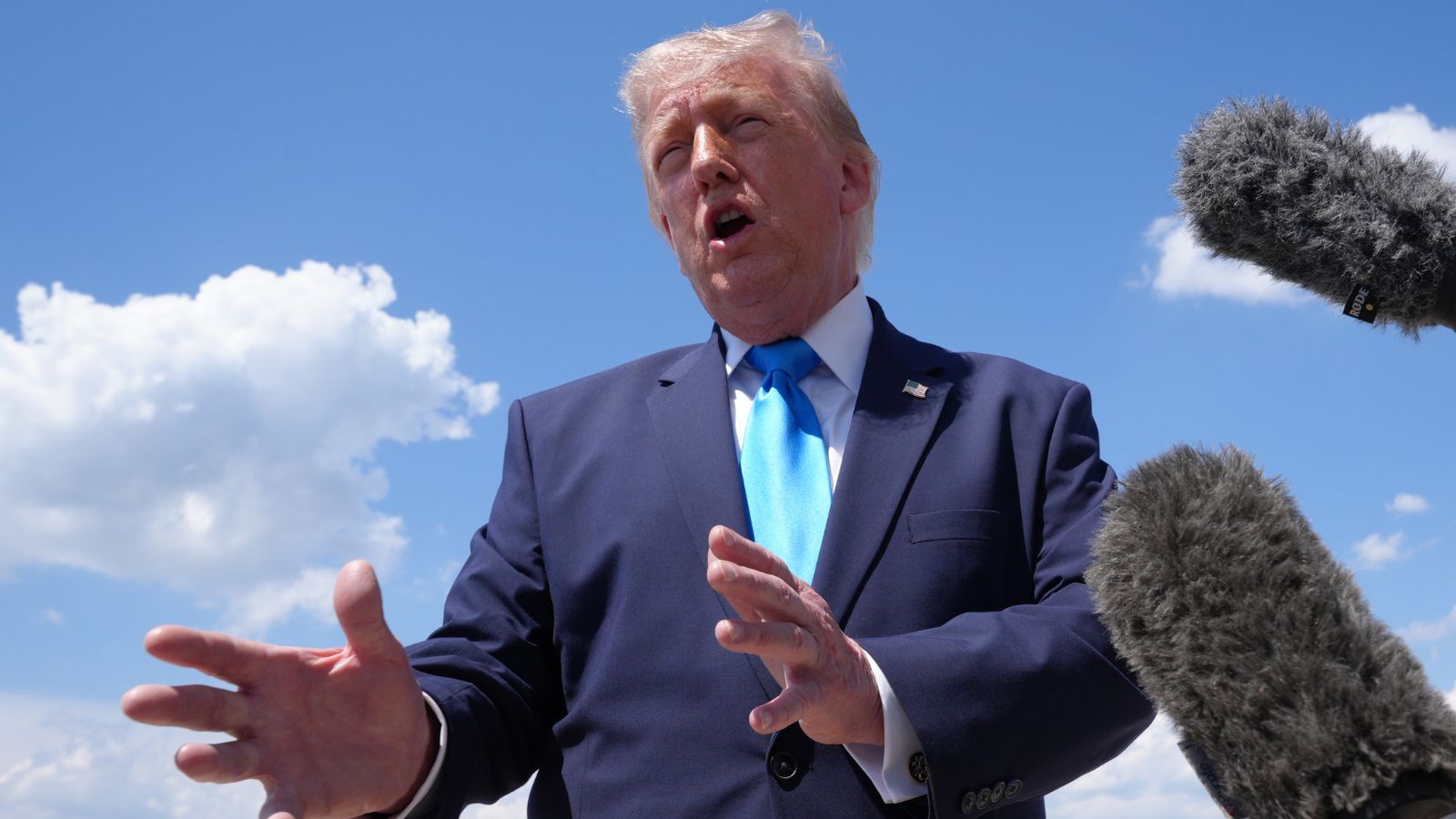
President Donald Trump has locked in a specific date for a high-stakes diplomatic collision. Chinese President Xi Jinping is scheduled to touch down in the United States on September 24 for a White House summit.
Trump dropped the date during an appearance with travel sector executives, framing the upcoming encounter with casual enthusiasm. Behind the public posturing lies a much sharper reality. This September meeting arrives at a time of low expectations, where both superpowers are far more interested in managing a permanent stalemate than chasing grand diplomatic breakthroughs.
The Architecture of a Managed Stalemate
Decades of covering bilateral friction teach a simple truth. Grand announcements rarely survive contact with structural competition.
When Trump hosts Xi later this month, the agenda will groan under the weight of unresolved grievances. Average American tariff rates on Chinese goods hover well above thirty percent. Export curbs on advanced semiconductors remain absolute. Artificial intelligence supremacy has replaced traditional manufacturing as the primary battleground of economic nationalism.
Trump asserted recently that the United States holds a commanding lead over China in artificial intelligence. Beijing views the same race through an existential lens. Neither side is willing to blink.
Diplomats in both capitals whisper that the September 24 summit is designed primarily for optics and containment. Transactions without trust have become the baseline currency of the relationship. Stability without settlement is the actual deliverable.
The Shadow of Secondary Pressures
Foreign policy rarely happens in a vacuum. Secondary flashpoints threaten to derail even the most carefully choreographed state visits.
Consider the complications surrounding global sanctions. Washington faces immense pressure regarding enforcement mechanisms against financial entities that cross geopolitical red lines, particularly concerning ongoing conflicts in the Middle East. The threshold for the Treasury Department to penalize Chinese financial institutions remains exceptionally high.
Why does Washington hesitate? Because hitting major Chinese banks risks immediate retaliation.
Any heavy-handed financial penalty could shatter the fragile trade detente currently holding global markets together. It could jeopardize American access to critical mineral supply chains that feed everything from defense hardware to consumer electronics. Both administrations know the cost of total economic decoupling. They spend their time constructing guardrails instead of bridges.
The Domestic Political Utility
Leaders love a foreign visitor when domestic headaches multiply.
Trump’s public remarks about the upcoming visit came packaged with complaints about entirely different geopolitical friction points, including an increasingly testy relationship with Canada. By highlighting an upcoming state visit from his Chinese counterpart, the White House shifts the narrative back to high-end great power management.
Yet history warns against expecting sudden harmony from choreographed handshakes. Past summits produced grand promises regarding agricultural purchases and aircraft acquisitions that routinely missed their ambitious targets or dissolved into bureaucratic obscurity.
Markets have learned to ignore the rhetorical gloss. Analysts look past the photo ops to track whether customs officials are clearing cargo or whether export licenses are moving through administrative bottlenecks.
September 24 will bring the pageantry of a state dinner and the gravity of two aging nuclear superpowers sharing a room. What it will not bring is an end to the structural rivalry defining this century.
The two economies will remain tightly bound by commerce and deeply separated by intent. The summit is not a turning point. It is simply the latest waypoint on a long, unyielding road of competitive coexistence.
Trump Says Xi Visit Will Be “Very Exciting” | US-China Leaders Prepare For Washington Talks This video details the upcoming Washington talks and the geopolitical atmosphere surrounding the September 24 summit.