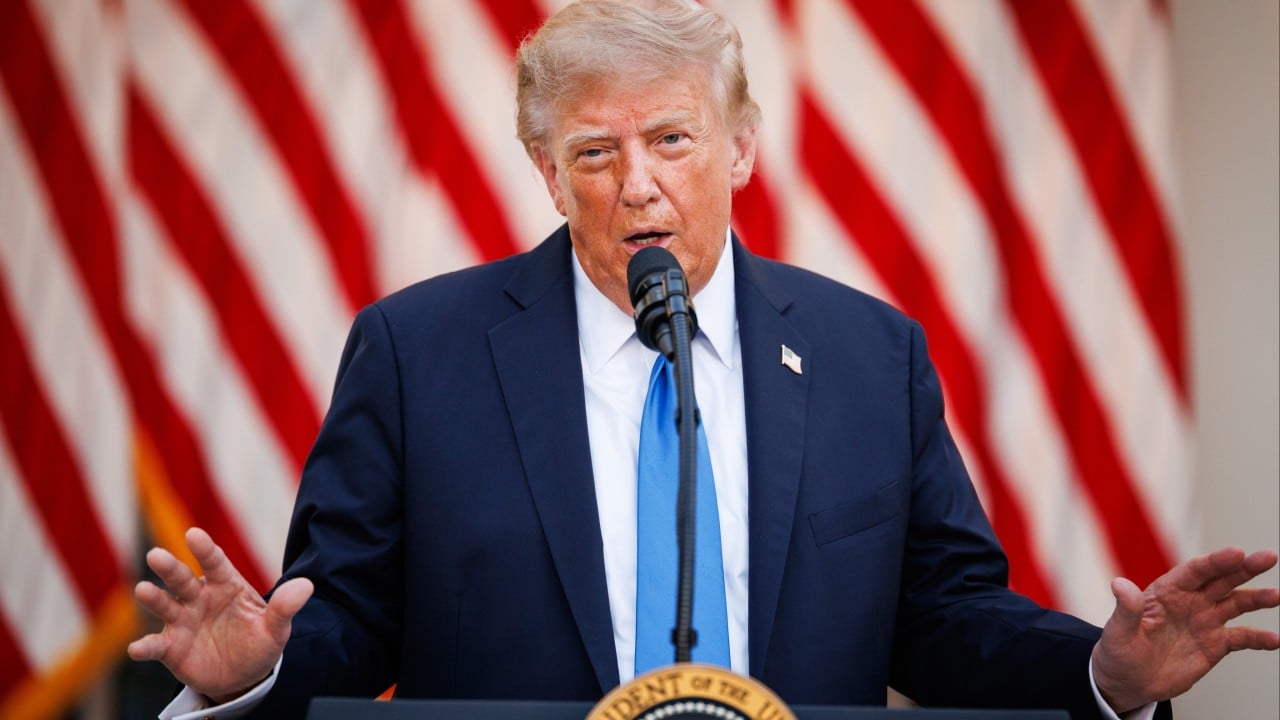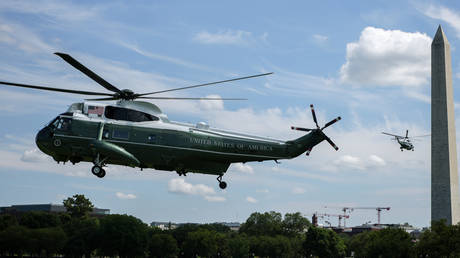
A commercial passenger jet and Marine One, carrying President Donald Trump, experienced a momentary loss of separation over Washington, D.C., triggering an active Federal Aviation Administration and National Transportation Safety Board investigation. The incident at Ronald Reagan Washington National Airport exposed deep structural vulnerabilities in a heavily congested corridor that lawmakers and regulators promised to fix following a catastrophic midair collision a year prior.
The Anatomy of a Breakdown
Washington airspace is a masterclass in operational friction. Multiple military installations, commercial hubs, and high-security zones overlap within a few square miles. Meanwhile, you can read other developments here: The Long Wait Behind the Port Call That Stopped the Fleet.
On that Tuesday afternoon, Marine One lifted off from the White House bound for Joint Base Andrews. Simultaneously, an Envoy Air regional jet began its takeoff roll from Reagan National. Standard safety protocols demand a clean buffer zone. Commercial departures are supposed to freeze when presidential transport transits the area.
Instead, a breakdown in communication unspooled. Transmissions between the helicopter crew and the control tower turned garbled. Transcripts indicate the military pilots attempted multiple times to announce their imminent departure. The tower acknowledged a broken and unreadable signal. To explore the bigger picture, we recommend the detailed analysis by Al Jazeera.
Moments later, the jet climbed into the path of the approaching flight profile. The two aircraft suffered a loss of separation before pulling away from each other.
The Ghost of Past Failures
This close call did not occur in a vacuum. The aviation community remains haunted by the January 2025 disaster where a regional airliner and an Army Black Hawk collided near the same airport, resulting in sixty-seven fatalities.
That tragedy forced the FAA to rewrite its playbook. Strict new mandates barred mixed helicopter and jet traffic from sharing simultaneous operational windows. Visual separation rules were heavily curtailed. Mandatory position broadcasting for military aircraft became non-negotiable.
Yet, the recent close call demonstrates that paper mandates do not automatically translate to operational discipline. When communication links fail or procedural handoffs stall, the system defaults to human error.
The Communication Vacuum
At the heart of the crisis lies a persistent disconnect between civilian air traffic controllers and military aviation units. Investigations following the 2025 disaster revealed startling infrastructure gaps, including a vital safety hotline between the Pentagon and the Reagan National control tower that had malfunctioned for years without detection.
When Marine One requests clearance, it relies on a complex web of handoffs. If a transmission drops or audio becomes unreadable, the margin for error shrinks to seconds. Commercial pilots accelerate down runways while military crews navigate blind spots in radio frequency allocation.
The Human Factor in the Tower
Controllers operate under immense cognitive loads. Managing high-density terminal airspace requires split-second decision-making.
When a presidential movement enters the sequence, the stress multiplier increases exponentially. A single missed radio readback cascades into a sequence of events where safety margins evaporate. Blaming a single controller misses the systemic reality. The architecture of the airspace itself invites friction by forcing high-priority military assets to weave through dense commercial traffic flows.
Institutional Defense Mechanisms
Official responses followed a predictable script. The White House asserted that the president faced no actual danger. The Marine Corps defended the proficiency of its flight crews, noting that the tower never issued a hold instruction.
These statements serve a political purpose. They protect institutional credibility. However, they sidestep the core engineering question. If safety procedures dictate that commercial takeoffs must pause during presidential departures, why did an aircraft leave the ground?
The investigation must look beyond the immediate cockpit dynamics. It must evaluate whether automation gaps, radio frequency congestion, or outdated procedural handoffs continue to compromise the safety of the capital's skies.
The skies above Washington leave zero room for administrative drift. Every near miss serves as a warning shot for a system running out of second chances.